





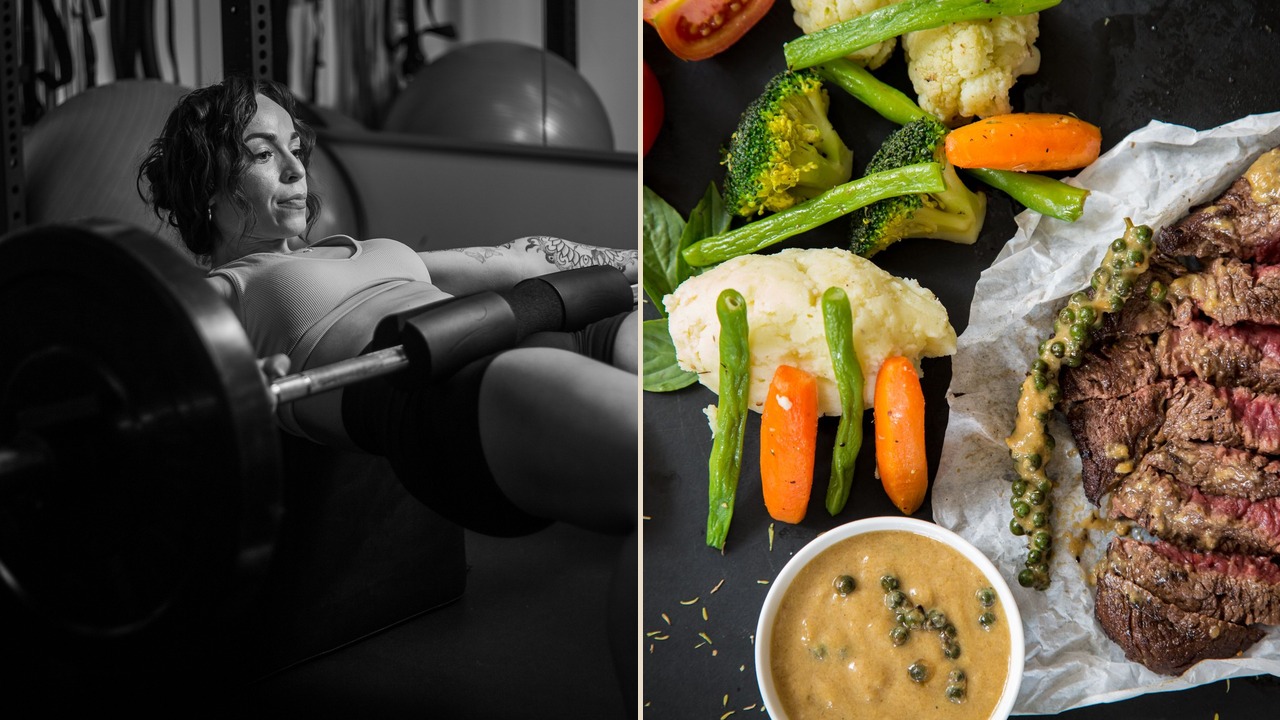

“Why aren’t my glutes growing?” If you own a gym, you have heard that question a hundred times. The member trains hard, three glute days a week, hip thrusts with solid form, and six months later the mirror shows the same picture. Trainers usually answer by tweaking the program. But often the program is not the problem. The problem is on the plate.
Building glute muscle is a two-part equation. Training provides the signal, protein provides the material. Most people obsess over the first half and guess at the second. This post fixes the second half with real numbers from real studies, not gym folklore.
Let’s start with the headline finding. In 2018, researchers led by Robert Morton published a meta-analysis in the British Journal of Sports Medicine that pooled 49 randomized trials with 1,863 participants. The question: does eating more protein keep producing more muscle during resistance training? The answer had a ceiling. Gains in fat-free mass stopped increasing once total protein intake passed about 1.62 grams per kilogram of body weight per day (a point estimate, with a 95% confidence interval of 1.03 to 2.20). Beyond that point, extra protein did nothing measurable for muscle growth.
That 1.6 g/kg/day figure is not an outlier. The International Society of Sports Nutrition’s position stand on protein and exercise lands in the same neighborhood: 1.4 to 2.0 grams per kilogram per day is sufficient for building and maintaining muscle in most exercising people. The ISSN flags one exception: lifters in a caloric deficit who are trying to hold onto muscle may need more, in the range of 2.3 to 3.1 g/kg/day.
1.6
g/kg/day – The protein ceiling for muscle growth (Morton et al., 2018)
49
Studies pooled in the landmark meta-analysis
1,863
Participants behind the 1.6 g/kg finding
20-40 g
Protein per meal to maximize muscle protein synthesis (ISSN)
What 1.6 g/kg Looks Like on a Plate
Numbers only help if you can translate them into food. Here is the simple math: multiply body weight in kilograms by 1.6.
A 70 kg (154 lb) woman training for glute growth lands at about 112 grams of protein per day. An 80 kg (176 lb) man lands at about 128 grams per day. Notice what those numbers are not: they are not 200 grams, and they are not a second full-time job.
A palm-sized portion of cooked chicken or turkey, about 4 to 6 ounces, delivers roughly 30 grams of protein. Three eggs give you about 18. A cup of Greek yogurt, around 20. Spread across the day, a realistic template looks like this:
Breakfast: Greek yogurt with berries and oats, about 25 g. Lunch: chicken breast with rice and vegetables, about 35 g. Training-day snack: a whey shake with milk, about 30 g. Dinner: salmon or lean beef with potatoes and greens, about 30 g.
That is roughly 120 grams, enough for most lifters under 80 kg, with no exotic meal prep and no six Tupperwares a day.
One note on supplements: protein powder is a convenience tool, not a requirement. The research is clear that total daily protein is what matters, not the delivery vehicle. If whole foods get you to your number, a tub of powder adds nothing.
Does Protein Timing Matter? The “Anabolic Window” Question
For years, gym culture preached a 30-minute anabolic window: miss your post-workout shake and the session was wasted. The evidence says otherwise.
A 2013 meta-analysis by Schoenfeld, Aragon and Krieger in the Journal of the International Society of Sports Nutrition tested exactly this. At first glance, protein timing seemed to help. But once the researchers controlled for total daily protein intake, the timing effect disappeared. The apparent benefit of drinking a shake right after training was really just the benefit of eating enough protein that day.
The ISSN’s guidance is practical: distribute protein across the day, roughly every 3 to 4 hours, with 20 to 40 grams (about 0.25 g/kg) per meal. The anabolic effect of a training session lasts at least 24 hours, so the pre-workout meal you ate three hours before the gym counts just as much as the one after.
Bottom line: hit your daily number first. Then, if you want to optimize, eat protein at regular intervals instead of backloading it all at dinner.
Why Protein Alone Builds Nothing
Here is the part some readers will not like: protein without progressive overload builds little or nothing on its own. Protein is the raw material. Training is the work order. Without the signal from hard resistance training, extra protein just becomes expensive calories.
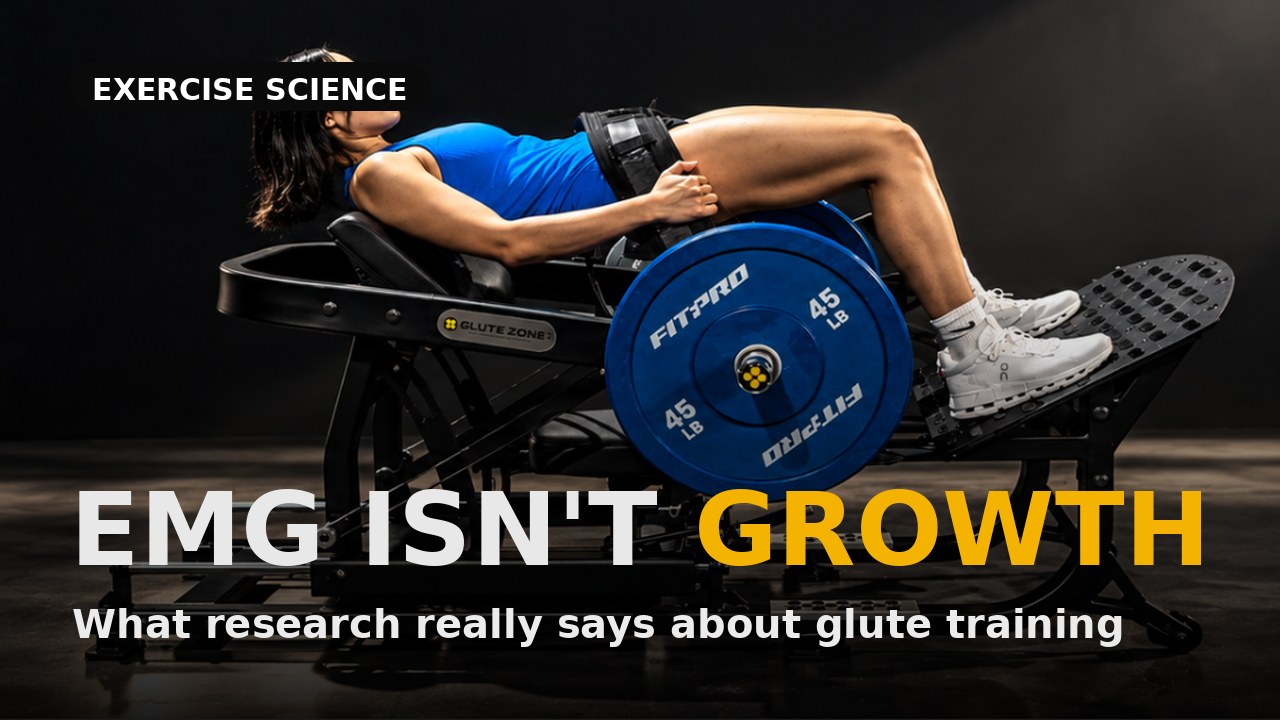
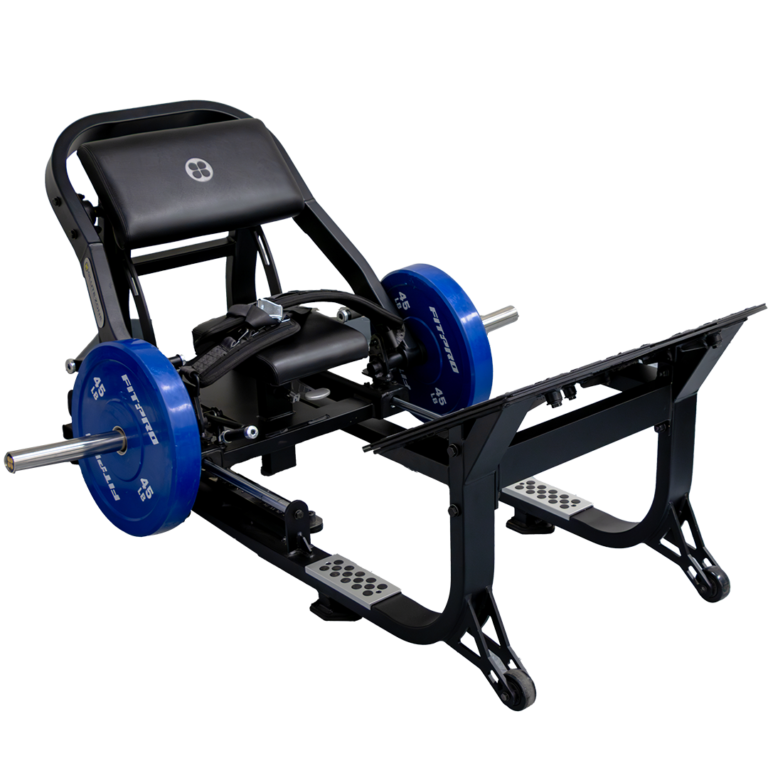
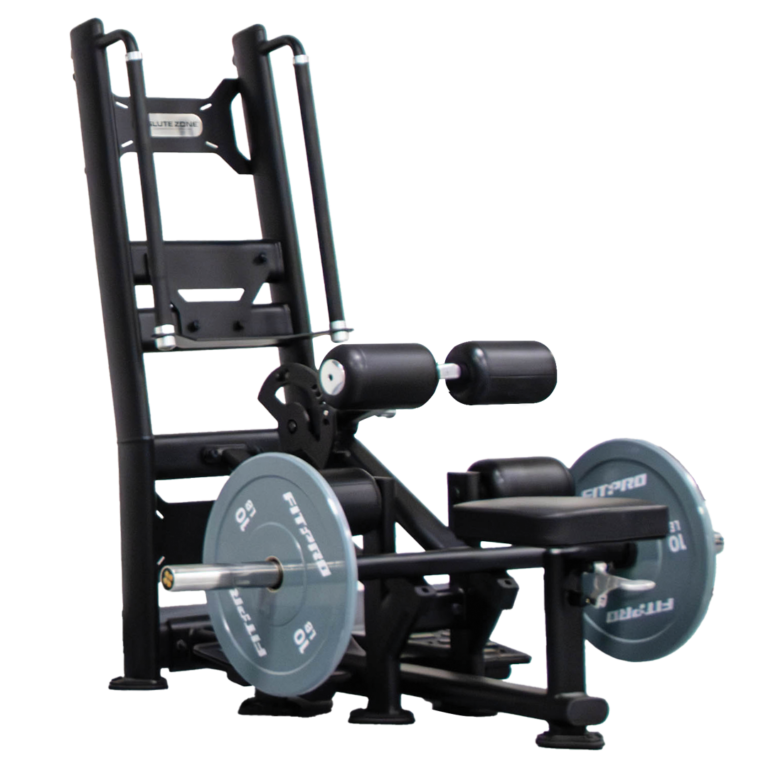
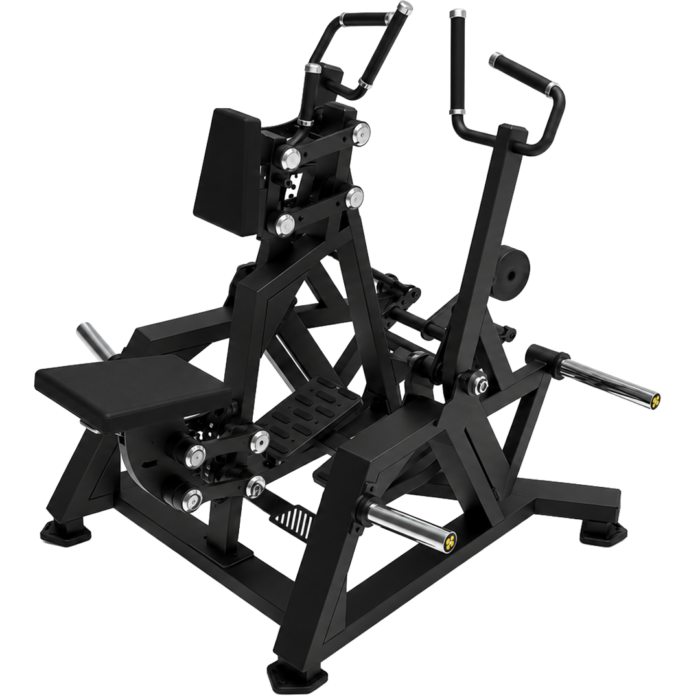
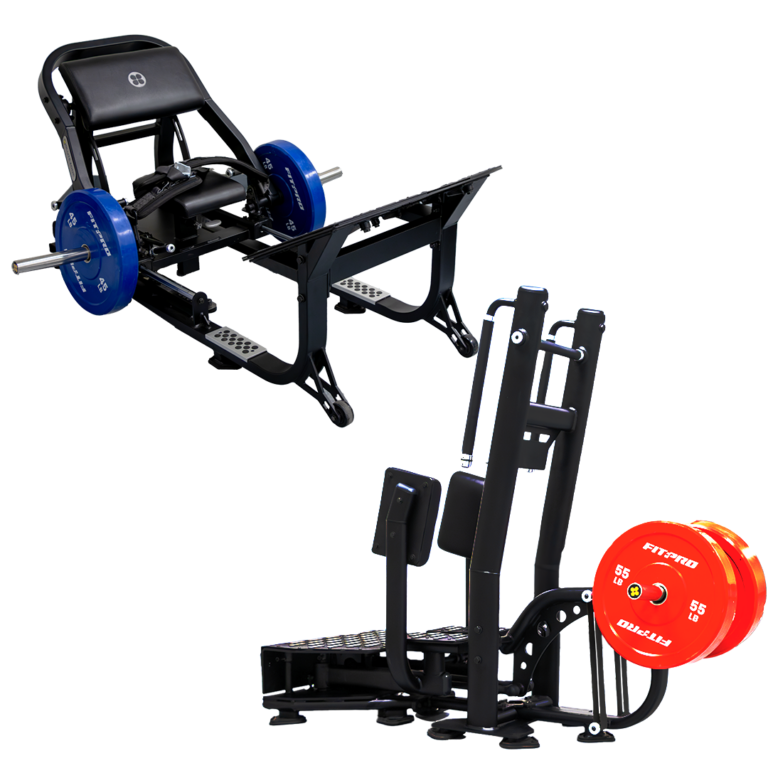
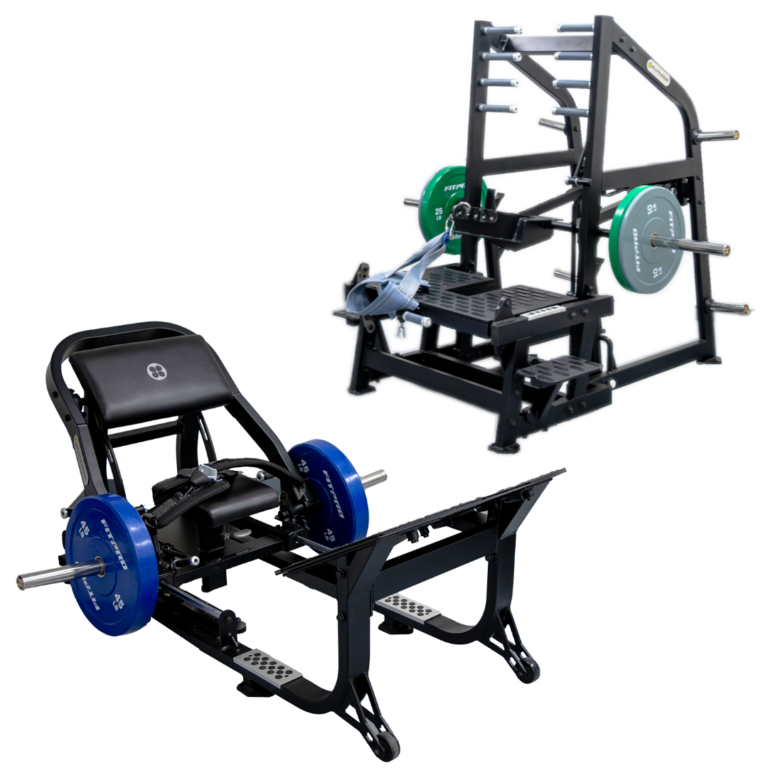
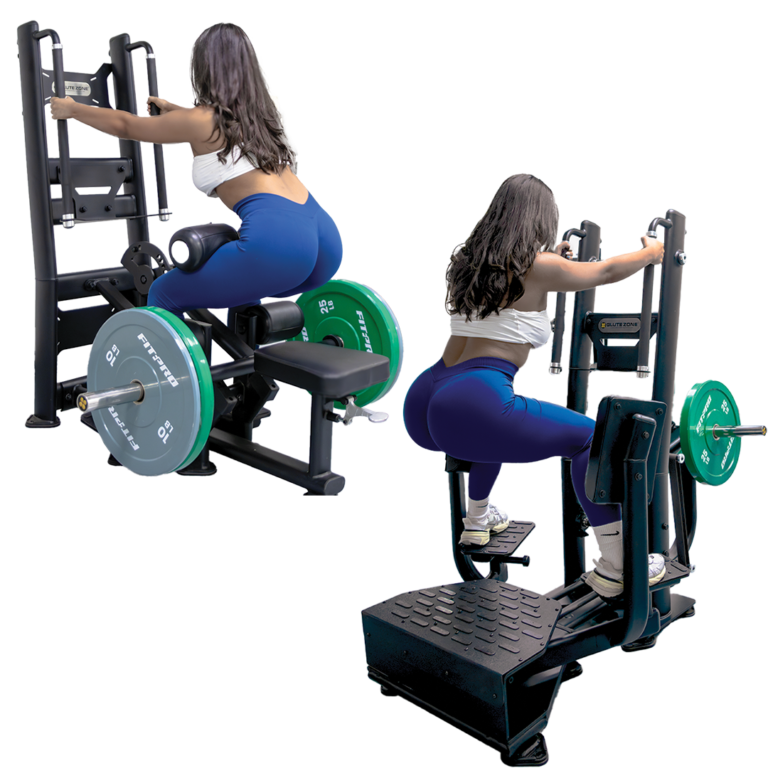
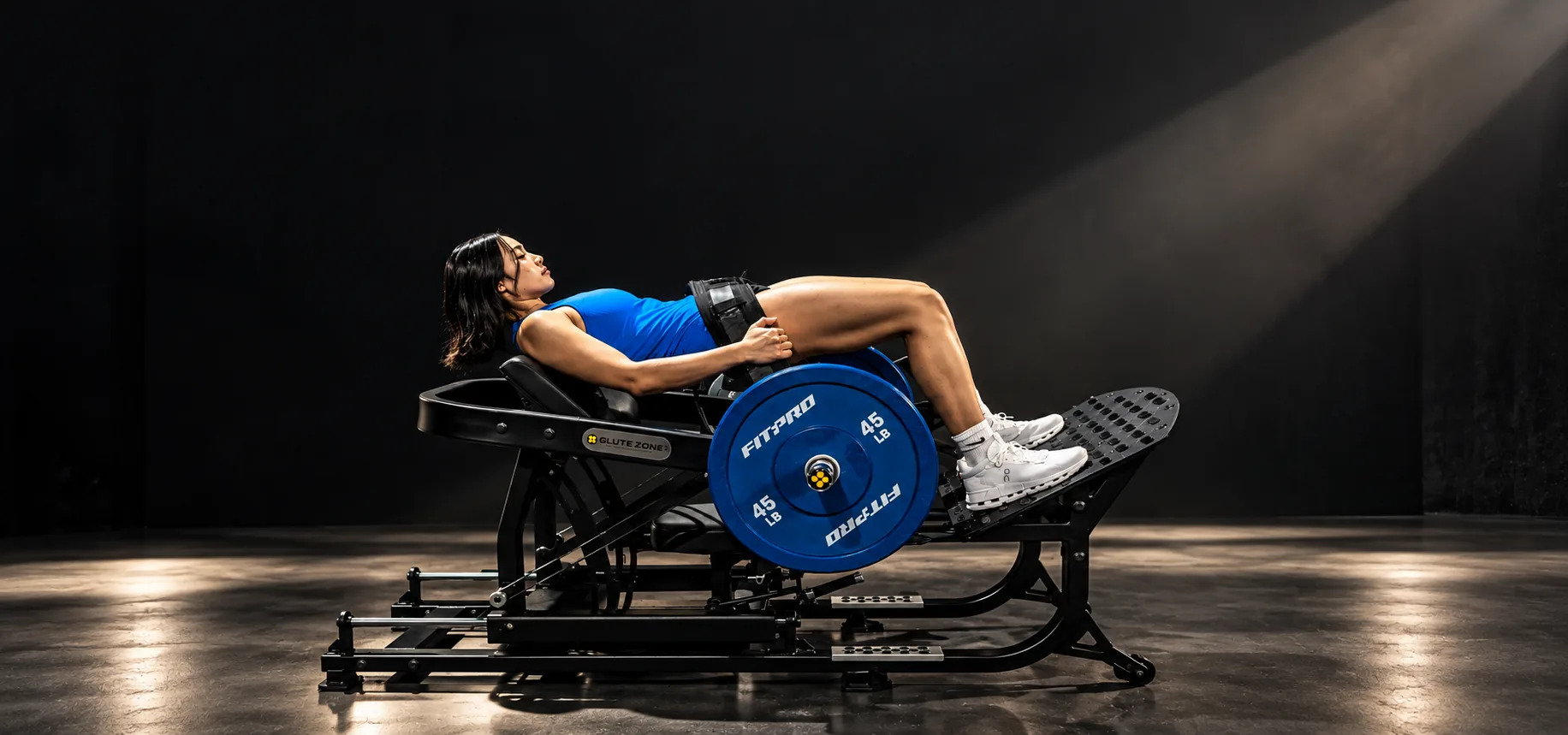
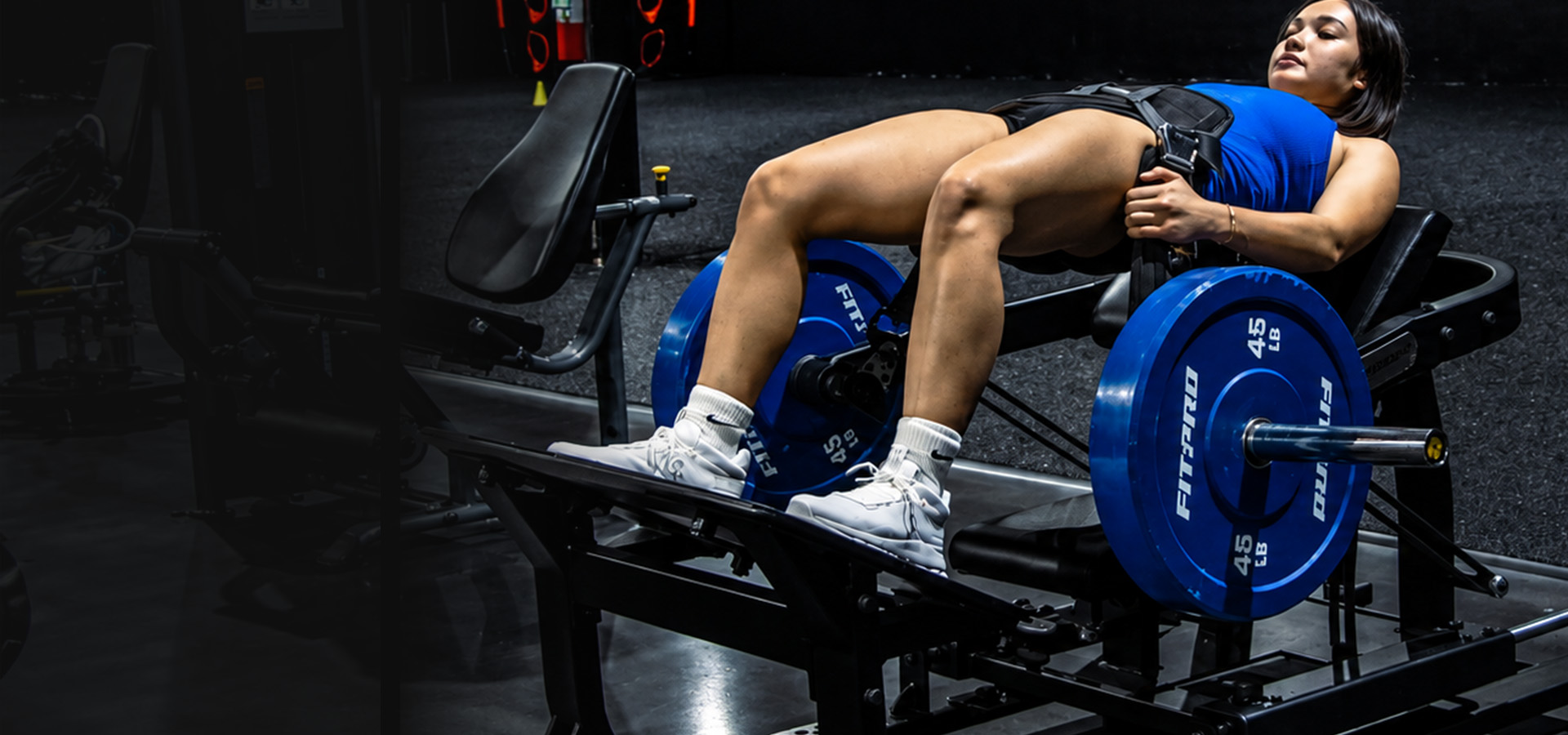
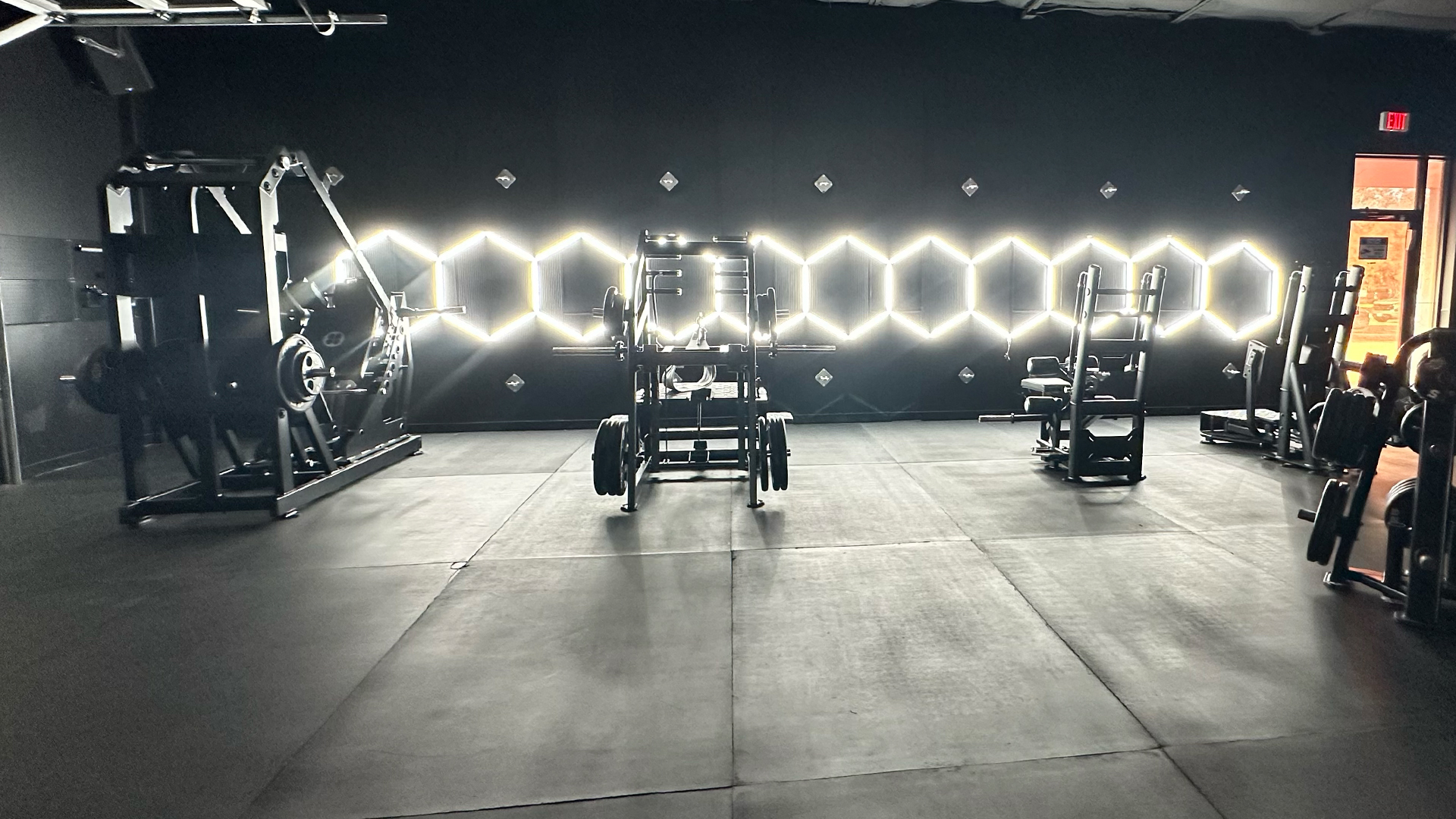
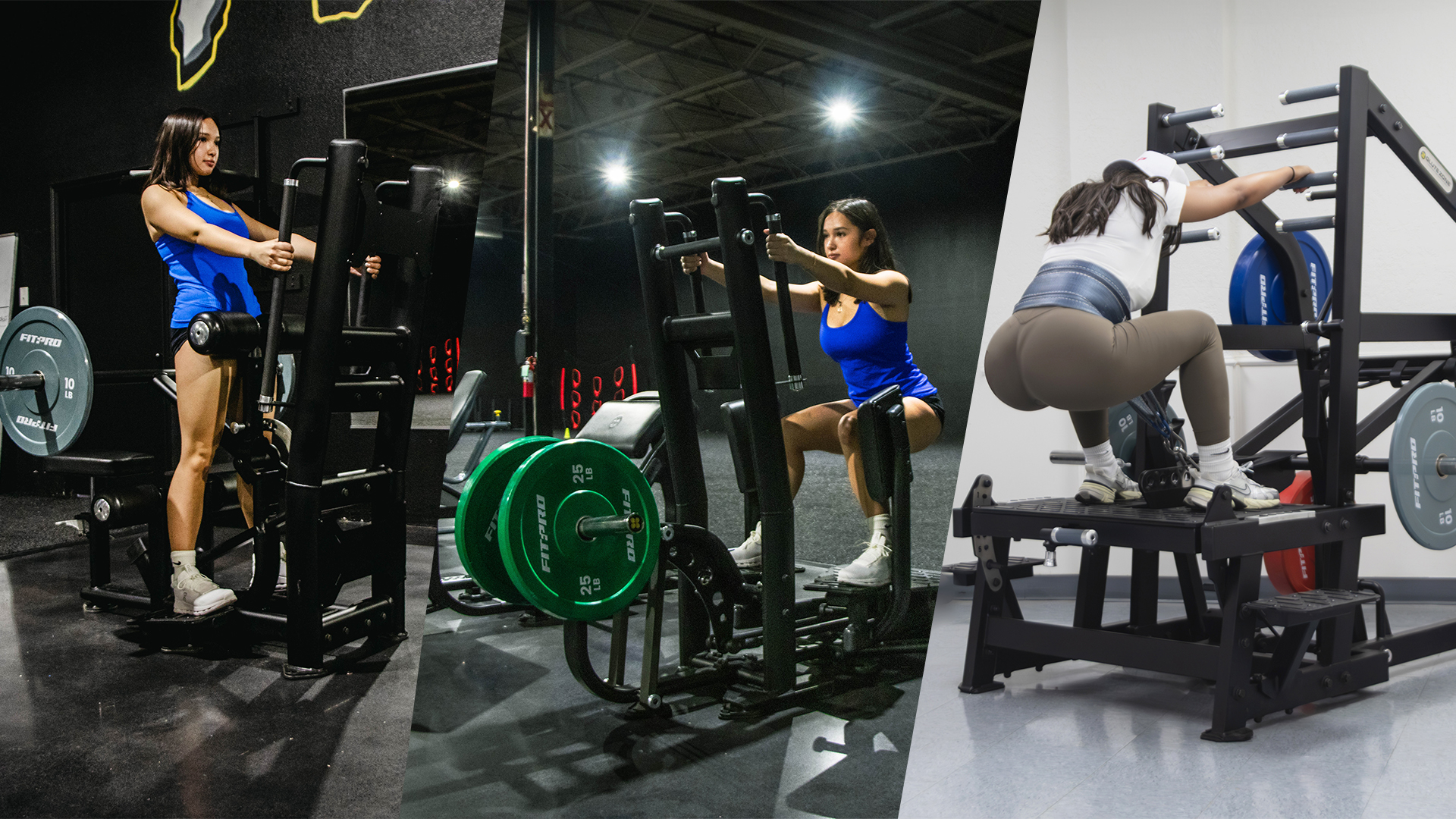
For glute growth specifically, that signal needs to load the glutes through a full range of motion under meaningful resistance. That is why plate-loaded hip thrust machines have become the centerpiece of serious glute zones: they let lifters progressively overload the exact movement linked to glute development, session after session, without the setup friction of a barbell.
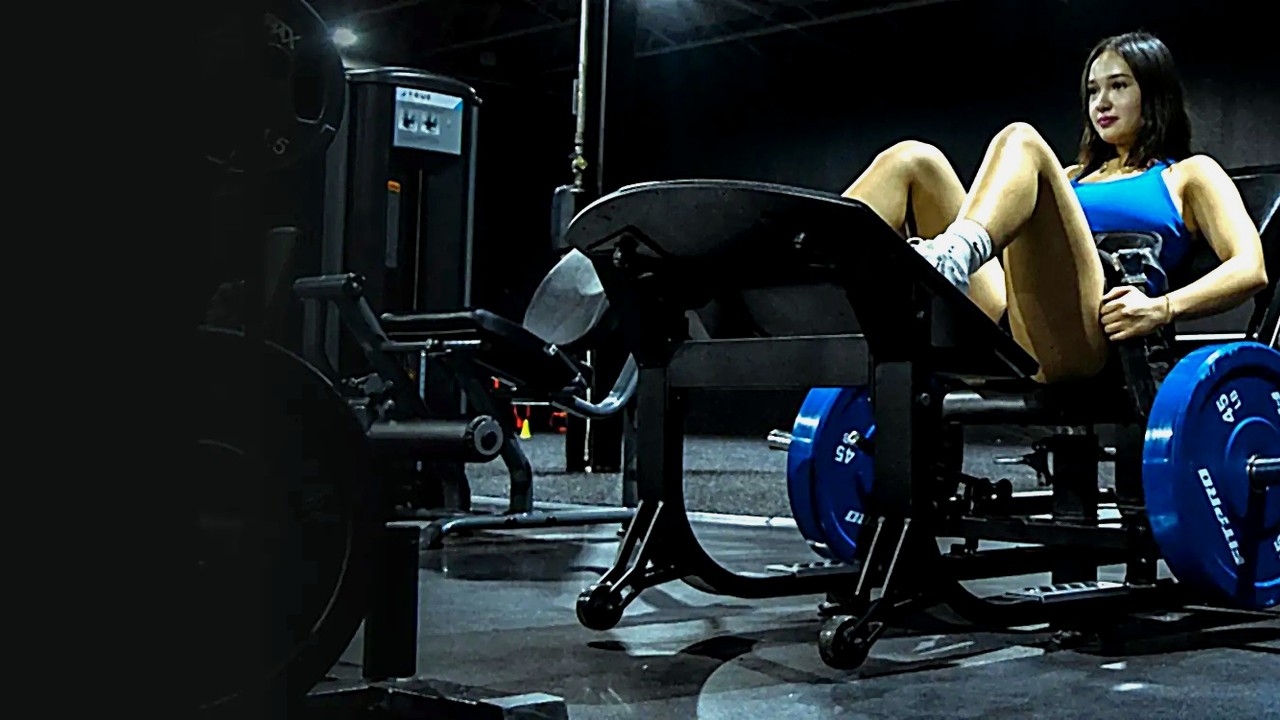
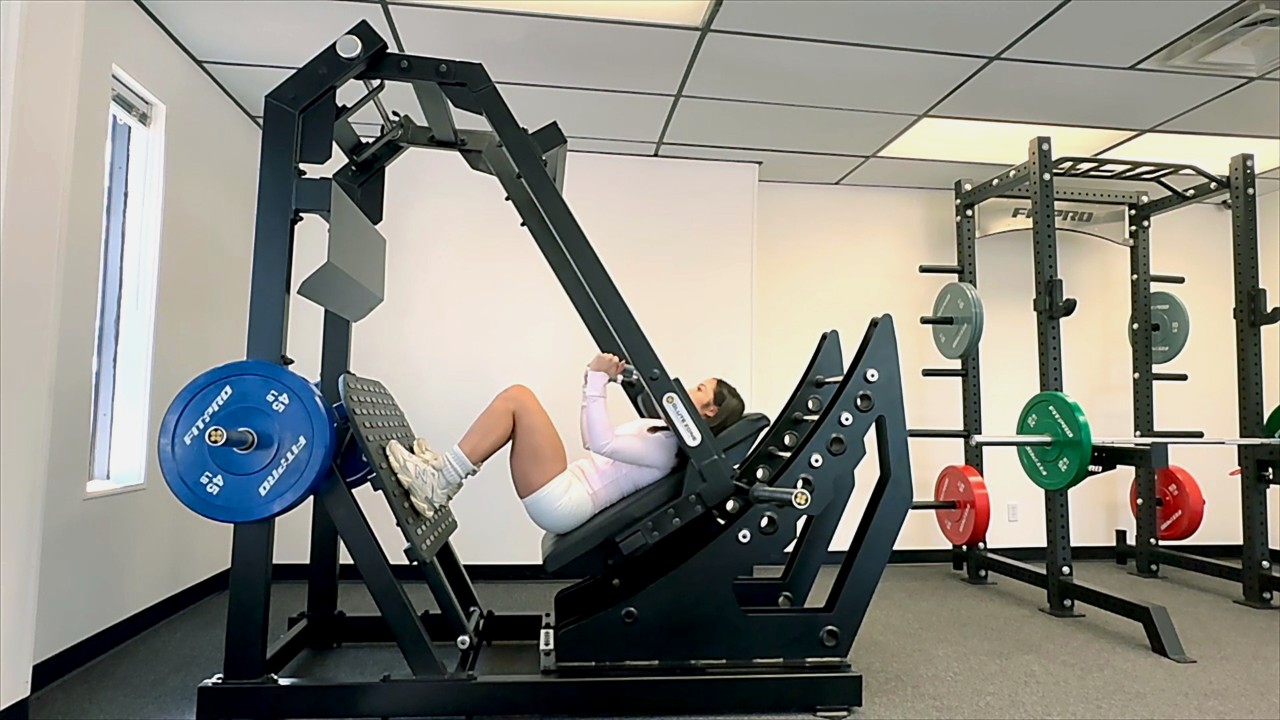
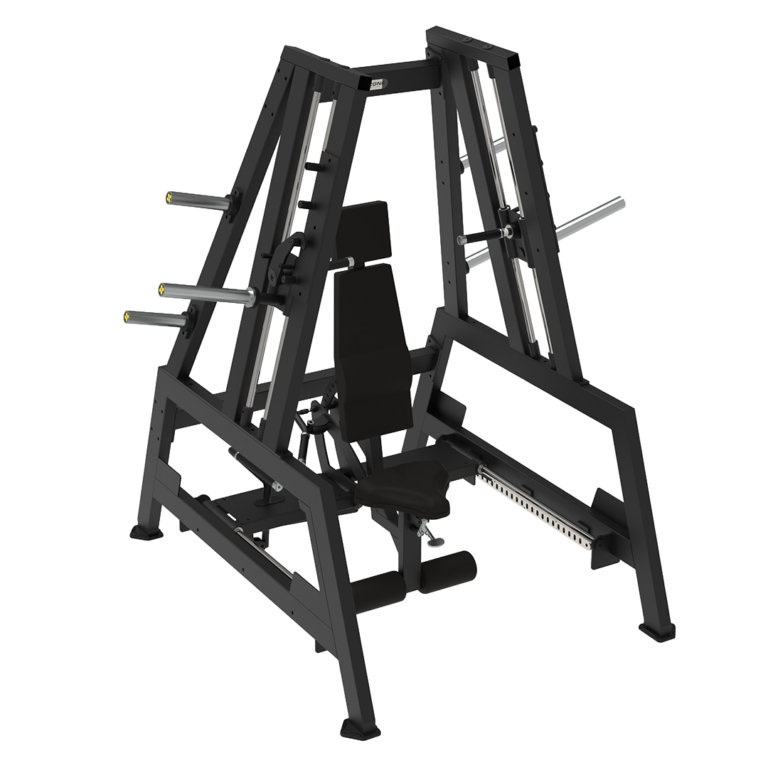
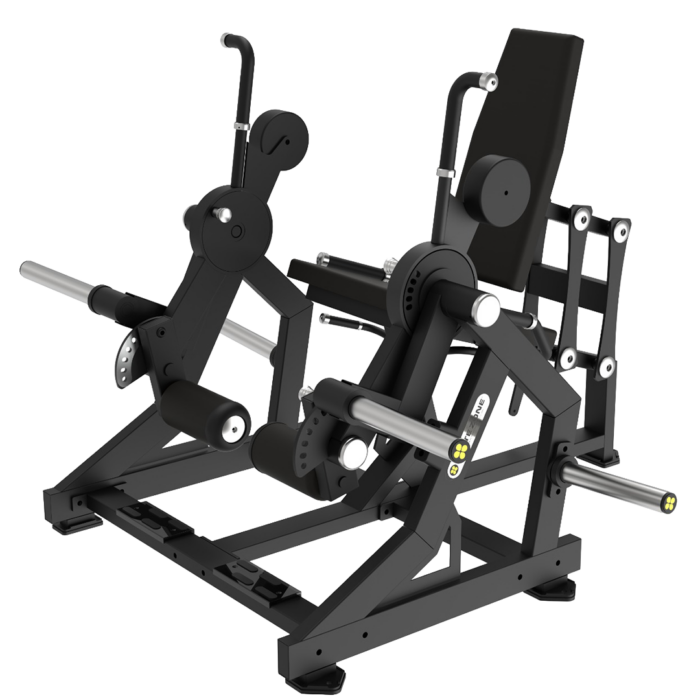
The same logic applies to the pendulum squat, which loads the quads and glutes through a deep, guided range of motion that is hard to replicate with free weights.
So the formula is simple and non-negotiable: progressive overload on the right movements, plus enough protein to rebuild what the training breaks down. Miss either half and growth stalls.
The Gym-Owner Angle: Nutrition Guidance Is a Retention Tool
This is where the science becomes a business decision. Members who see visible progress renew their memberships. Members who stall for six months quietly cancel. When a member asks why her glutes are not growing, the gym that answers with real numbers (1.6 g/kg, protein every 3 to 4 hours) instead of shrugs keeps that member.
You do not need to become a nutrition clinic. A one-page protein guide at the front desk, a ten-minute nutrition check-in during onboarding, or a short post on your gym’s social channels can do it. Simple nutrition education is one of the cheapest retention tools a gym can deploy, and most competitors are not doing it. Keep the guidance general, and encourage members with medical conditions to consult a professional.
Three Protein Myths That Need to Die
Myth 1: more protein always means more muscle. The 250-gram-a-day strategy has no support in the literature. Morton’s breakpoint analysis found no additional fat-free mass gains past about 1.6 g/kg/day. The excess gets oxidized, not built into muscle.
Myth 2: your body can only use 30 grams of protein per meal. This one refuses to die. Larger protein meals simply digest over a longer window. Total daily intake predicts growth far better than any per-meal cap.
Myth 3: skip the post-workout shake and the session was wasted. As the Schoenfeld meta-analysis showed, timing effects vanish once daily totals are matched. The shake is convenient, not magical.
The Simple Protein Protocol
- Calculate your target: body weight in kg times 1.6. Use 2.3 to 3.1 g/kg/day if you are in a caloric deficit (ISSN).
- Build three to four meals around 25 to 40 grams of protein each, spaced through the day.
- Put a protein source in every meal before you think about supplements.
- Pair it with progressive overload on glute-focused movements, at least twice a week.
- Reassess after 8 to 12 weeks. If strength is climbing and measurements are moving, the protocol is working.
Sources
- Morton RW et al. A systematic review, meta-analysis and meta-regression of the effect of protein supplementation on resistance training-induced gains in muscle mass and strength in healthy adults. Br J Sports Med. 2018;52(6):376-384. https://pubmed.ncbi.nlm.nih.gov/28698222/
- Jäger R et al. International Society of Sports Nutrition position stand: protein and exercise. J Int Soc Sports Nutr. 2017;14:20. https://doi.org/10.1186/s12970-017-0177-8
- Schoenfeld BJ, Aragon AA, Krieger JW. The effect of protein timing on muscle strength and hypertrophy: a meta-analysis. J Int Soc Sports Nutr. 2013;10:42. https://pubmed.ncbi.nlm.nih.gov/24299050/
Your members’ glutes will not grow on hope and guesswork. Give them the training stimulus that makes protein worth eating: a dedicated glute zone built around commercial-grade hip thrust and pendulum squat machines. GluteZone equipment is commercial grade, built for gyms and heavy daily use, with flexible financing available through Affirm.