





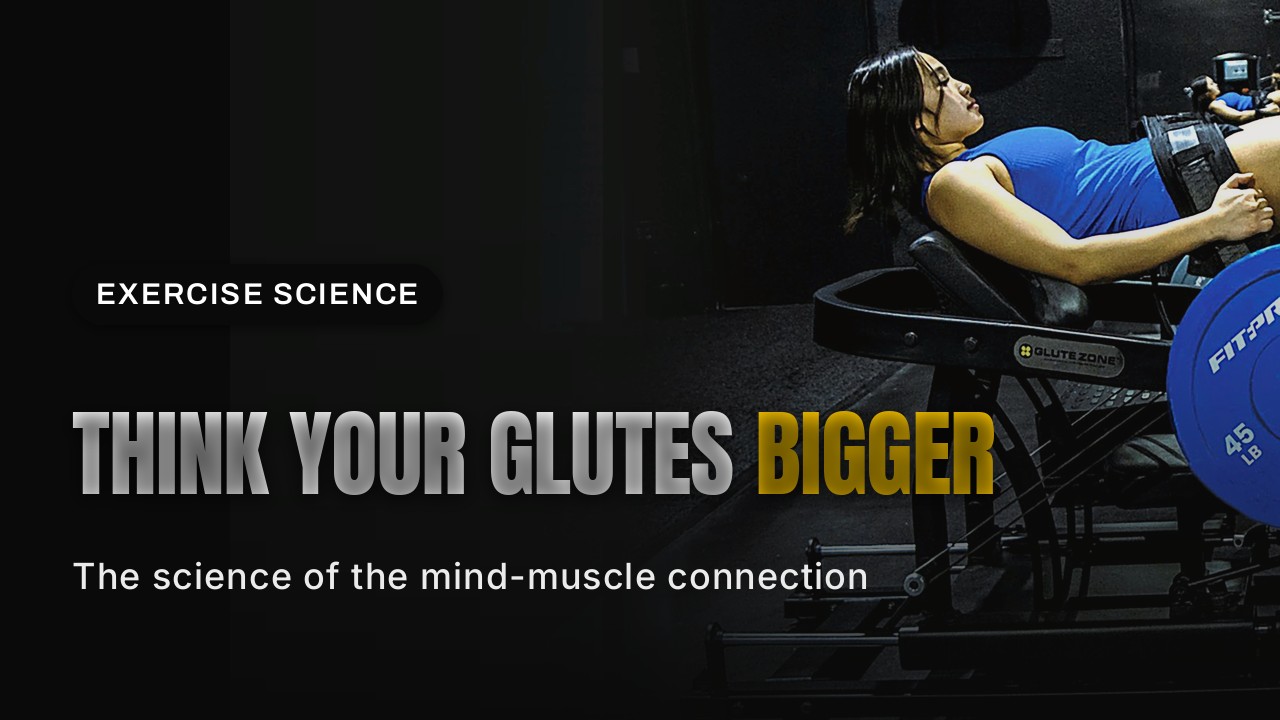

The Science of Glute Activation: Why Your Brain Is Your Best Glute Builder
Watch a busy gym floor for ten minutes and you’ll see it: two lifters doing the exact same hip thrusts, with the exact same weight, for the exact same reps — and getting completely different results. One drives through the heels, pauses at the top, and visibly squeezes every rep. The other just moves the weight up and down, scrolling mentally through their day. Gym owners program the reps, the sets, and the progressive overload. But the research points to a fourth variable that costs nothing to program and changes everything it touches: attention. Where a lifter’s mind goes, the muscle follows — and science now backs up what old-school bodybuilders preached for decades. This is the mind-muscle connection, and for glute training, it may be the most underused tool on your gym floor.
What the Research Says About the Mind-Muscle Connection
The mind-muscle connection (MMC) is simple to define: deliberately focusing on contracting the target muscle during a lift, rather than just moving the weight from point A to point B. For years it was dismissed as bro-science. Then the studies started arriving. In 2018, Brad Schoenfeld and colleagues published a landmark 8-week study in the European Journal of Sport Science. Thirty untrained college-aged men were split into two groups: one focused internally on contracting the target muscle during every rep, the other focused externally on the outcome of the lift. Both trained the same way — three sessions per week, four sets of 8–12 reps. The result: the internal-focus group grew their elbow flexors by 12.4% versus 6.9% for the external-focus group. The authors concluded that the mind-muscle connection enhances muscular hypertrophy. Earlier work pointed the same direction. Calatayud and colleagues (2016) found that lifters who focused on their chest muscles during the bench press increased pectoral muscle activity — though the effect faded at loads above 80% of one-rep max, a detail we’ll come back to. And in a review column on attentional focus, Schoenfeld and Bret Contreras concluded that the evidence supports using a mind-muscle connection to maximize muscle development. The takeaway is not subtle: attention is a training variable. And it matters most exactly where most lifters struggle to feel anything at all — the glutes.
Why Your Glutes Are the Hardest Muscle to "Feel"
Coaches have a name for the modern epidemic of dormant glutes: gluteal amnesia. Hours of sitting each day teach the body to move without the glutes — the quads and lower back take over, and the biggest, most powerful muscle in the human body goes quiet. The result is the most common complaint in glute training: ‘I just don’t feel it in my glutes.’ Research on attentional focus suggests this is a learnable skill, and that training experience helps — lifters who practice internal cueing get measurably better at activating the muscles they target. In other words, the member who ‘can’t feel their glutes’ isn’t broken. They’re untrained in the skill of feeling them. That’s a coaching problem — and for gym owners, a programming and equipment opportunity.
The EMG Evidence: Why the Hip Thrust Rewards Focus
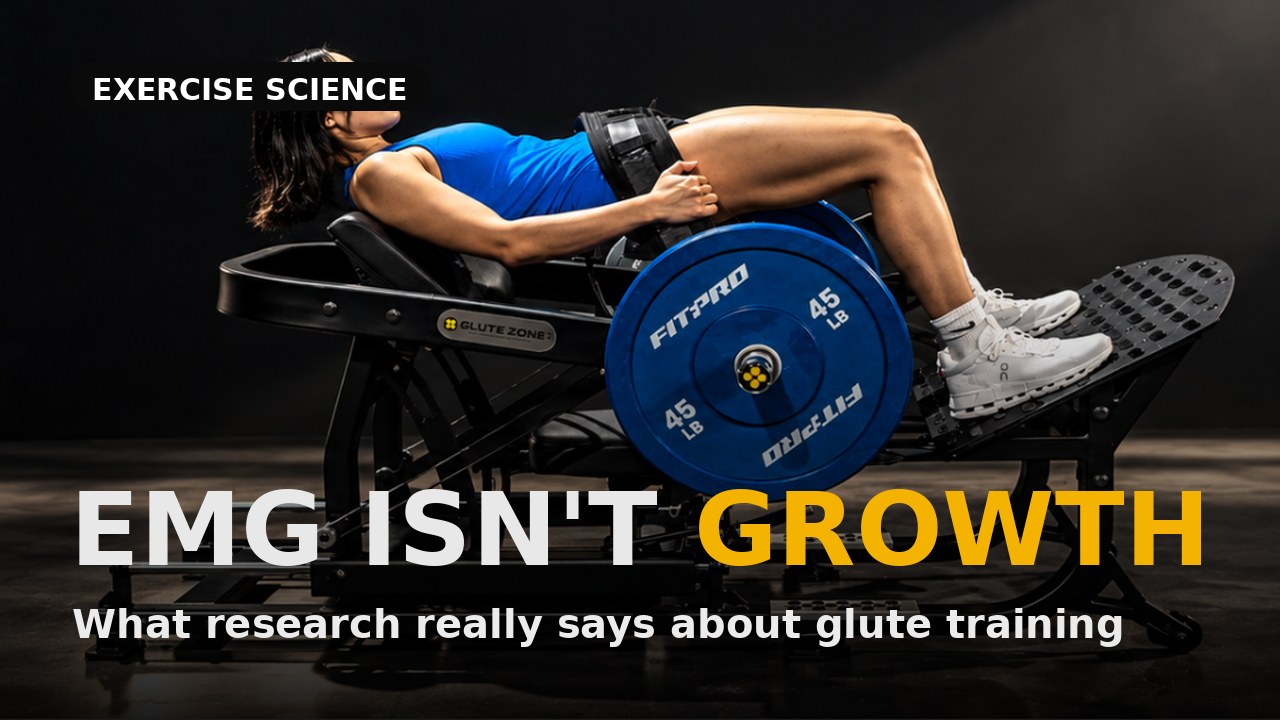
If you’re going to teach members to feel their glutes, start with the exercise where the feeling is strongest. Electromyography (EMG) research — which measures electrical activity in the muscle — consistently ranks the hip thrust at the top for glute activation. The landmark study comes from Bret Contreras and colleagues (2015), published in the Journal of Applied Biomechanics. Thirteen trained women performed estimated 10-rep-maximum back squats and barbell hip thrusts. The hip thrust produced dramatically higher gluteus maximus activity: mean activation of 69.5% versus 29.4% for the upper glutes, and 86.8% versus 45.4% for the lower glutes. Peak values told the same story — 216% versus 130% for the lower gluteus maximus. Why does the hip thrust light up the glutes this way? Later research by Vidar Andersen and colleagues (2018) found that tension on the hip extensors is greatest near lockout in the hip thrust — exactly the position where a lifter can pause, squeeze, and practice the mind-muscle connection at peak contraction. The exercise is practically designed for internal focus. An honest caveat, because the science deserves it: EMG measures activation, not growth. A 9-week training study comparing hip thrust and squat training found both produced similar gluteal hypertrophy (the squat built more thigh muscle). So the hip thrust isn’t magic — but combined with deliberate internal focus, it gives lifters the strongest possible feedback loop: maximum activation, maximum feel, maximum control. For building the mind-muscle connection, no exercise teaches the lesson faster.
5 Cues That Build the Mind-Muscle Connection on Hip Thrusts
Whether your members train on your floor or in a home gym, these evidence-backed cues turn mindless reps into glute-building reps:
1
Pause two seconds at lockout. Tension peaks at full hip extension, so own that position. Squeeze deliberately instead of rushing into the next rep.
2
Dial in the knee angle. Aim for roughly 90 degrees at the knees at the top of the thrust — this maximizes glute engagement while keeping knees and lower back safe.
3
Slow the lowering phase. A controlled 2–3 second eccentric keeps the glutes under tension and keeps attention on the muscle instead of on momentum.
4
Touch the target. A hand on the glute during warm-up sets gives the brain a tactile anchor — physical touch dramatically speeds up the ‘feeling’ learning curve.
5
Train it at moderate loads. Remember the bench press finding: internal focus boosted muscle activity, but the effect faded above 80% of 1RM. Heavy singles build strength; the mind-muscle connection is a hypertrophy tool. Use it in the 8–15 rep range.
What This Means for Gym Owners
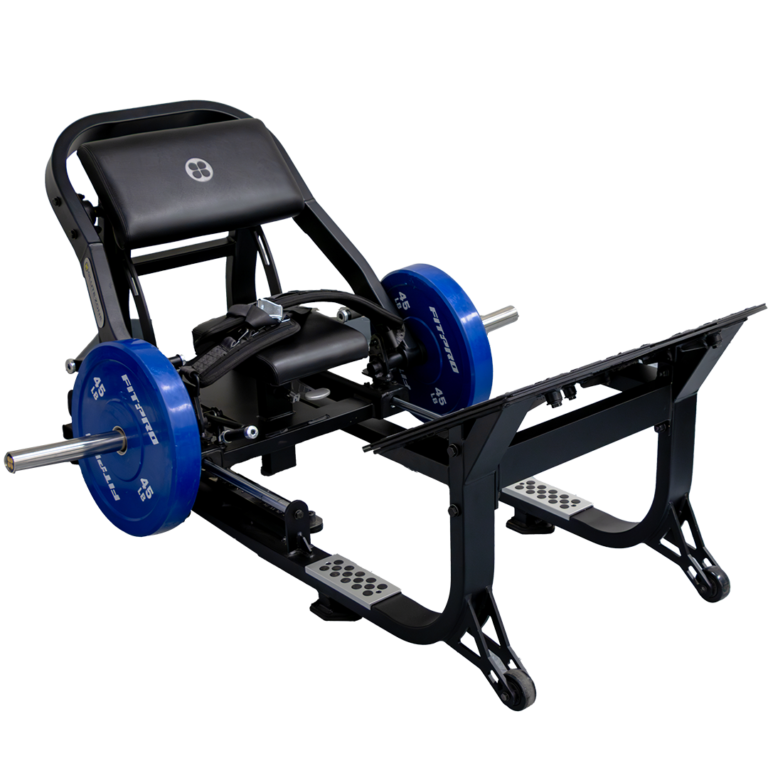
Here’s where the science becomes a business decision. Members who feel the target muscle get better results, enjoy training more, and renew. Members who never feel their glutes assume glute training ‘doesn’t work for them’ — and drift away from that corner of your floor. A dedicated, guided hip thrust machine removes the biggest barrier to the mind-muscle connection: the stability tax. On a barbell, a lifter’s attention splits between balancing the load, bracing the core, and finding the glutes. On a guided machine, stability is handled — so 100% of attention can go internal. The machine does the thinking about balance; the member does the thinking about the muscle. Practical moves for your floor: print the five cues above on a small placard on the machine. Script your trainers to teach the two-second pause during onboarding. Program dedicated glute sessions 2–3 times per week with at least 48 hours between them. Small coaching infrastructure, measurable difference in member experience.
The Machine That Makes Connection Automatic
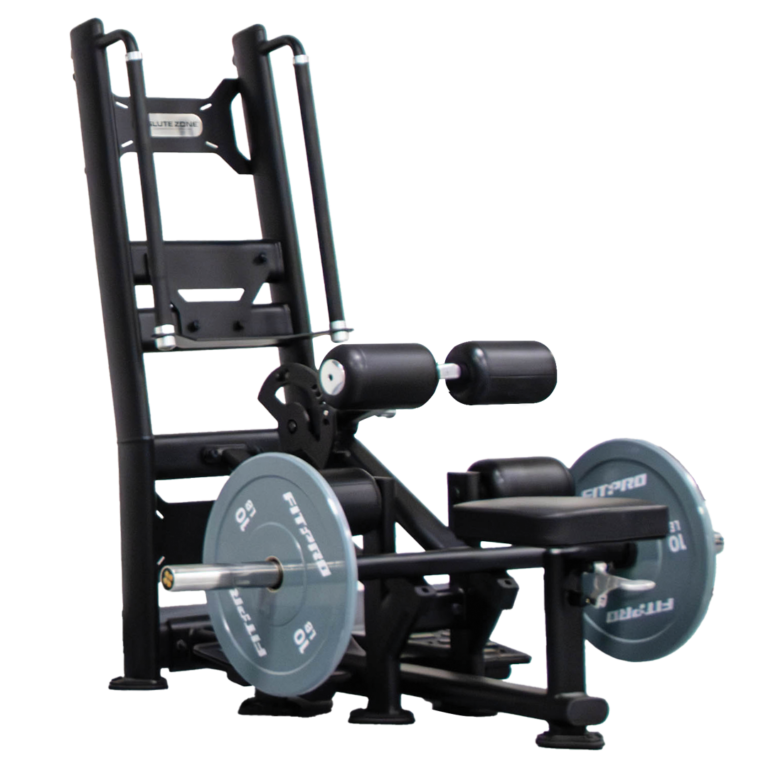
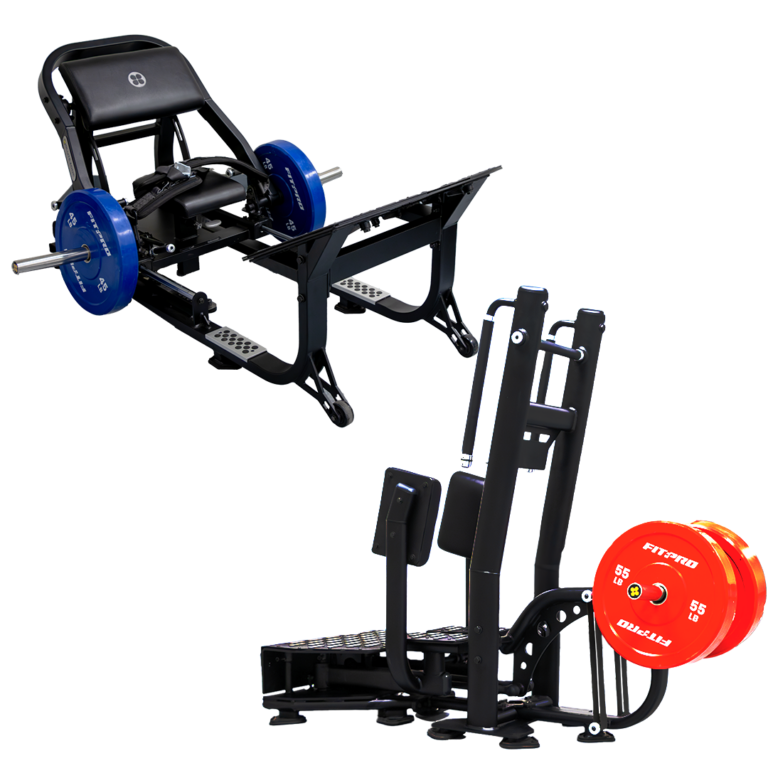
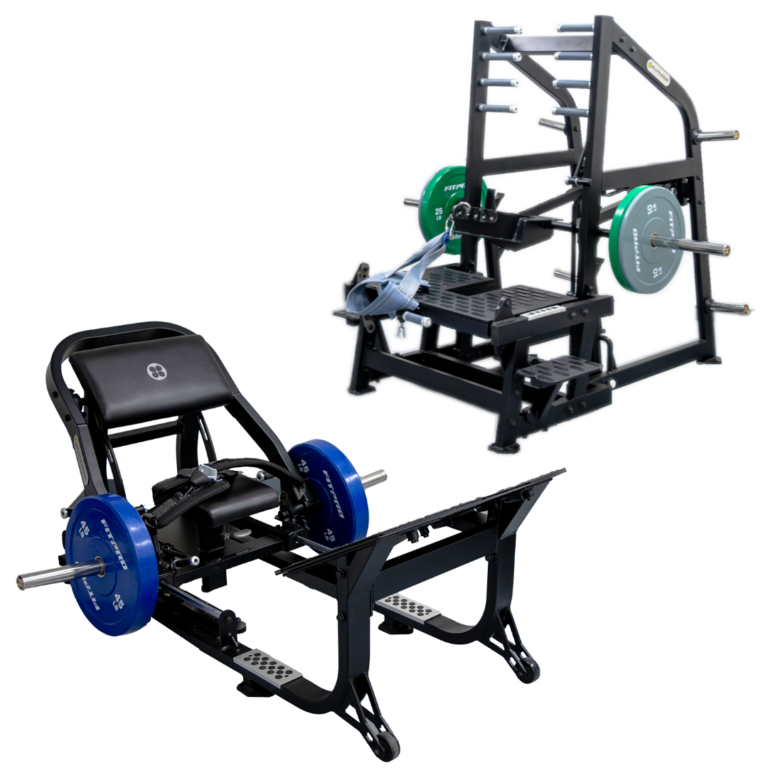
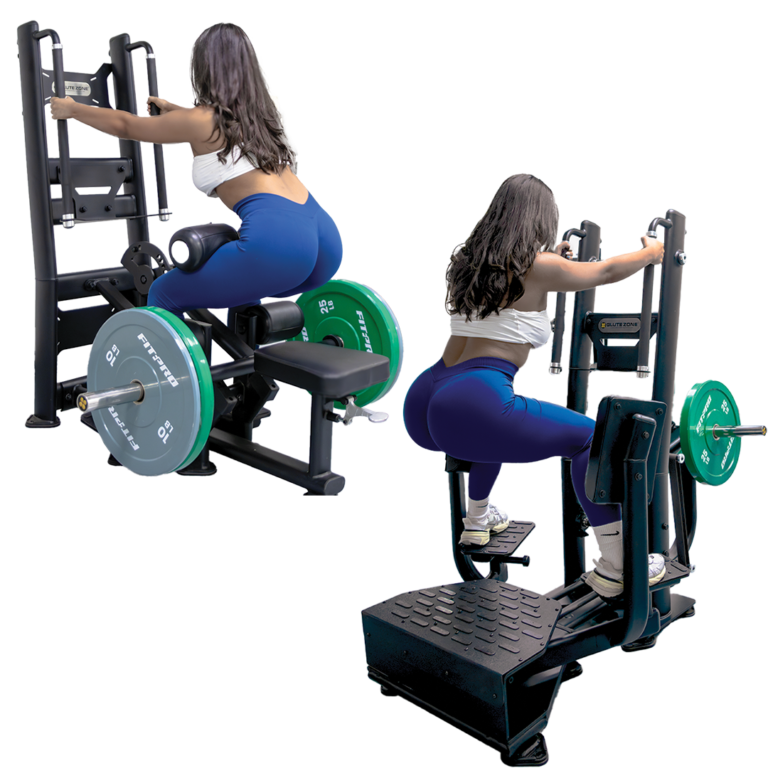
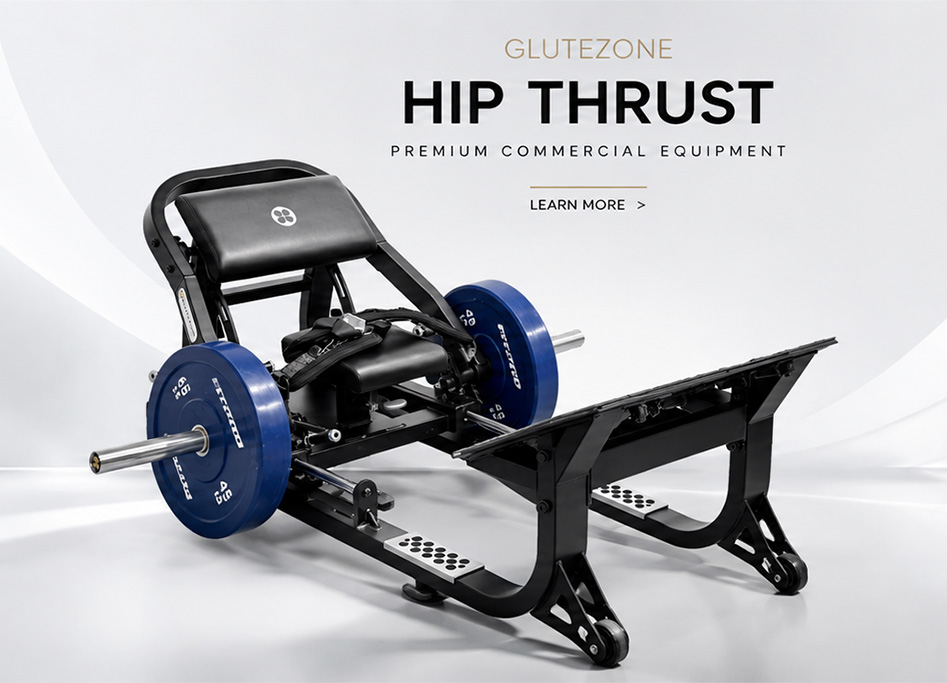
Equipment either fights the mind-muscle connection or feeds it. The GluteZone Hip Thrust Machine is built for the second job: a 16-point forward/backward adjustable seat dials every body type into the position where the glutes — not the quads or lower back — do the work. The commercial-grade steel frame supports up to 550 lbs on the plate horns for advanced lifters, while the roughly 357-lb base with front wheels stays planted rep after rep. Anchor-hole ports on each foot allow optional floor bolting for high-traffic facilities, and the plate-loaded design accepts optional resistance bands for accommodating resistance at lockout — exactly where focus matters most. For gyms building a complete glute zone, the Elite Strength Duo pairs the Hip Thrust with the Pendulum Squat in one commercial-grade package, and the Glute Trinity Bundle covers glute max, medius, and minimus across three machines. Serious home-gym owners get the same commercial-grade mechanics that make internal focus effortless — proof that a machine built for gyms is the one serious home lifters end up choosing too.
Ready to put the science on your gym floor?
Get a quote on the GluteZone Hip Thrust Machine — with Affirm financing available to spread the investment.
Sources
- Schoenfeld, B.J., et al. (2018). Differential effects of attentional focus strategies during long-term resistance training. European Journal of Sport Science, 18(5), 705–712. https://onlinelibrary.wiley.com/doi/10.1080/17461391.2018.1447020
- Schoenfeld, B.J., & Contreras, B. Attentional Focus for Maximizing Muscle Development: The Mind Muscle Connection. https://bretcontreras.com/wp-content/uploads/Attentional-Focus-for-Maximizing-Muscle-Development-The-Mind-Muscle-Connection.pdf
- Contreras, B., et al. (2015). A Comparison of Gluteus Maximus, Biceps Femoris, and Vastus Lateralis EMG Activity in the Back Squat and Barbell Hip Thrust Exercises. Journal of Applied Biomechanics. https://www.researchgate.net/publication/280498065_A_Comparison_of_Gluteus_Maximus_Biceps_Femoris_and_Vastus_Lateralis_EMG_Activity_in_the_Back_Squat_and_Barbell_Hip_Thrust_Exercises
- Andersen, V., et al. (2018) — tension on the hip extensors greatest near lockout in the hip thrust (via https://evidencebasedmuscle.com/the-study-of-the-year-hip-thrust-vs-squats-for-glute-growth/)
- 2023 study: Hip thrust and back squat training elicit similar gluteus muscle hypertrophy and transfer similarly to the deadlift (9-week MRI study). https://www.biorxiv.org/content/10.1101/2023.06.21.545949v1
- Calatayud, J., et al. (2016) — internal focus increased pectoral activity during bench press; effect diminished above 80% 1RM (via https://www.bodybuildingmealplan.com/mind-muscle-connection/page/44/)