





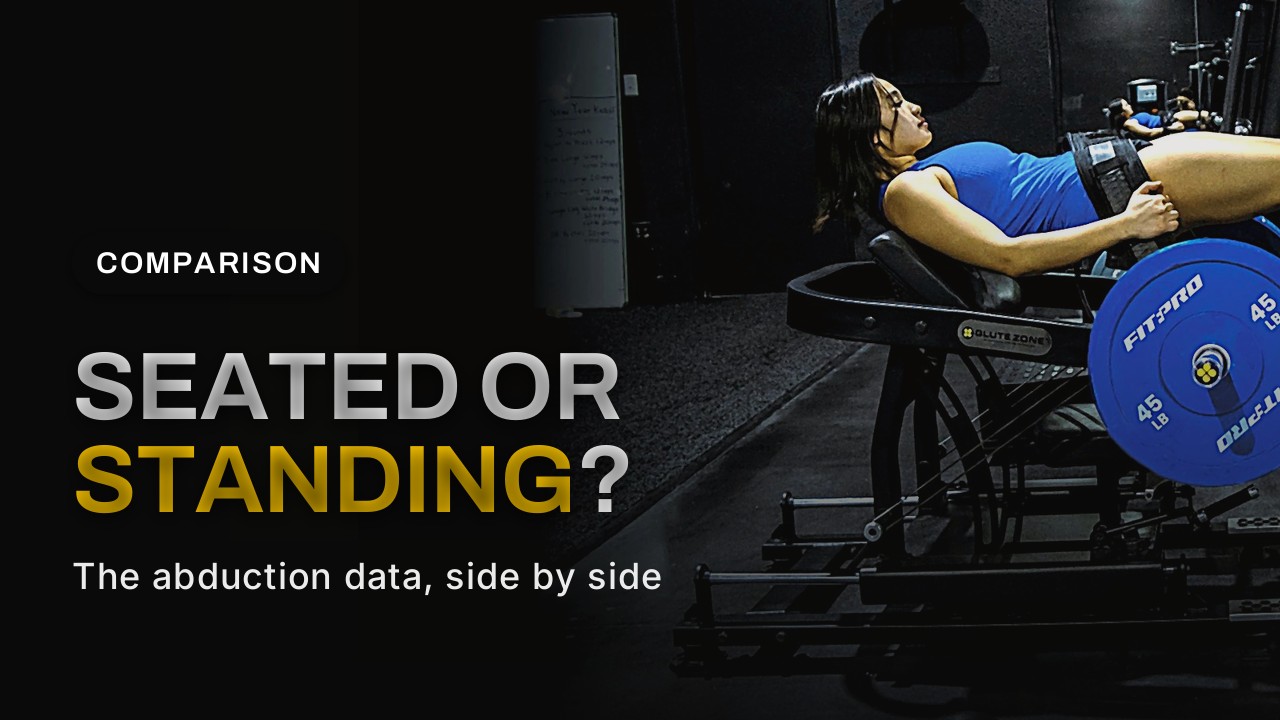

If you run a gym, you have seen the debate play out on your own floor. One member swears by the seated hip abduction machine, leaning forward and chasing a burn. Another member will only train abduction standing, one leg at a time, holding the handles and bracing hard. Both say their version is the one that builds glutes. So, does position actually matter, or is this just preference dressed up as science? The honest answer is that position changes the job. Seated and standing abduction both train hip abduction, the movement of taking the leg away from the midline. Both involve the gluteus medius and gluteus minimus. What changes is how much isolation you get, how much stability you have to produce yourself, and how much the tensor fasciae latae, or TFL, tries to take over. For gym owners choosing equipment, and for home gym buyers choosing one piece over another, that difference is the whole buying decision.
Key numbers first
80%
Gluteus medius activation on the seated hip abduction machine at high effort in the systematic review data.
3x
Higher gluteus medius to TFL ratio at 135 degrees of hip flexion versus straighter positions in seated abduction research.
86%
Upper gluteus maximus activation at 80 degrees of hip flexion in hard isometric abduction, up from 30% with hips straight.
Those numbers need context, and we will give it below. A high EMG reading does not automatically mean more long term growth. It does tell you which muscle is doing the work in that position, and that is exactly what members are arguing about.
What the seated machine does best: isolation
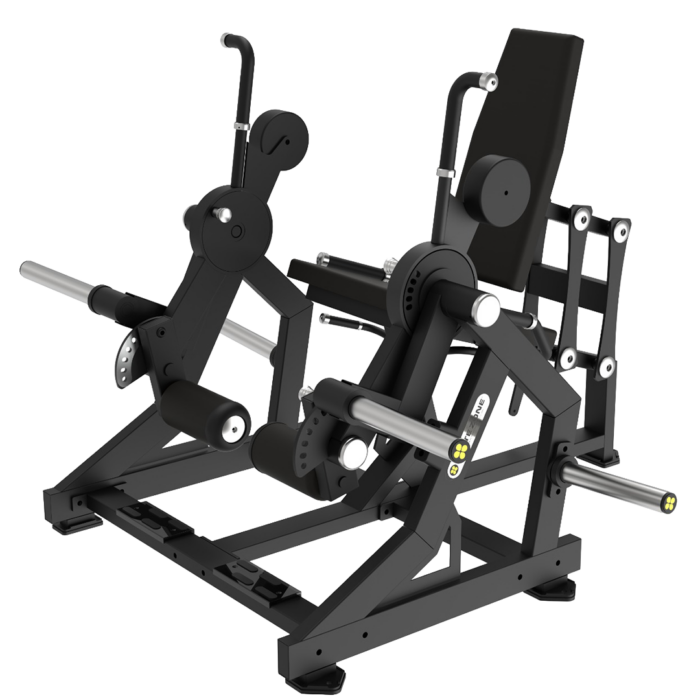
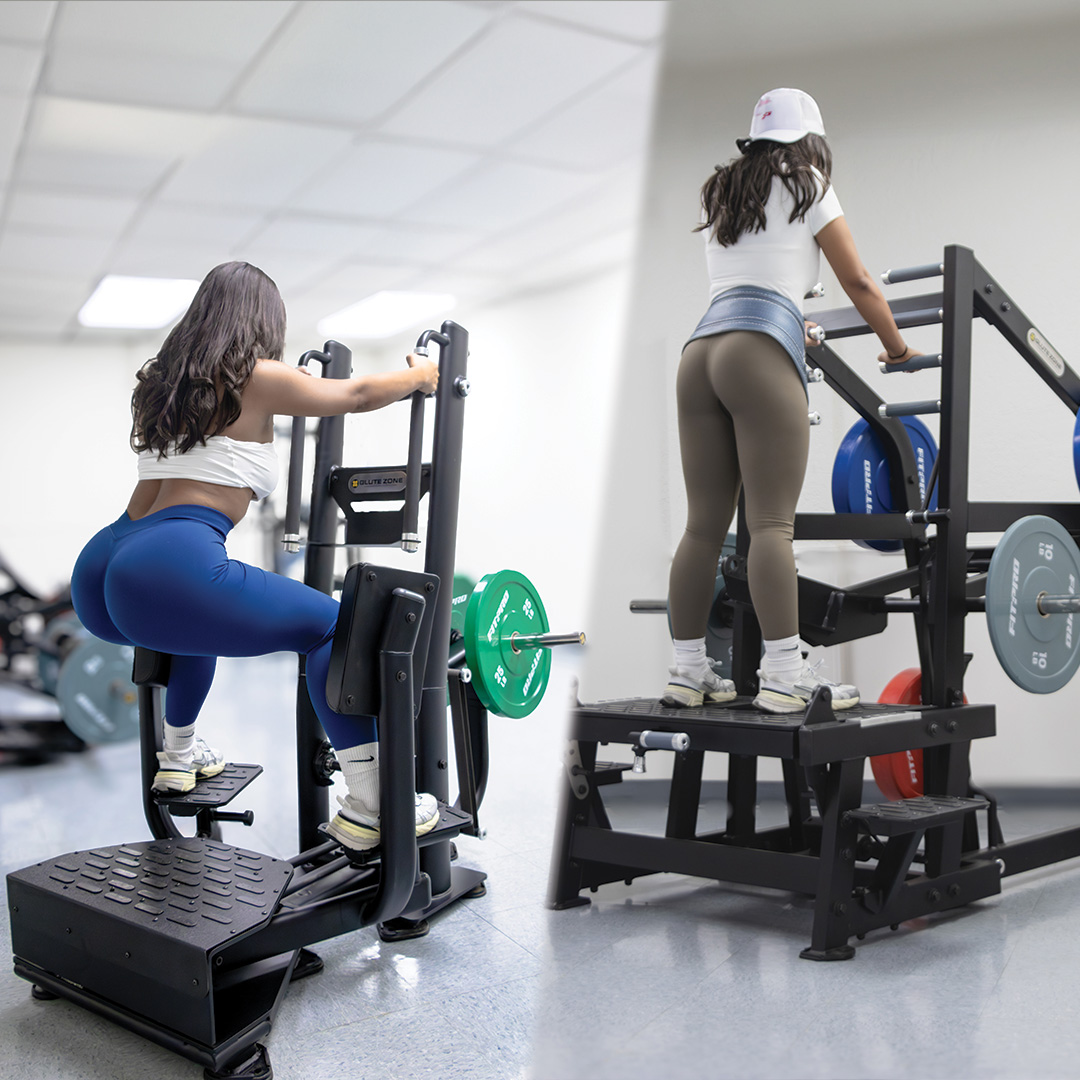
Sit down, set the pads outside your knees, and push out. Your pelvis is supported by the seat and back pad, so you do not have to balance. That support is not a weakness. It is the reason the seated version isolates so well. A systematic review in the International Journal of Sports Physical Therapy pooled dynamic hip abduction and external rotation exercises. For the seated position, the pooled average was 65.2 percent of maximal voluntary isometric contraction for gluteus medius and 66.7 percent for gluteus maximus. At the highest effort level in the included seated study, gluteus medius reached 80 percent and gluteus maximus reached about 70.8 percent. The review authors were clear about the limit: only one study with 16 people used the seated position, so treat the ranking as promising, not final.
A second study helps explain why the machine is popular. In the Journal of Bodywork and Movement Therapies in 2022, de Almeida Paz and colleagues compared the hip abductor machine with side lying abduction and the clamshell in 11 trained men doing 10 maximal repetitions. Gluteus medius activity did not differ between the three exercises. TFL activity was higher in side lying, and the gluteus medius to TFL ratio was highest on the machine in both the lifting and lowering phases. In plain language: the machine did not win by turning the medius up louder. It won by keeping the TFL quieter. For a beginner, a returning member, or anyone who wants direct outer glute volume without a lot of setup, that matters. Seated abduction is easy to teach, easy to load in small steps, and easy to repeat the same way next week.
The angle inside the seated exercise matters too
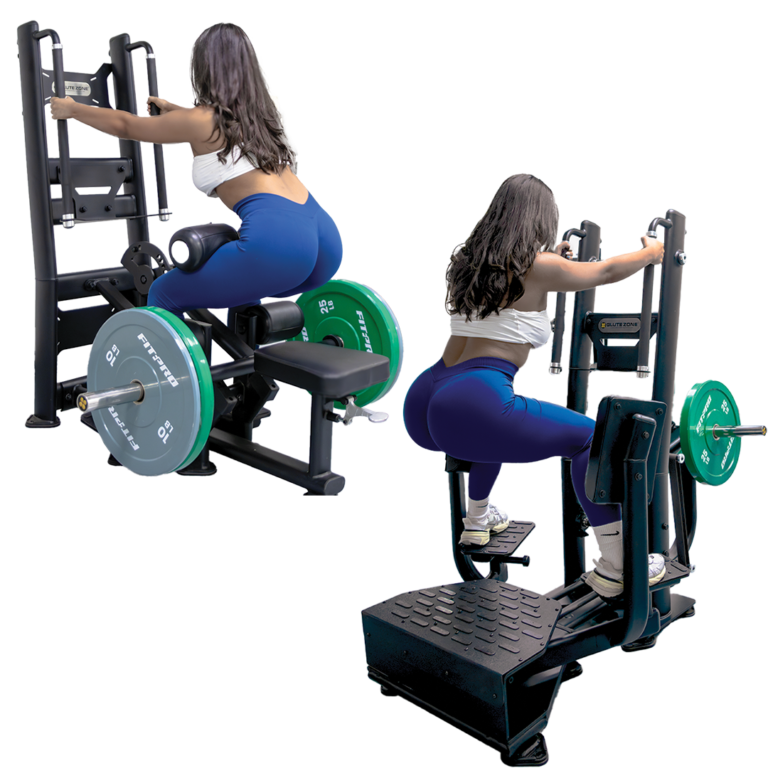
Seated does not mean one fixed position. Hip flexion angle changes the bias. Research on seated abduction at 45, 90, and 135 degrees of hip flexion, using 60 percent of a six rep max in 14 volunteers, found a clear pattern. Gluteus medius activity was higher at 45 degrees than at 135 degrees, TFL activity fell as flexion increased, and the gluteus medius to TFL ratio tripled at 135 degrees. More flexion made the exercise more selective, even if the raw medius signal was not highest there. Older isometric work summarized in recent programming guides points the same way for the upper gluteus maximus. As hip flexion rose toward 80 degrees, upper gluteus maximus activity rose from about 30 percent to about 86 percent of max, TFL fell from about 70 percent to about 45 percent, and gluteus medius stayed in a similar range. That is why leaning forward on a seated machine feels different. You are not imagining it. You are shifting more work toward the upper glute max and away from the TFL, while the medius keeps working. Practical rule for coaches: sit tall when you want a clean medius focus. Lean forward in a controlled way when you want more upper glute max in the mix. Keep the lean consistent within a training block so progress is comparable.
What standing abduction does best: stability under load
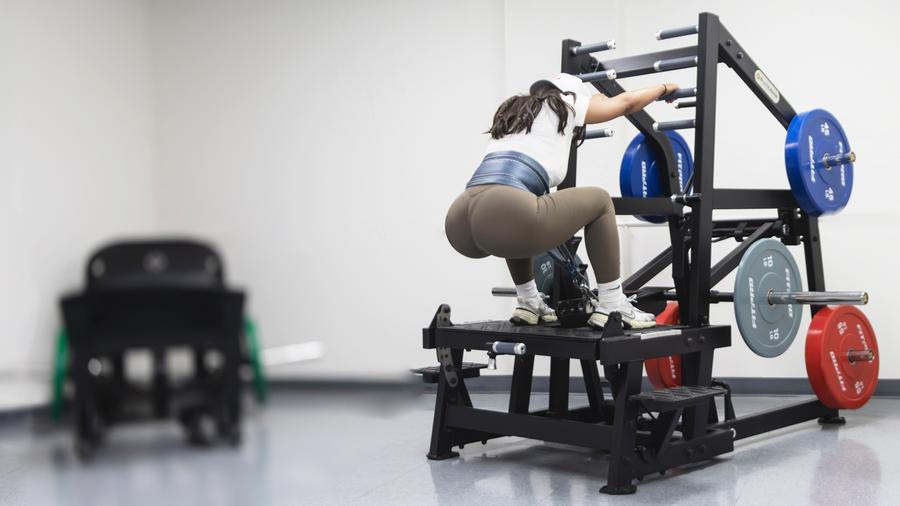
Stand up and the exercise changes character. Now one leg works while the other leg, and the whole pelvis, have to stay level. The working leg abducts. The support side gluteus medius works to stop the pelvis from dropping. You get abduction training and single leg stability training in the same set. In that same systematic review, standing abduction variations pooled lower for pure isolation, at 47.2 percent for gluteus medius and 34.7 percent for gluteus maximus on average. That does not make standing worse. It makes it different. The load is shared with stabilizers, balance, and pelvic control, which is precisely the demand in walking, running, lunging, and sport.
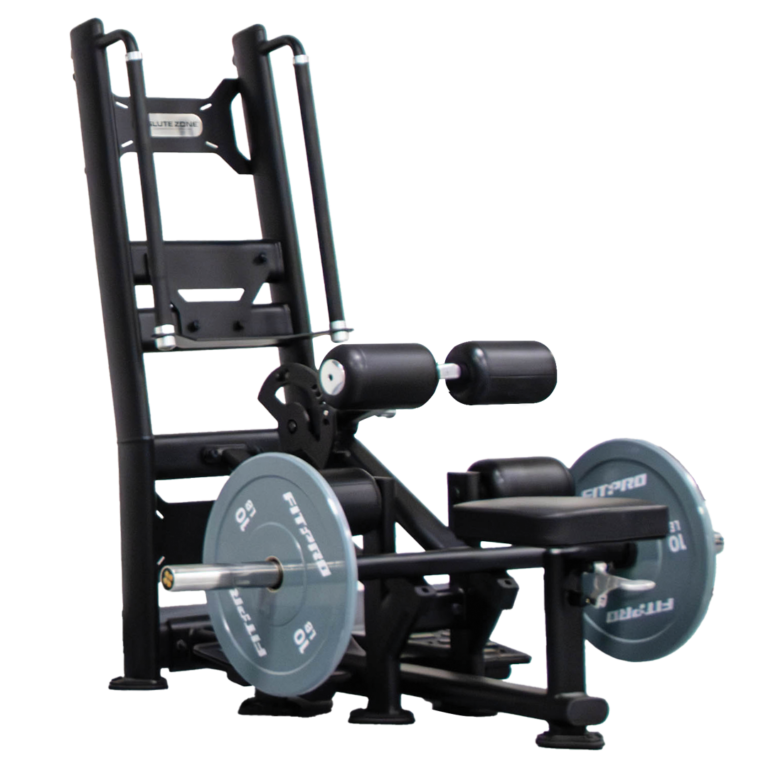
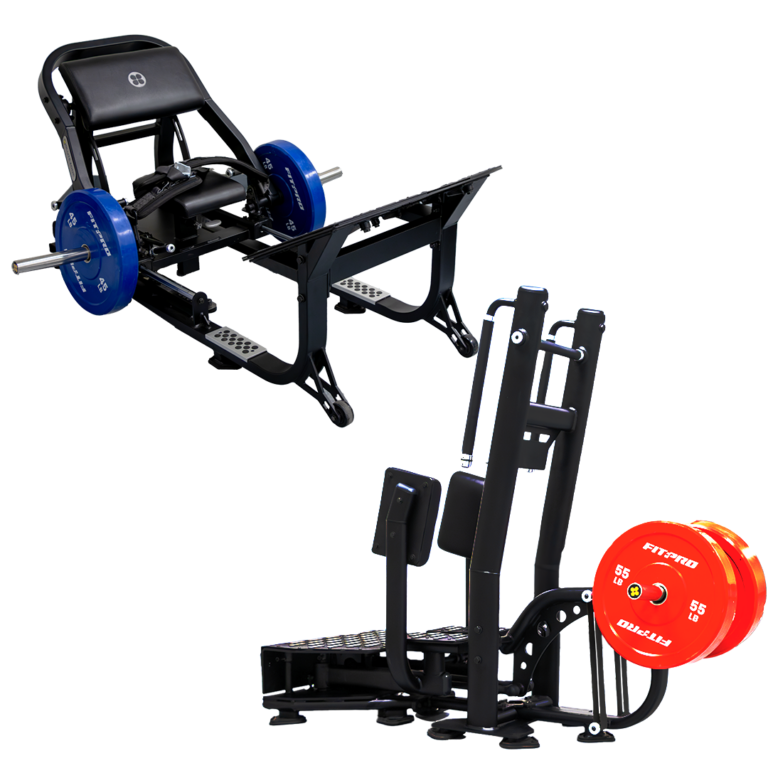
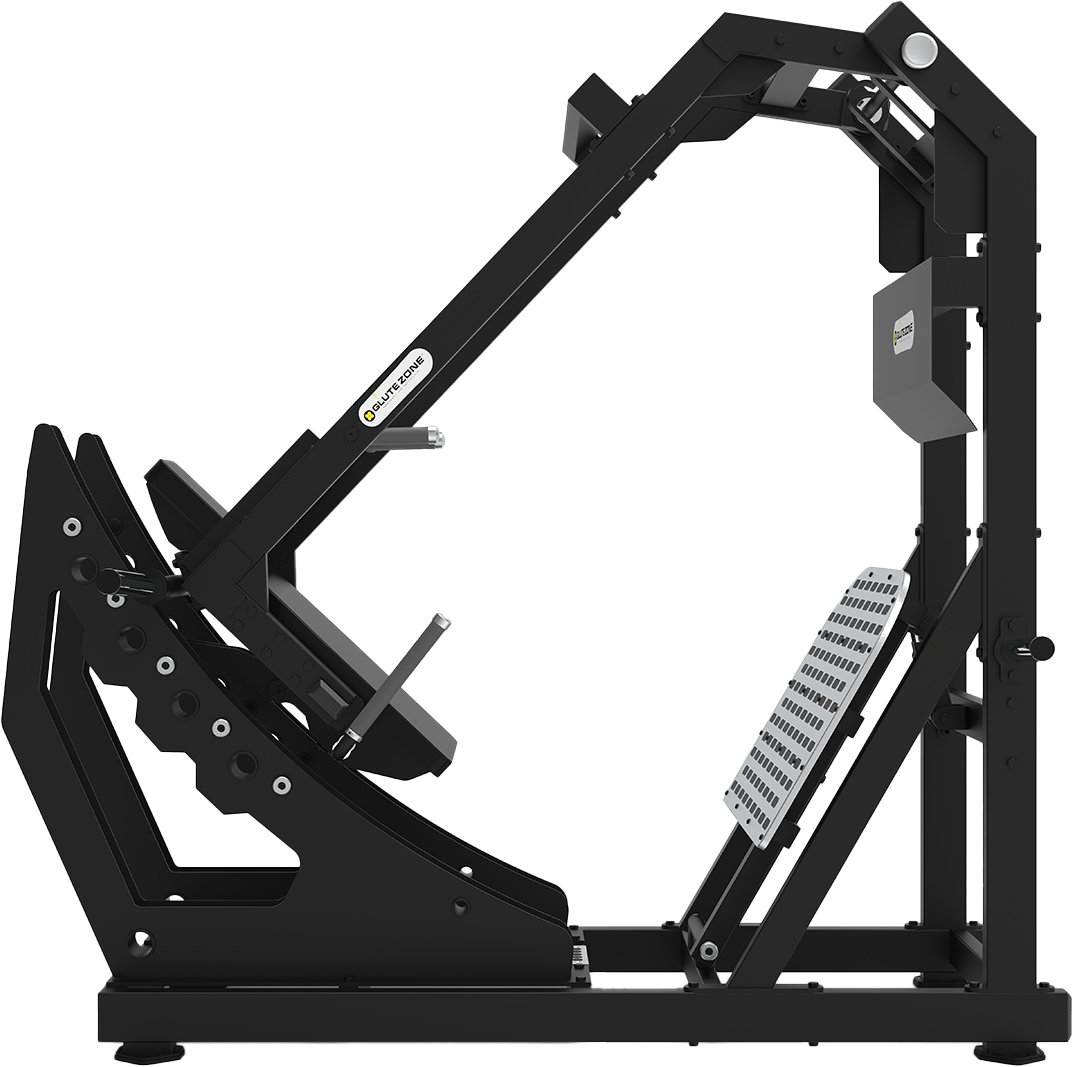
This is where the GluteZone Standing Abductor fits the floor. Verified today on its official product page on glutezone.com, it is listed at $1,799, described as a commercial grade, plate loaded machine for glute isolation, with resistance band support, and a focus on glute medius, core, and hip stabilizers. The product page itself contrasts the positions in the same terms the research does: standing requires balance and gives a more natural range, while a seat stabilizes the user and limits other muscle engagement. We are not adding specs beyond that page. If you need dimensions or current stock status for a quote, ask the team directly, because the page showed out of stock at the time we checked today. For advanced members, athletes, and anyone whose knees cave in on squats or whose pelvis drops on single leg work, standing abduction gives a training effect a seat cannot copy. For home gym buyers with limited space, a standing, plate loaded option can also do double duty: direct outer glute work plus stability work, without needing a large selectorized stack.
Side by side: the decision
- Goal pure isolation and easy progression: seated.
- Goal upper glute shape and forward lean option: seated leaning forward.
- Goal pelvic control and single leg stability: standing.
- Goal beginner confidence: seated.
- Goal athletic carryover and side to side differences: standing.
- Goal adding glute volume without heavy systemic fatigue: tie.
How smart gyms program both
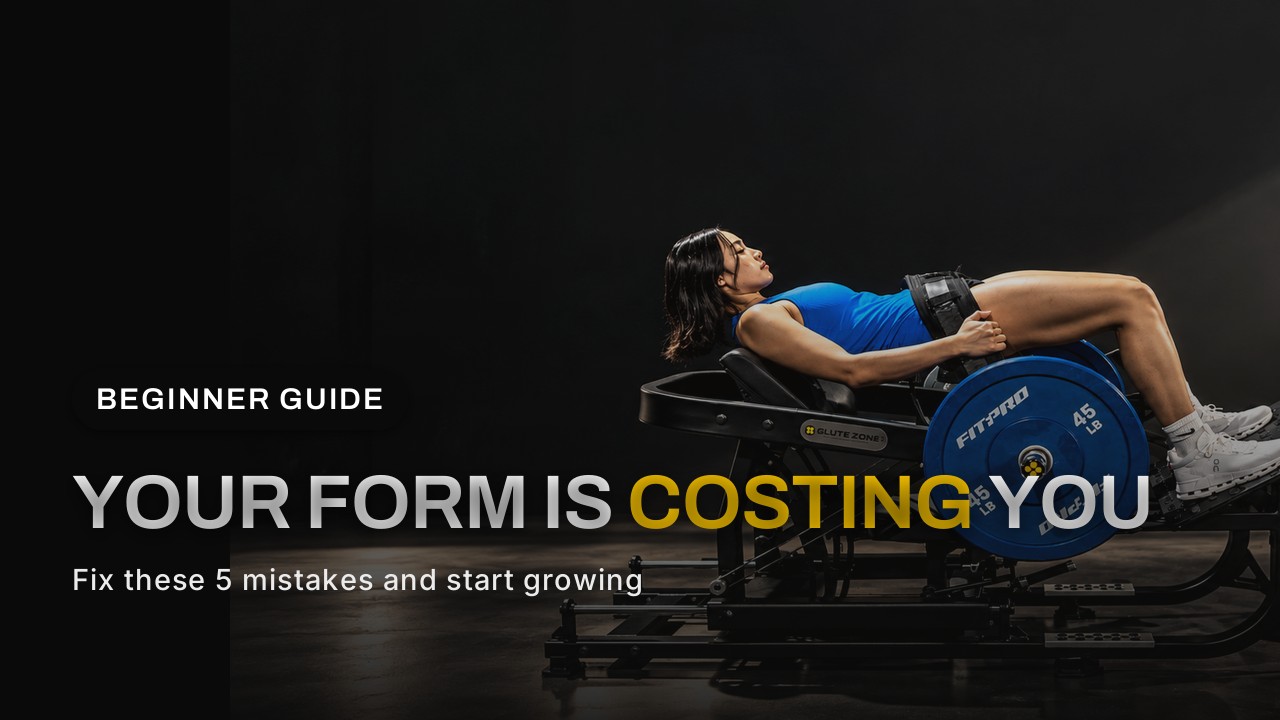
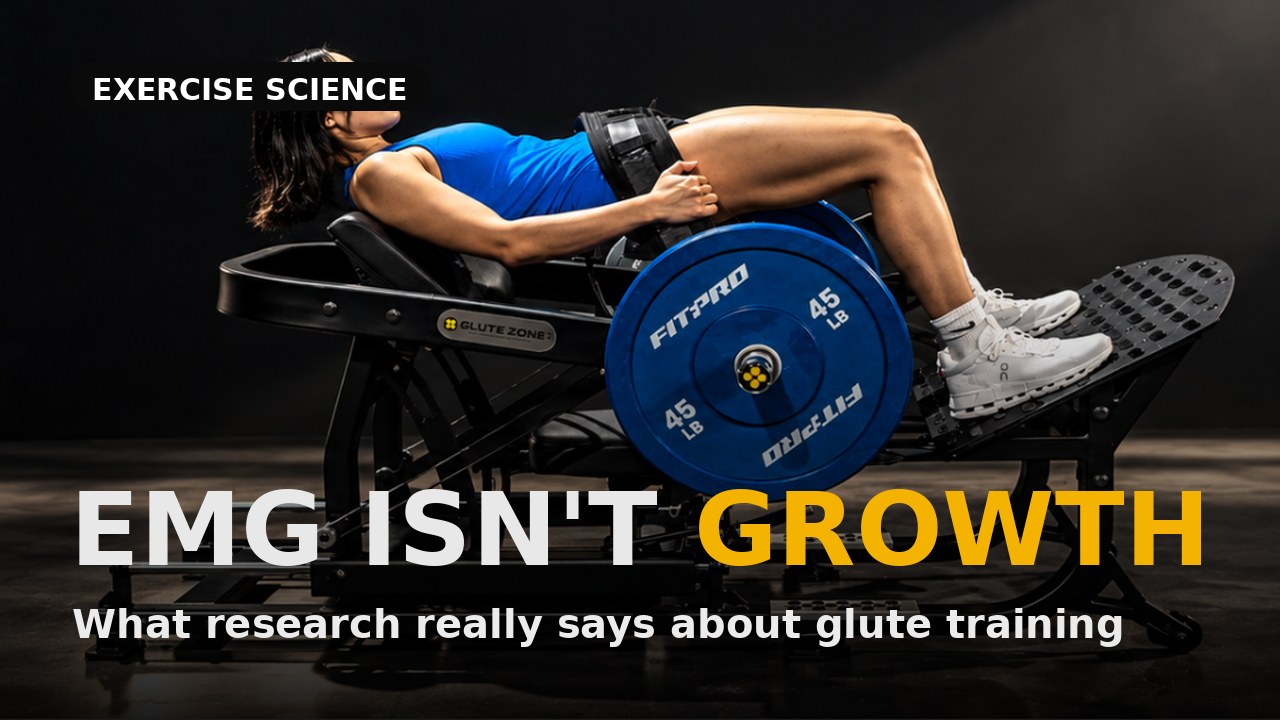
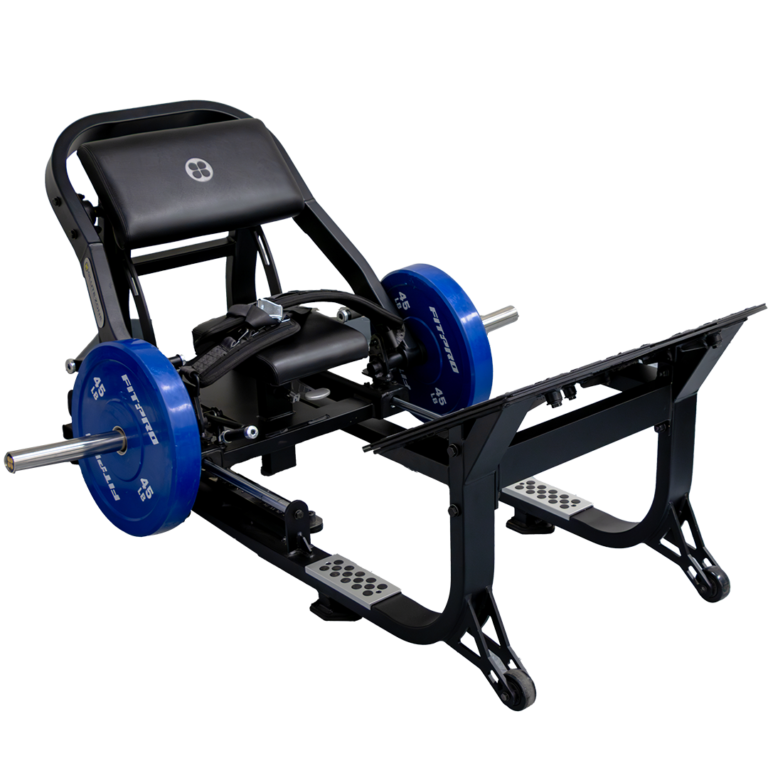
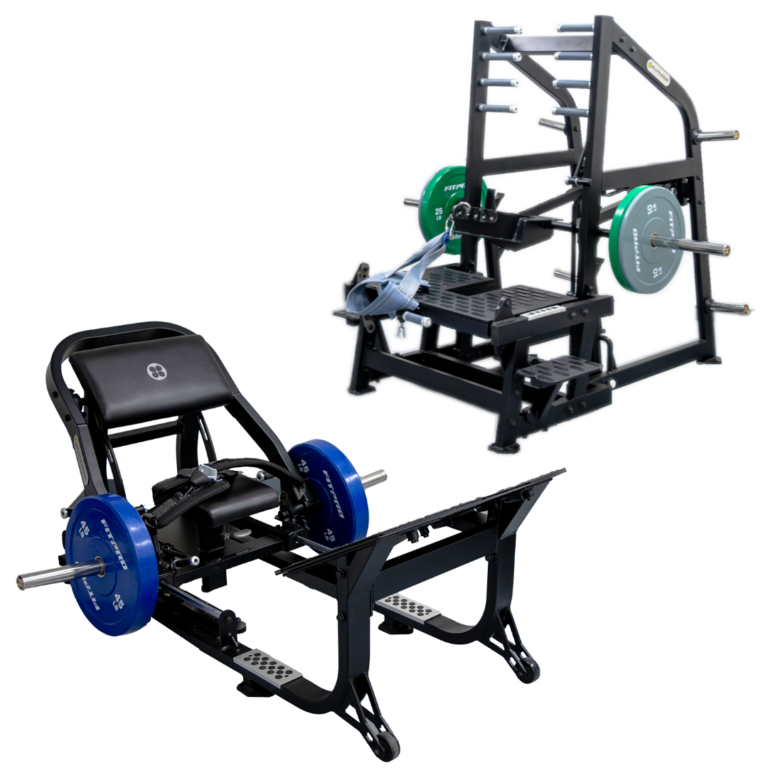
You do not have to pick a tribe. Most complete glute areas pair a big hip extension movement with an abduction movement. Start with the GluteZone Hip Thrust Machine. Verified today on glutezone.com, that machine is $2,239, plate loaded, with a 16 point adjustable seat, up to 550 lb on the plate horns, and a 357 lb frame. Then add abduction: 2 to 4 sets of 10 to 20 controlled reps, brief pause at widest point, 2 to 3 second return. Alternate position across the week if you have both. Pair once a week with Pendulum Squat for complete lower body development.
What this means for gym owners
Members do not renew because a machine exists. They renew because they can feel a muscle they could not feel before, and because the area looks intentional. A dedicated abduction option signals your glute area is not an afterthought. For a home gym: if your gap is feeling outer glutes, seated is the easier first win. If your gap is stability, standing is the better first win. Either way abduction completes hip thrusts and squats, it does not replace them.
FAQ
Does the hip abductor machine really build glutes?
It builds gluteus medius and minimus directly, and can involve upper gluteus maximus when hip flexion increases. Combine with hip thrusts for overall size.
Is standing better than seated for hypertrophy?
Not automatically. Seated shows higher pooled medius activation and better isolation. Standing adds stability. Hypertrophy depends on progressive load, volume, consistency.
Why does my TFL feel it more?
TFL also abducts. Machine abduction showed better medius to TFL ratio than side lying in 2022 study, more hip flexion reduced TFL. Reduce load, control return, try more flexed position.
How often train abduction?
Two sessions per week for most, at least a day between hard sessions.
The verdict
Does it matter? Yes, but not as social media frames it. Seated is the isolation tool. Standing is the stability tool.
Ready to build a glute area your members will actually use? Talk to GluteZone about the Standing Abductor, the Hip Thrust Machine, and a complete zone layout. Financing is available through Affirm, so you can equip now and pay over time. Get a quote: https://glutezone.com/contact/
Sources
- Macadam P, Cronin J, Contreras B. Systematic review, International Journal of Sports Physical Therapy, 2015.
- de Almeida Paz I et al, Journal of Bodywork and Movement Therapies, 2022, 30:160-167, PubMed 35500965.
- Farias AM et al, seated abduction at 45, 90, 135 degrees.
- Fujisawa H et al 2014 isometric work by hip flexion angle.
- GluteZone Standing Abductor product page verified Oct 15 2026.
- GluteZone Hip Thrust Machine product page verified Oct 15 2026.