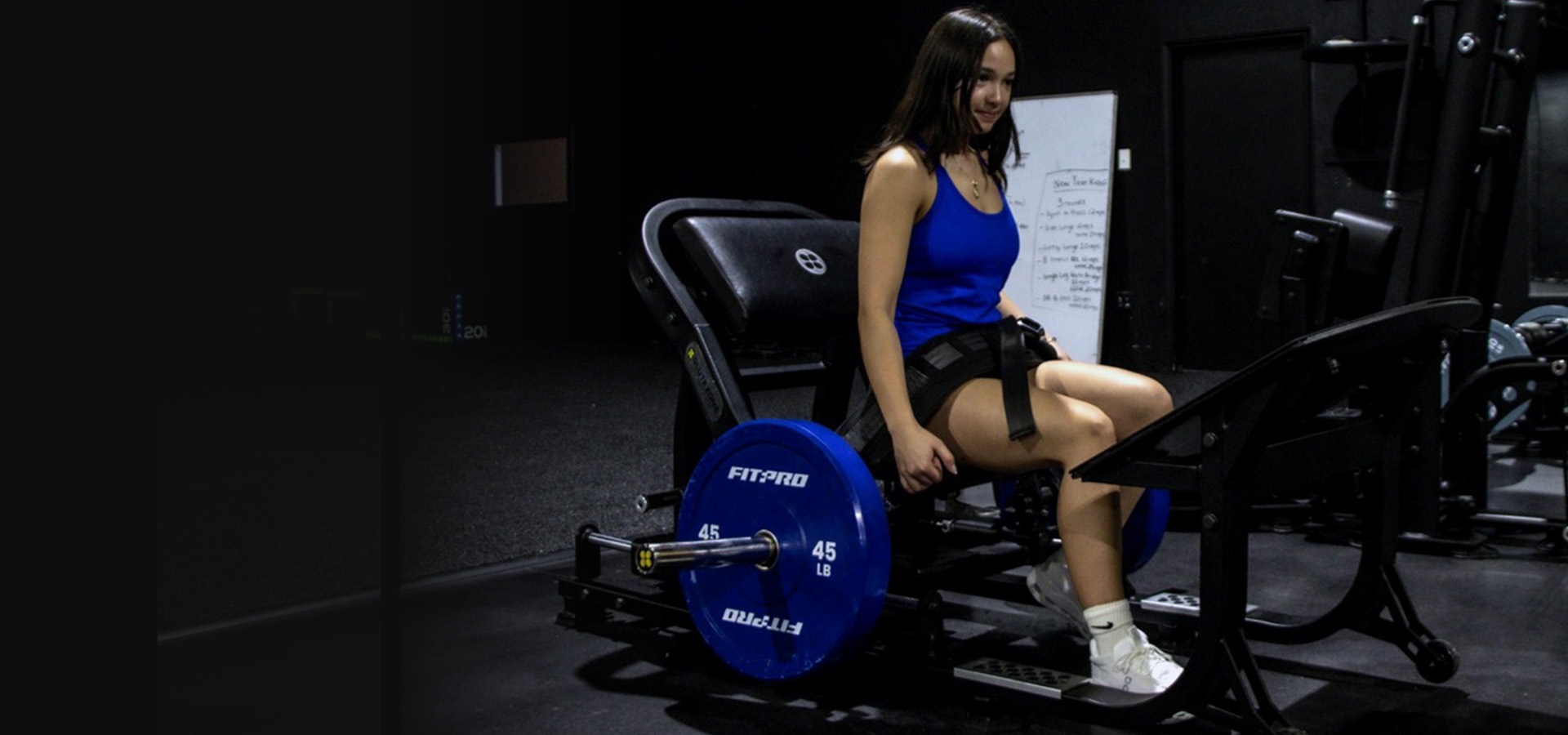

Two lifters can use the same hip thrust machine, load the same plates, and walk away reporting completely different muscles. One feels all glute. The other feels hamstrings, quads, or a cranky lower back. Most of the time the difference is not effort or genetics. It is where their feet were standing when the set started.
Foot placement is the cheapest coaching tool in glute training. It costs nothing, it takes ten seconds, and on a machine with an adjustable seat it is repeatable from session to session. This guide breaks down what the research says about foot position on the hip thrust, how to set the standard position, and when to move your feet on purpose to change the target. It works the same in a commercial gym and in a serious home gym.
90 degrees
Knee angle at the top in the standard hip thrust setup, with shins vertical
86.2%
Gluteus maximus activity, percent of maximum, in the rotation hip thrust variant in Collazo Garcia 2020
75.3 to 23.5
Hamstring activity drop in Lehecka 2017 when knee flexion moved from 90 to 135 degrees in the bridge
16
Forward and backward seat positions on the GluteZone Hip Thrust Machine
The Standard Position: Shins Vertical at the Top
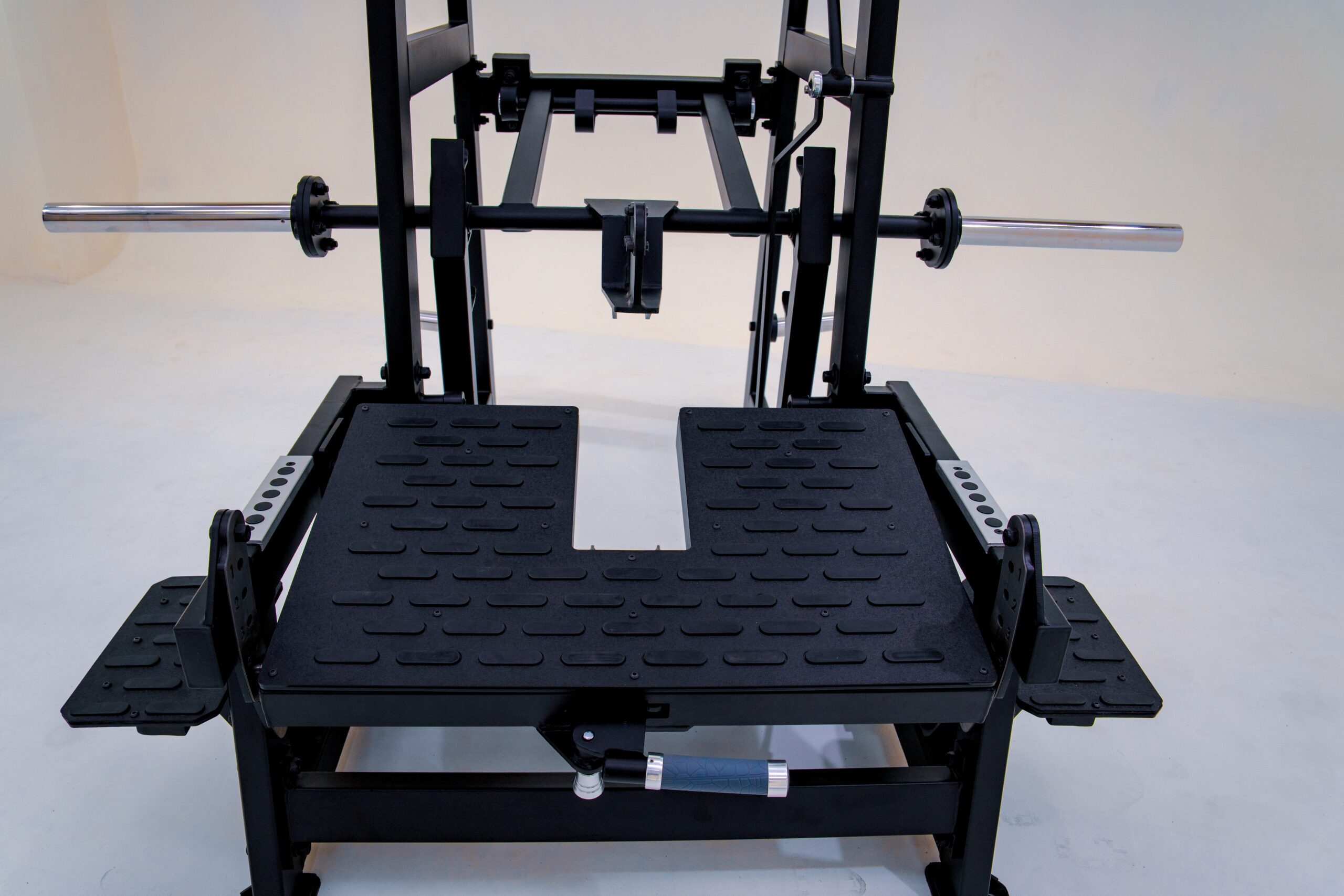
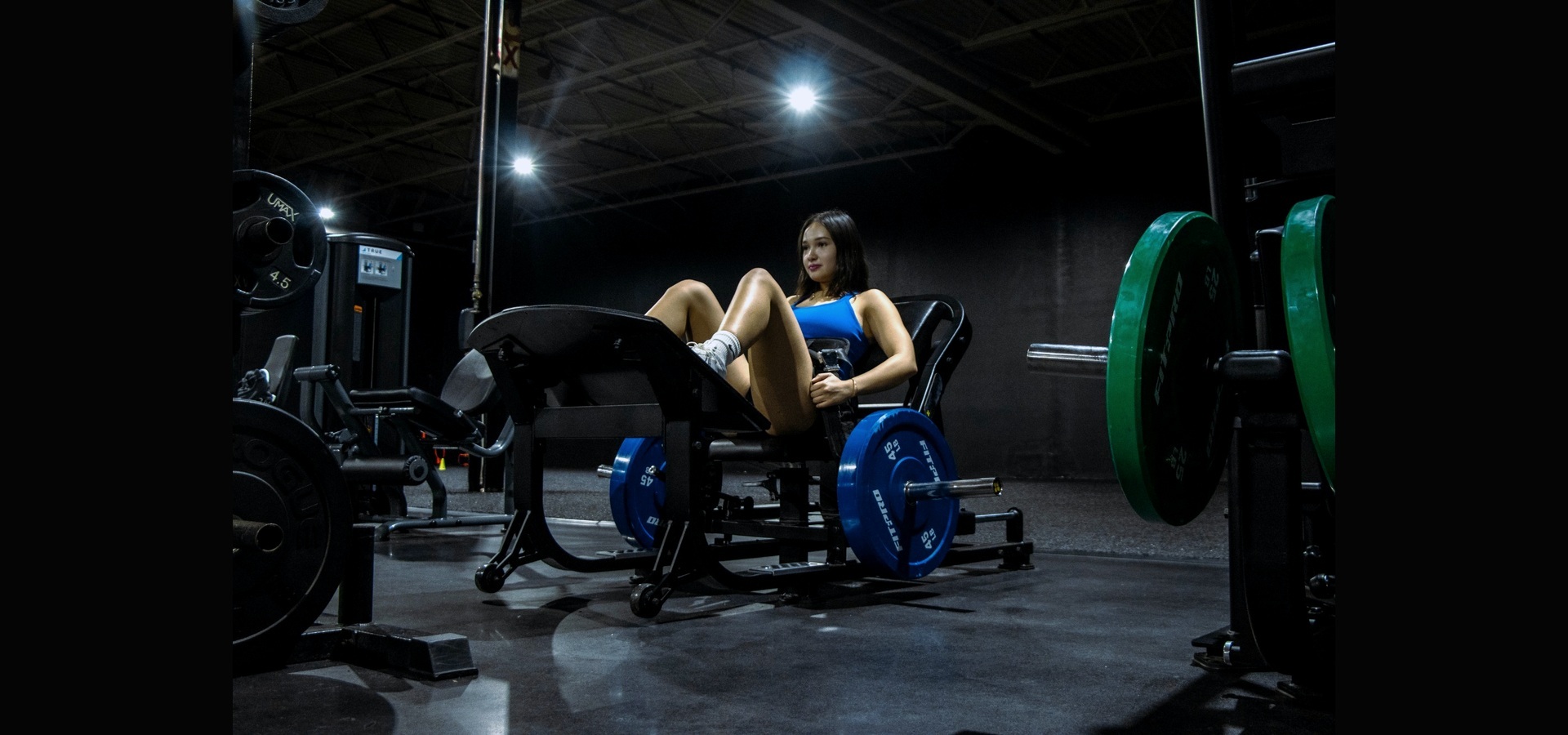
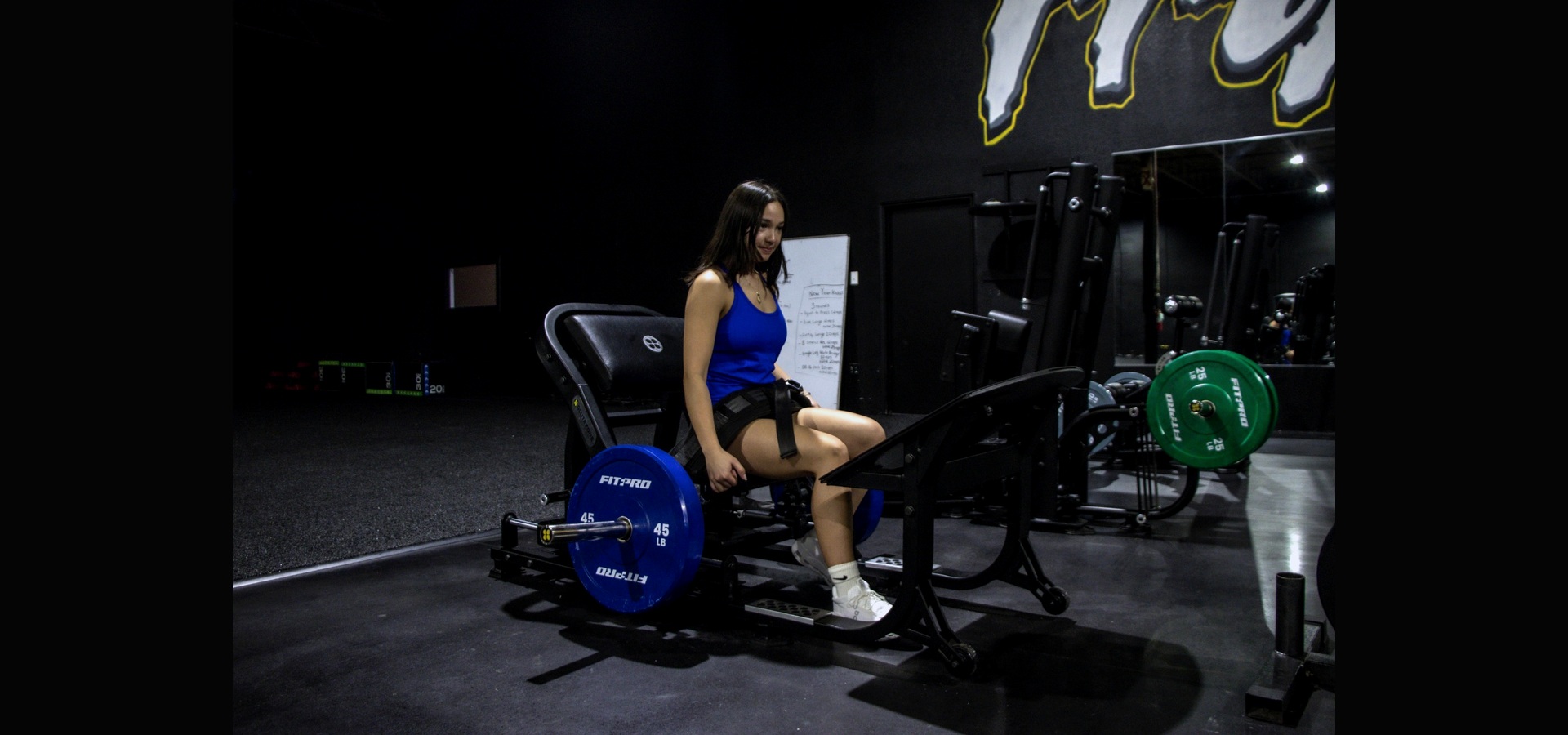
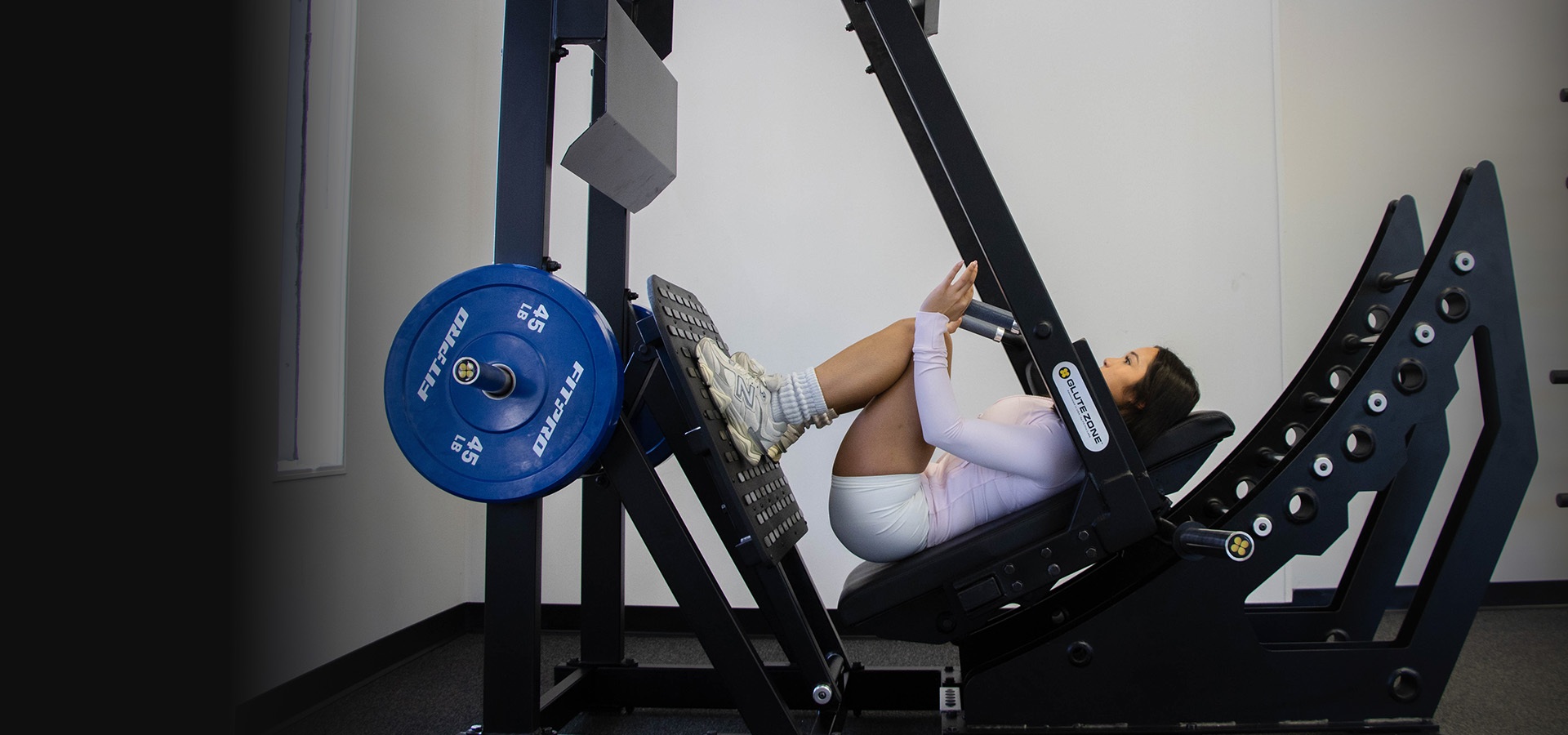
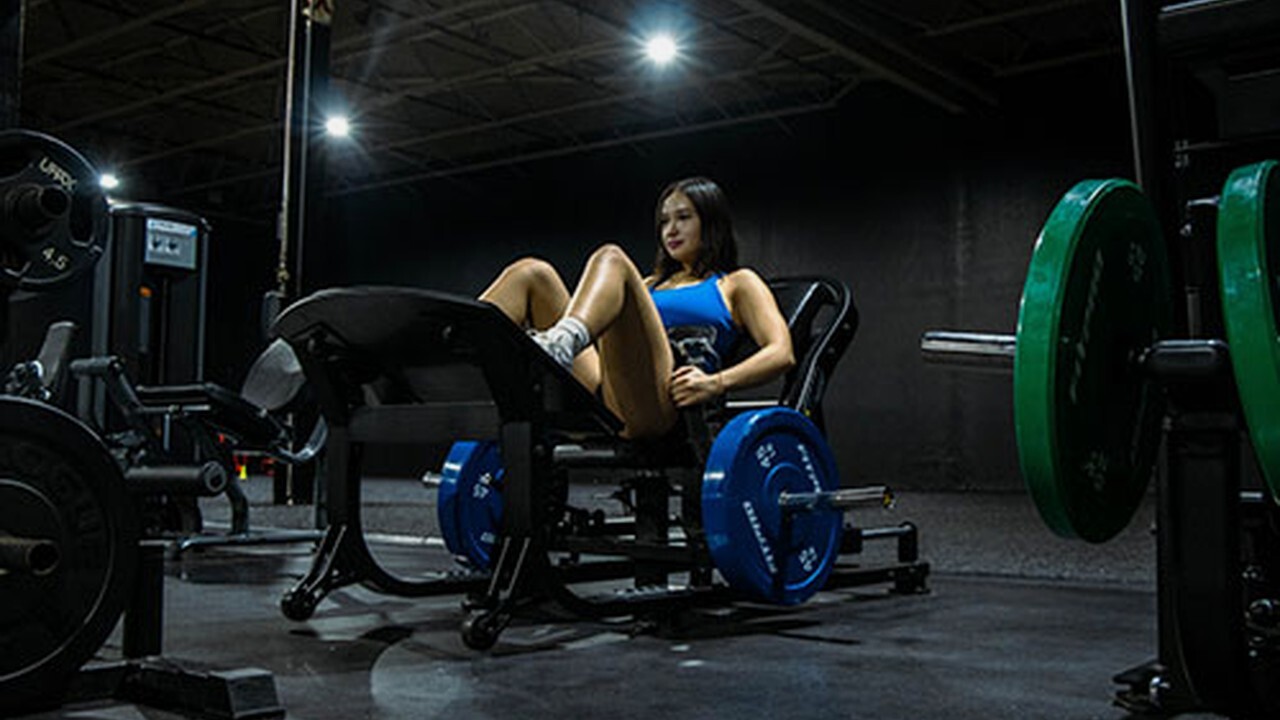
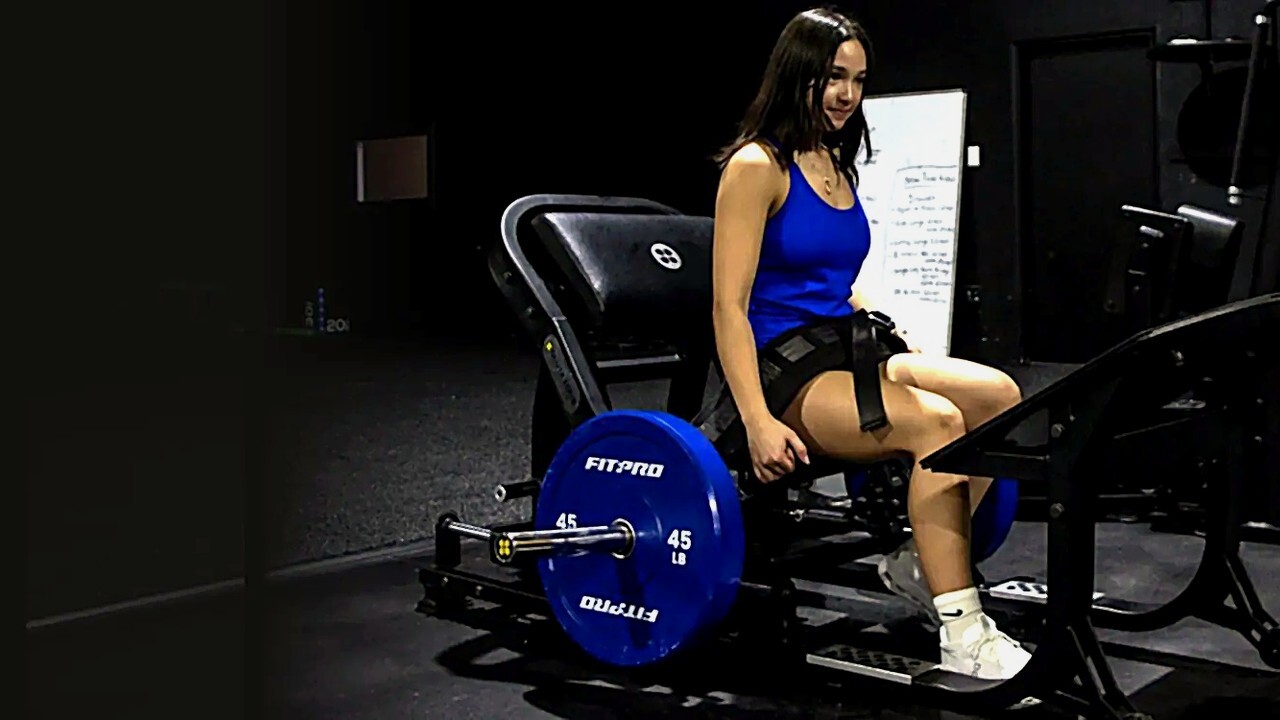
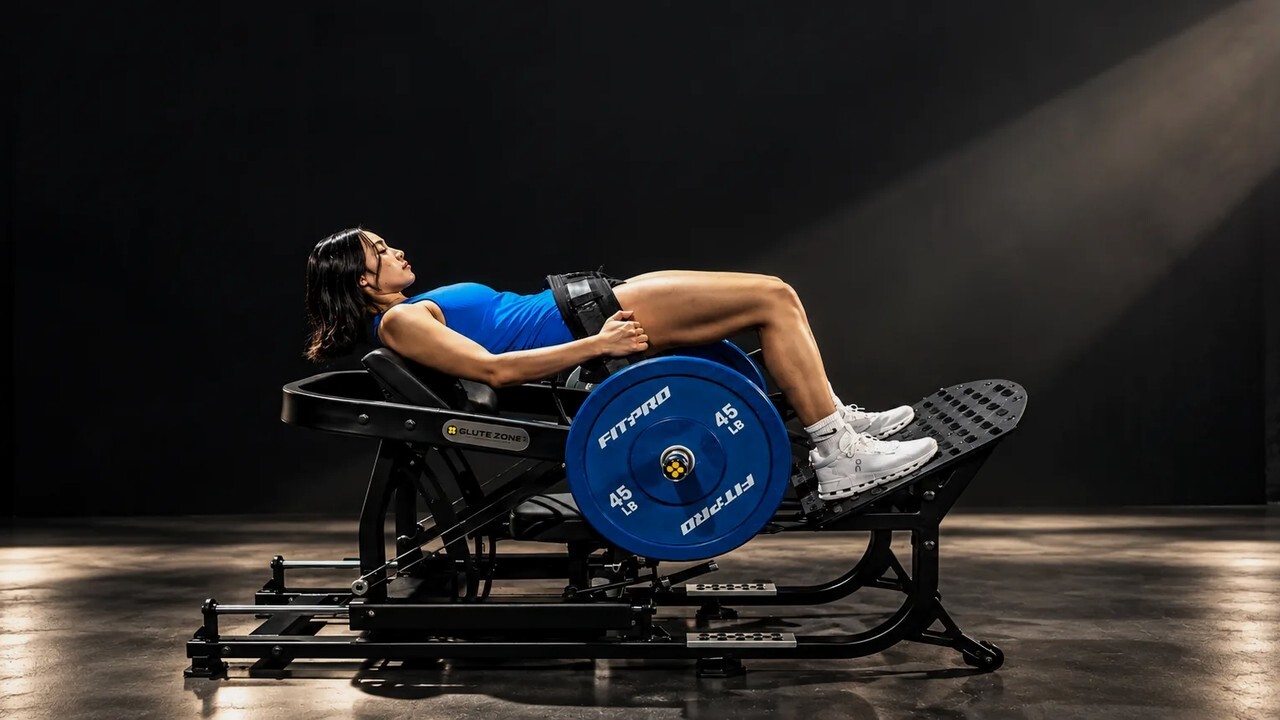
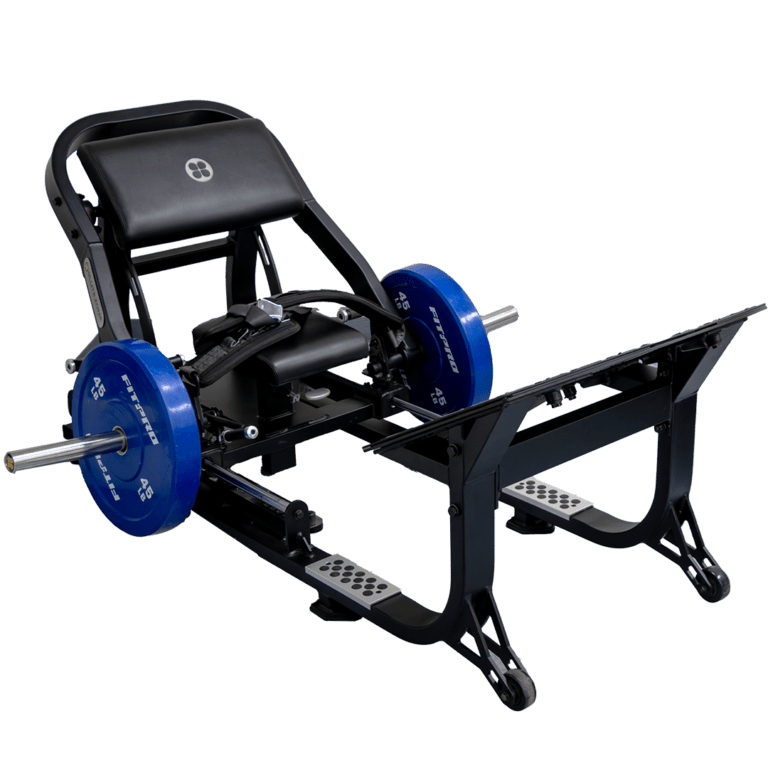
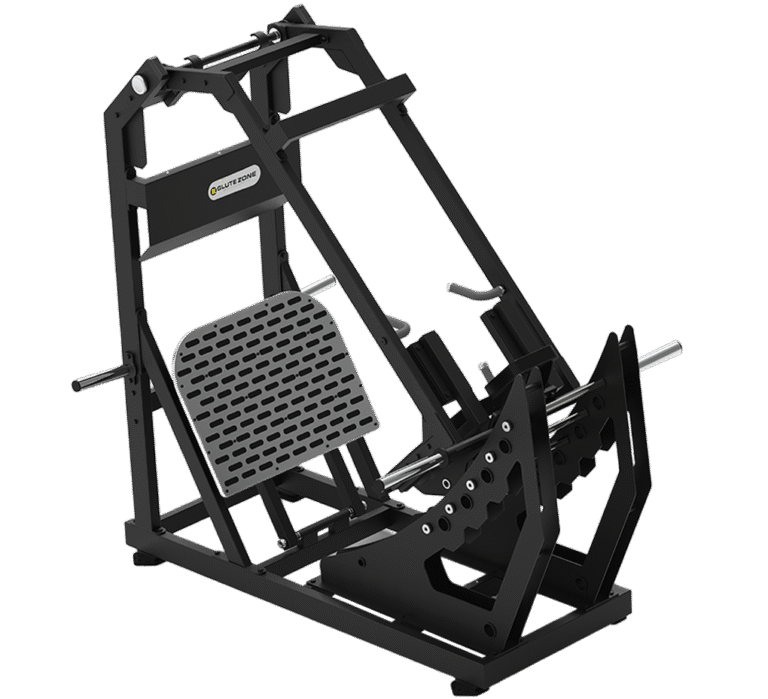
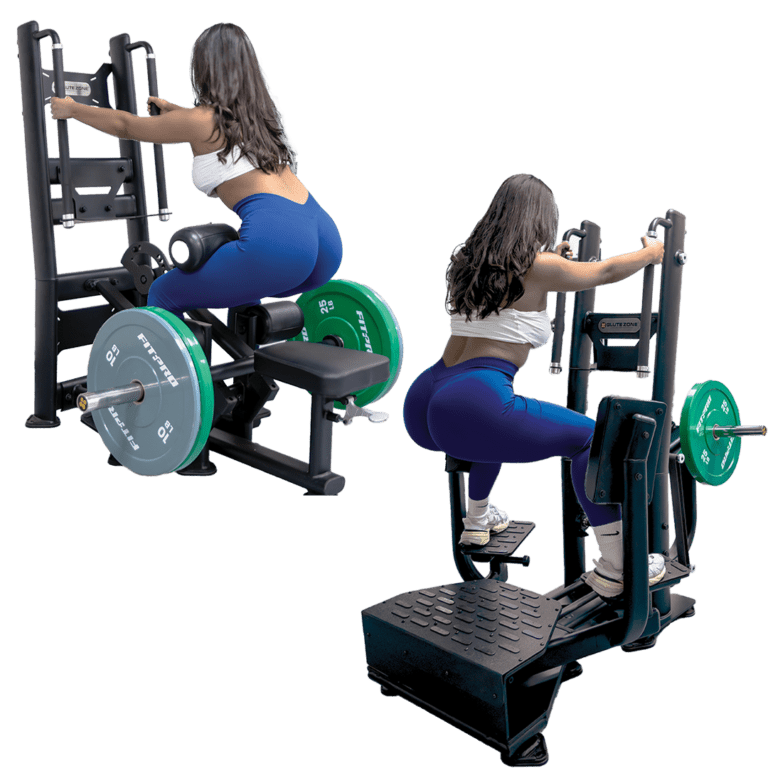
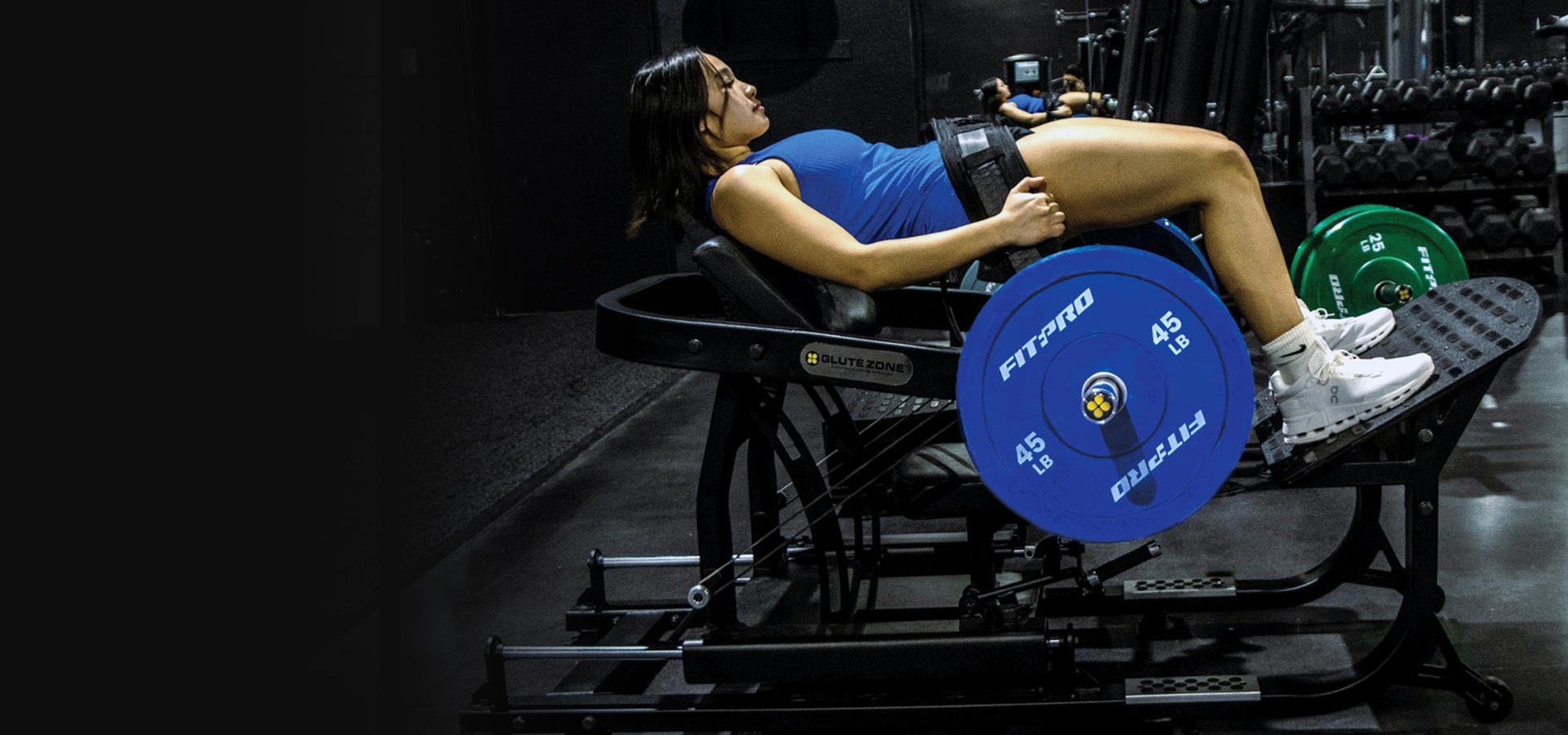
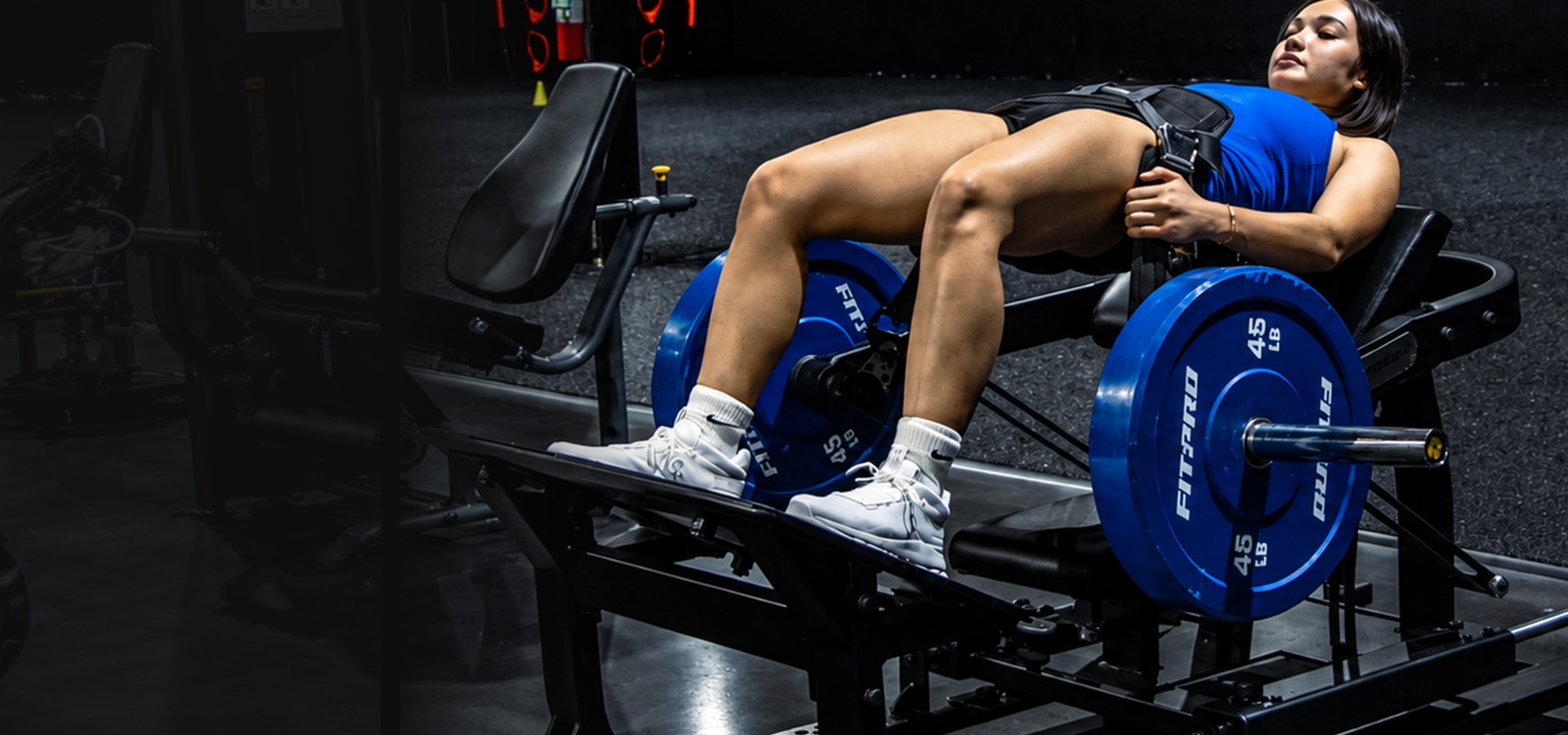
Start here before you experiment. The official guidance on the GluteZone Hip Thrust Machine product page is simple: place your feet flat on the platform, roughly shoulder width apart, so that at the top of the thrust your knees form a 90 degree angle. That position maximizes glute engagement while keeping the knees and lower back in a friendly alignment.
In practice, check the top of the rep, not the bottom. Drive up, pause, and look down. Your shins should be close to vertical, your feet flat, and your torso and thighs should form one straight line from shoulders to knees. If your shins tilt far forward at the top, your feet are too close. If your knees are nearly straight, your feet are too far away. One seat notch or one small foot move usually fixes it.
The belt matters too. On the GluteZone machine the belt sits just below your hip bones, at the crease of your hips, so the load stays centered while you adjust your feet. Set the belt first, set your feet second, and only then load the plates.
Feet Farther Forward: More Hamstring, on Purpose
Moving your feet away from your body is not automatically a mistake. It is a different exercise emphasis. In the Collazo Garcia study of hip thrust variations, published in the Journal of Strength and Conditioning Research in 2020, seven experienced trainers performed four hip thrust variants at 40 percent of their one rep maximum while researchers measured muscle activity. When the feet were placed farther away, the hamstrings, the biceps femoris and semitendinosus, took a larger share of the work, while the glutes were most active with the feet under the knees.
Use the feet forward position when you actually want that. A posterior chain day where the hip thrust doubles as hamstring work is a fair reason. A member who feels nothing in the glutes and everything behind the knee is not having that experience by accident. Bring their feet back under their knees and the same machine, same load, becomes a glute exercise again.
Toes Out, Knees Out: The Rotation Cue
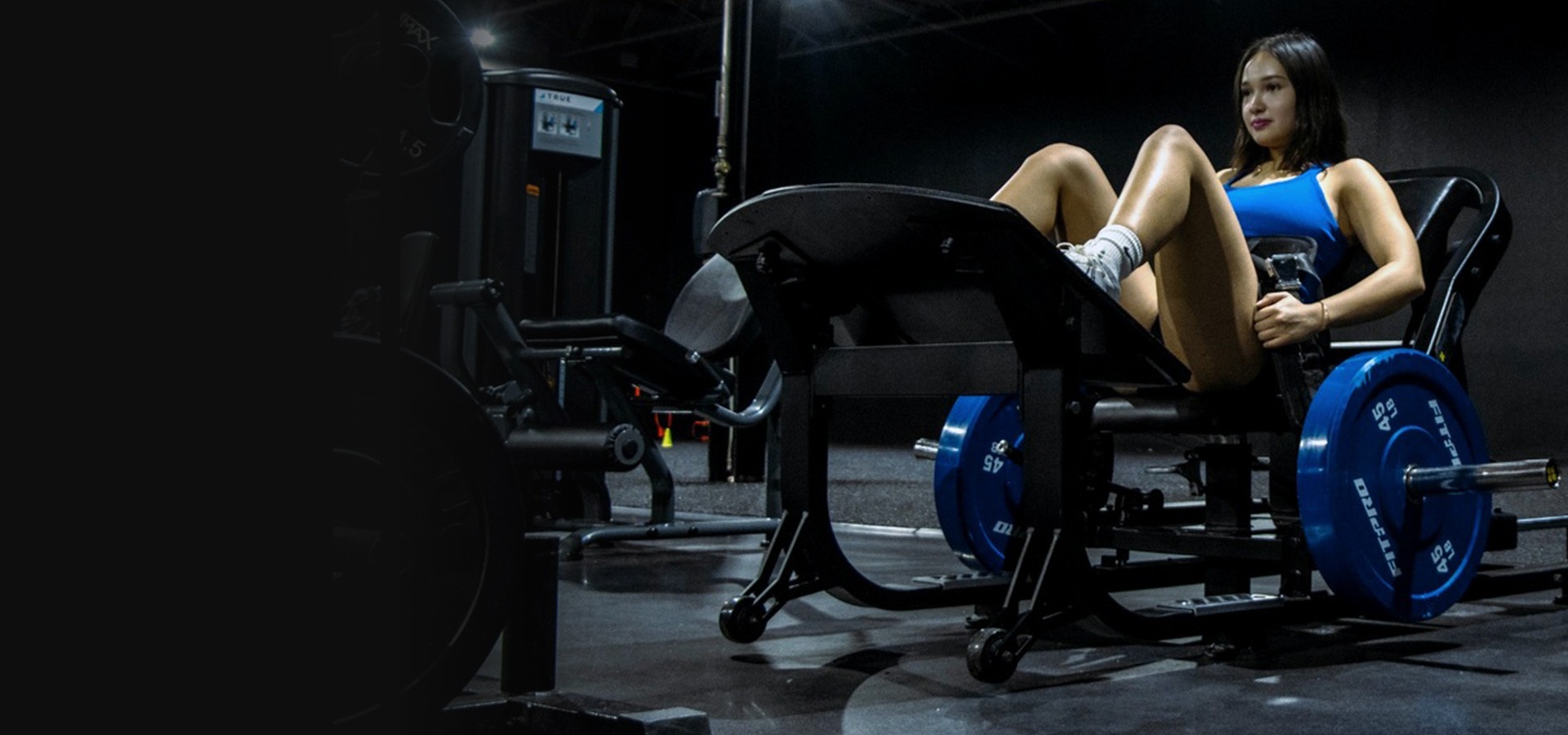
The strongest foot placement finding in that same 2020 study was not about distance. It was about direction. In the rotation variant, lifters used a wider stance and actively tried to rotate their feet outward against the floor. Gluteus maximus activity climbed to 86.2 percent of maximum voluntary contraction, the highest glute reading in the study, at a load of only 40 percent of one rep maximum.
You do not need to turn your feet into a ballet position to use this. Point the toes out slightly, keep the whole foot planted, and drive the knees out over the toes as you thrust. Think about screwing your feet into the platform. For many lifters this single cue cleans up knee cave, wakes up the upper glute, and makes the lockout feel solid instead of wobbly.
For context on why coaches chase glute activity in this exercise at all: in Contreras 2015, the barbell hip thrust produced mean upper gluteus maximus activity of 69.5 percent against 29.4 percent for the back squat, and mean lower gluteus maximus activity of 86.8 percent against 45.4 percent, in thirteen trained women lifting estimated 10 rep maximum loads. The hip thrust is already a glute dominant movement. Foot placement decides how much of that advantage you actually keep.
Feet Closer In: When the Hamstrings Keep Cramping
Some lifters cramp in the hamstrings long before their glutes get tired. For them, a small move in the other direction can help: feet a little closer, knees bent more deeply. The clearest numbers on this come from bridge research rather than machine research, and it is worth saying that plainly. In Lehecka 2017, twenty eight adults performed single leg bridges at different knee angles. Bending the knee to 135 degrees instead of 90 dropped hamstring activity from 75.34 percent to 23.49 percent of maximum, while gluteus maximus activity stayed similarly high, 47.35 percent against 51.01 percent.
A bridge is not a hip thrust machine, so treat this as a principle to test, not a promise. If a member cramps, move their feet slightly closer, lighten the load for one set, and ask what they feel. If the glutes take over and the cramping stops, you have found their position. Write it down. On a machine, that position is repeatable next week.
Use the Seat, Not Just Your Feet
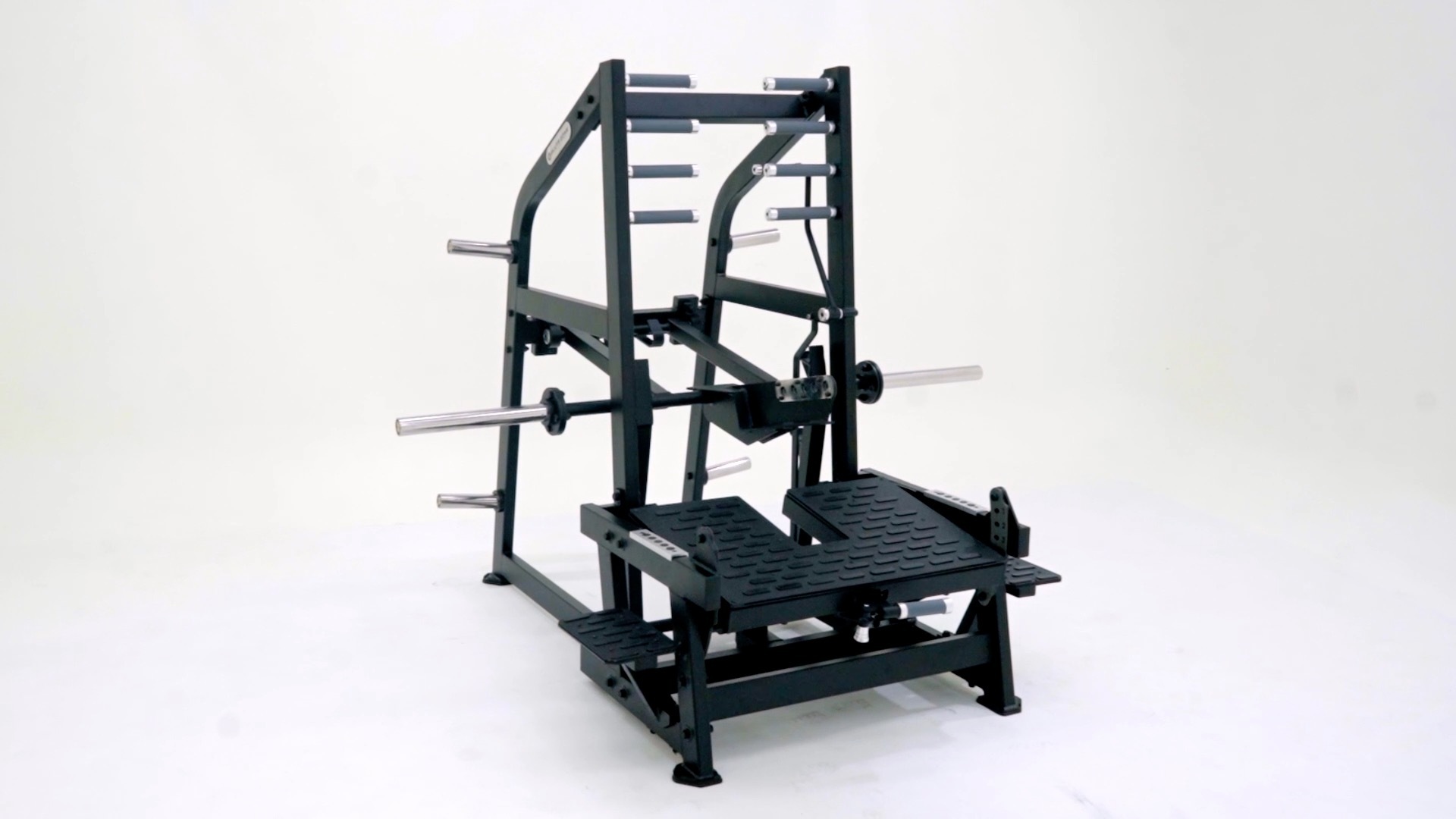
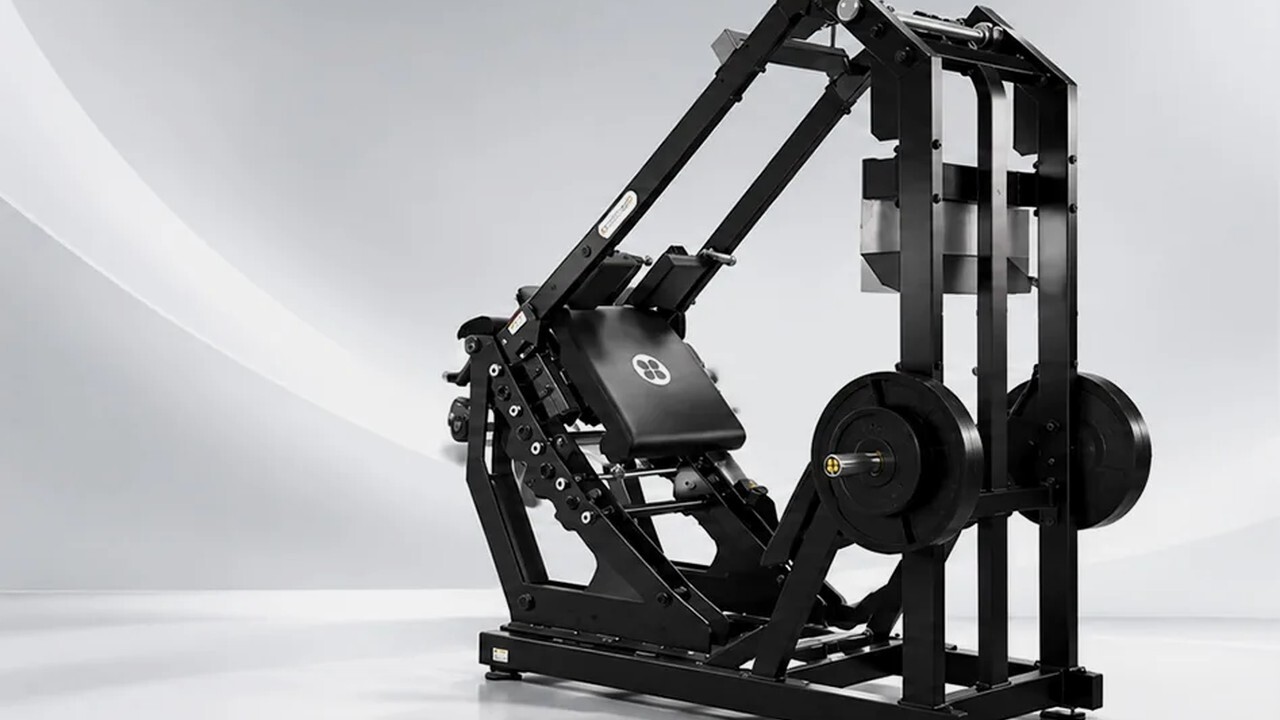
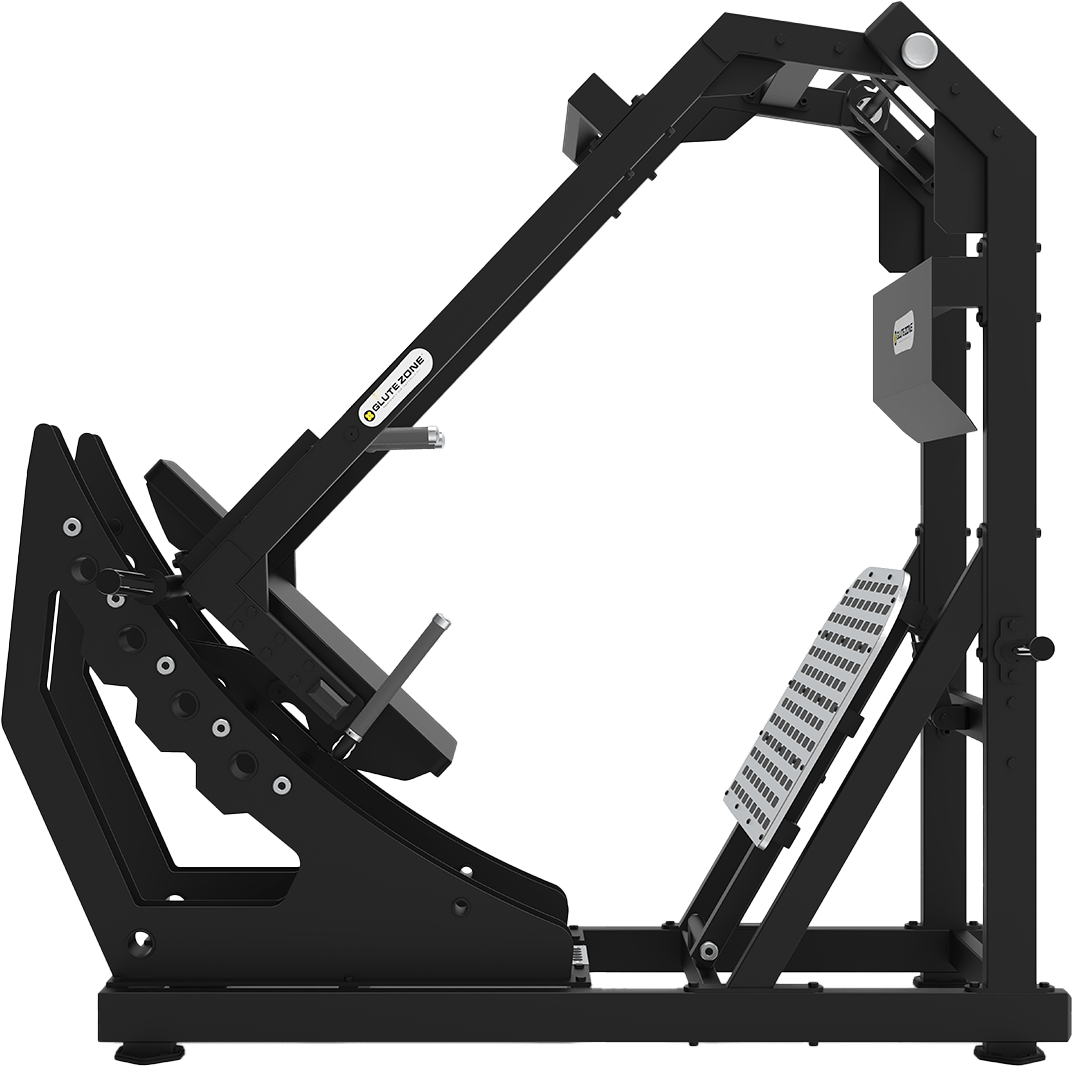
Here is the part most lifters skip. On the GluteZone Hip Thrust Machine, foot placement and seat placement work together. The seat adjusts forward and backward through 16 points, so a tall lifter and a short lifter can both arrive at the same shin vertical top position without standing in strange places on the platform. Set the seat for the body in front of you first. Then fine tune with the feet.
That repeatability is also a capacity story. The machine supports up to 550 lb on its plate horns and the frame itself weighs about 357 lb, so the position you coach for a beginner is the same stable position available when that member is loading serious plates a year later. Anchor hole ports on each foot allow optional bolting to the floor for the heaviest use.
For gym owners, this is a staffing point as much as a training point. A sixteen position seat and a simple visual check, shins vertical at the top, give every coach on your floor the same setup language. New members learn it in one session. Fewer bad first experiences means fewer people quietly deciding that glute training is not for them.
Pair It With the Pendulum Squat
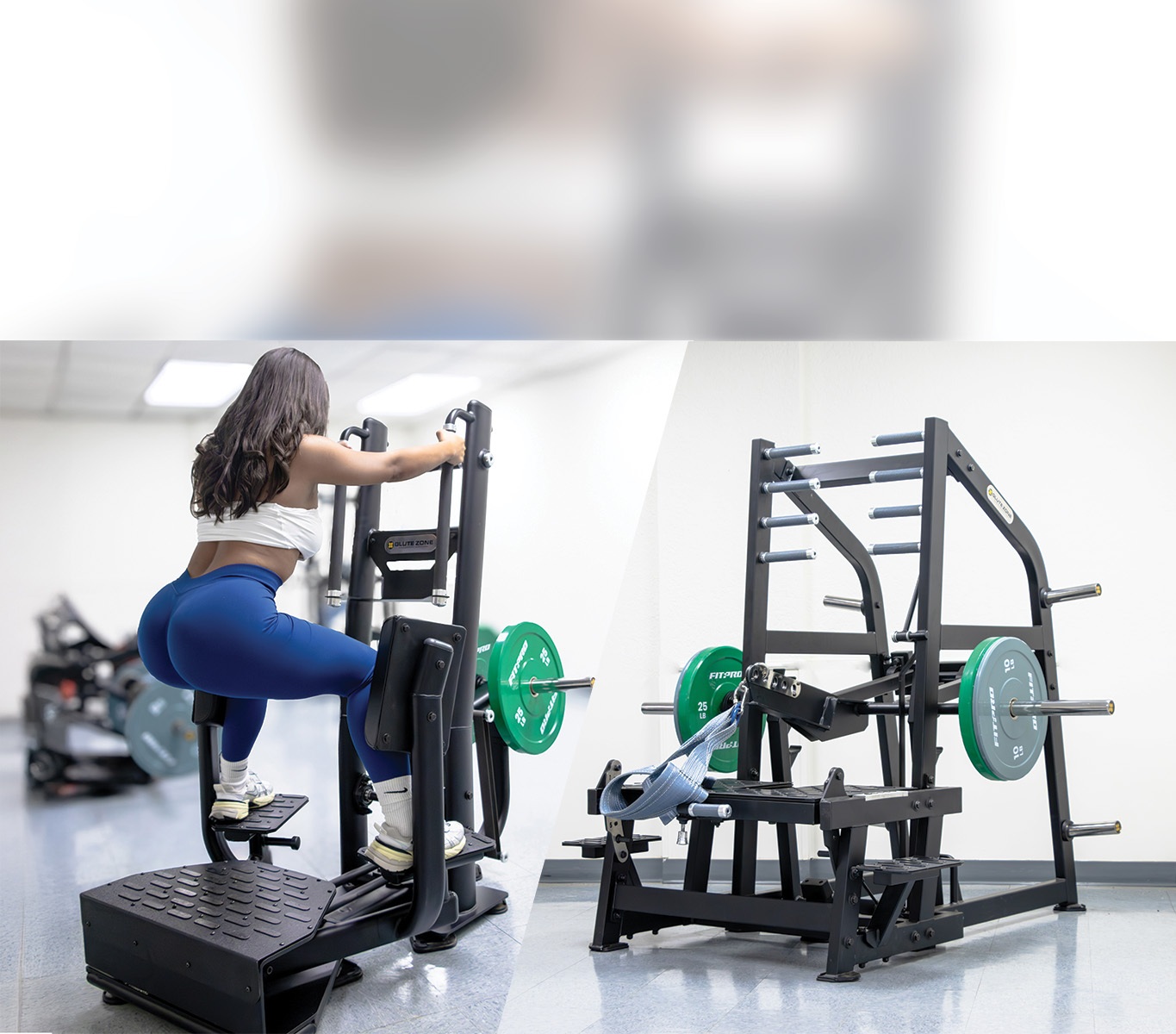
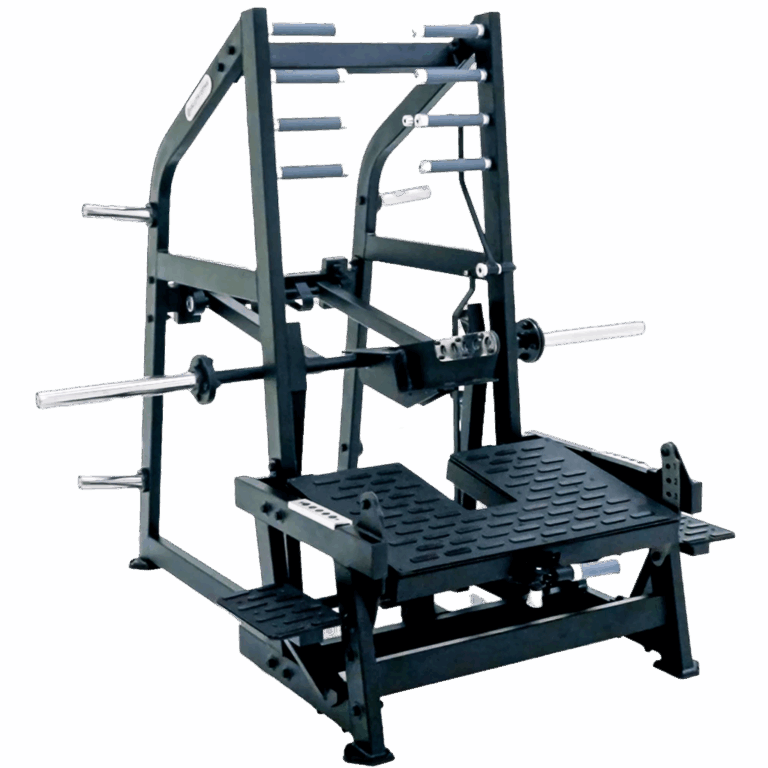
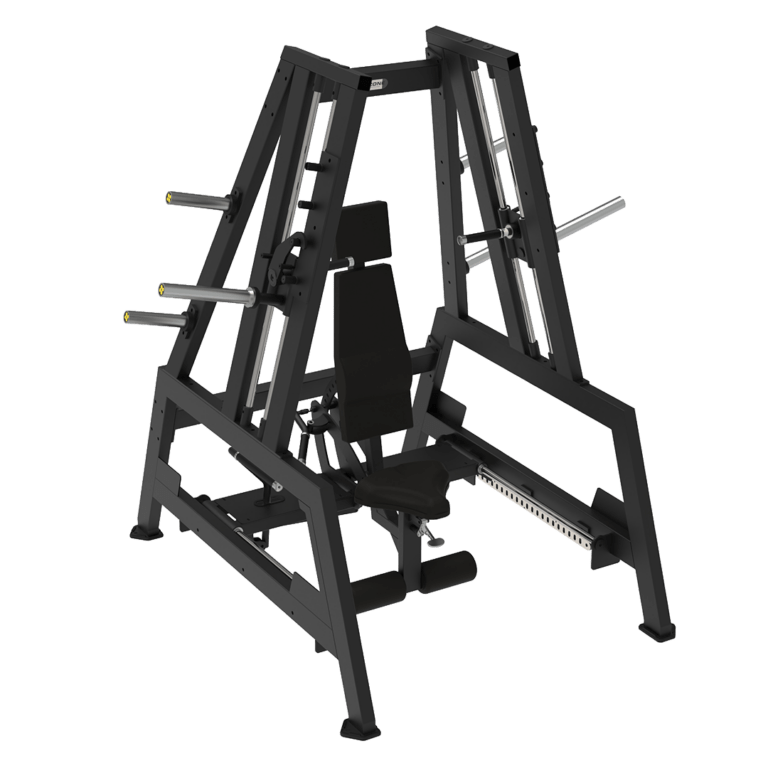
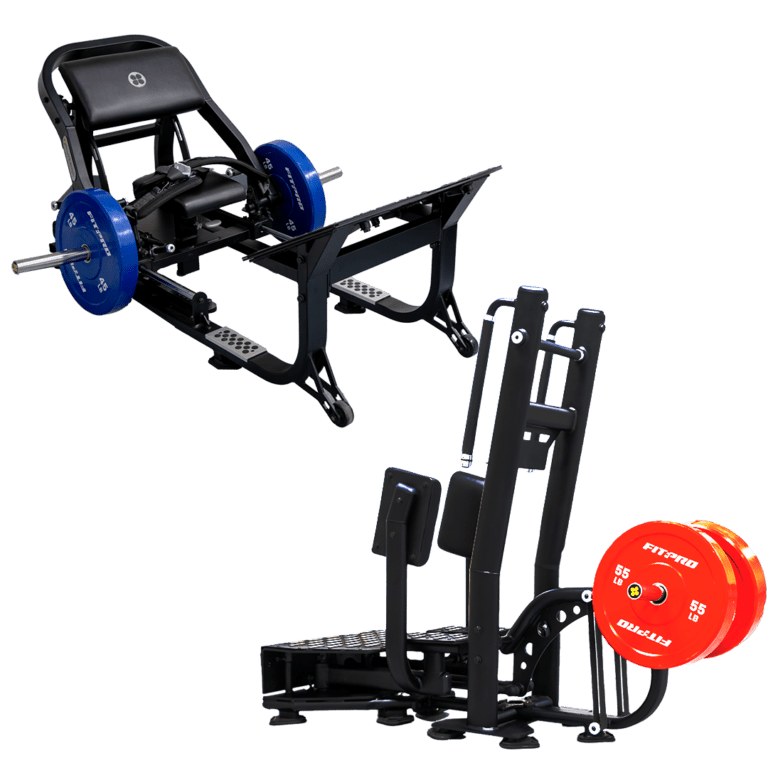
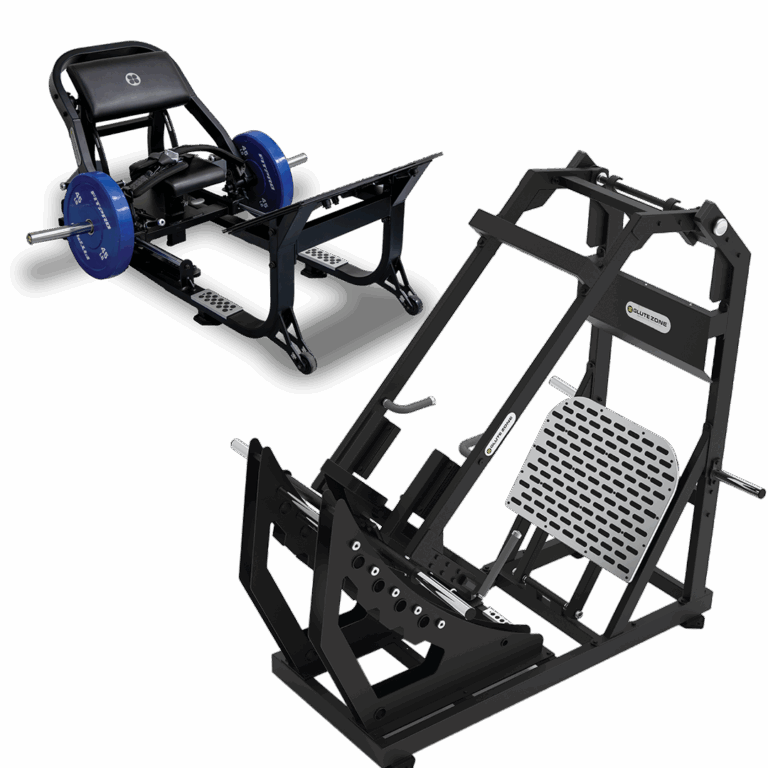
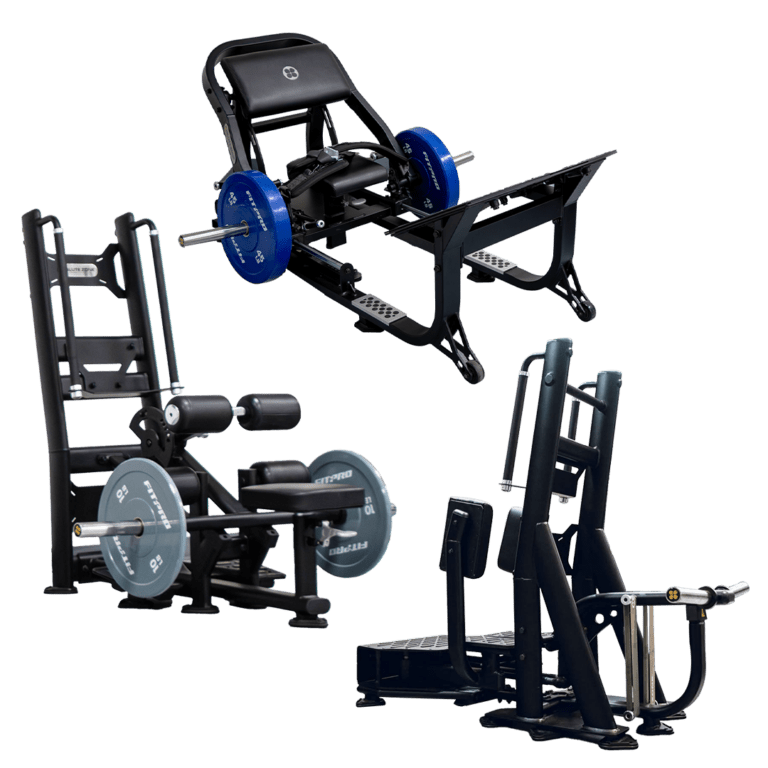
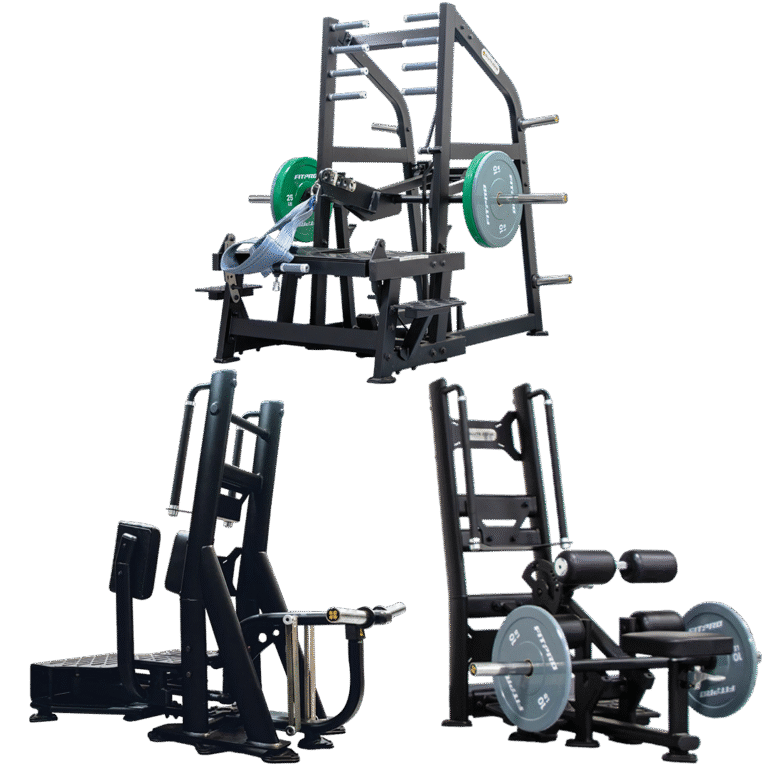
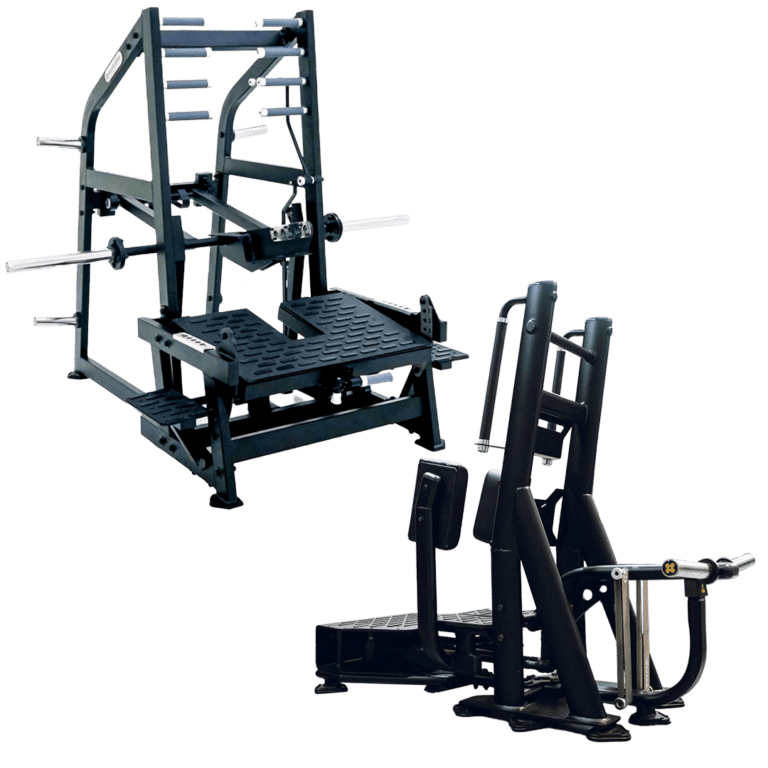
Foot placement thinking does not stop at the hip thrust. On the GluteZone Pendulum Squat, stance and footplate angle change the squat pattern in the same practical way: small position changes, clearly felt differences. Coaching both machines with the same habit, set the position first, then add load, builds members who train deliberately instead of guessing. That is the culture every good glute zone runs on.
A Simple Foot Placement Checklist
Run this list before the first heavy set, for yourself or for a member. Belt below the hip bones, at the hip crease. Feet flat, roughly shoulder width. Drive up and pause: shins vertical, knees near 90 degrees, body in one line. Toes slightly out, knees tracking over the toes. Whole foot planted through the rep, heels heavy. If the hamstrings dominate, bring the feet back. If the hamstrings cramp, bring the feet slightly closer and test. Change one thing at a time, and note the seat number that worked.
Program it the way the product guidance suggests: two to three hip thrust sessions per week, with at least 48 hours of rest between them. Consistency in position is what lets load progress honestly. When the position changes every week, the numbers on the plate horns stop meaning anything.
Frequently Asked Questions
Where should my feet be on a hip thrust machine?
Flat on the platform, roughly shoulder width apart, positioned so your shins are vertical and your knees are near 90 degrees at the top of the rep. That is the standard position recommended on the GluteZone product page.
Do feet farther forward work the glutes more?
No. In Collazo Garcia 2020, feet placed farther away increased hamstring activity, while the glutes were most active with the feet under the knees. Use the forward position only when extra hamstring work is the goal.
Does turning my toes out help glute activation?
In the same 2020 study, the rotation variant, a wider stance with active outward rotation of the feet, produced the highest gluteus maximus reading, 86.2 percent of maximum voluntary contraction, at 40 percent of one rep maximum.
Why do my hamstrings cramp during hip thrusts?
Hamstrings share hip extension with the glutes, and position changes their share. Bridge research by Lehecka in 2017 found that deeper knee flexion cut hamstring activity sharply while glute activity held steady. Try your feet slightly closer, and reduce the load while you test.
How do I set the machine for different heights?
Use the seat first. The GluteZone Hip Thrust Machine has a 16 point forward and backward adjustable seat, so each lifter can reach the same shin vertical top position. Then fine tune with foot placement and record the seat number.
Set up a glute zone your coaches can run the same way, every day
Talk to GluteZone about the Hip Thrust Machine for your gym or home gym. Financing is available through Affirm, so you can spread the cost while the machine goes to work.
Sources
- Contreras B et al. A Comparison of Gluteus Maximus, Biceps Femoris, and Vastus Lateralis Electromyographic Activity in the Back Squat and Barbell Hip Thrust Exercises. Journal of Applied Biomechanics, 2015. Thirteen trained women, estimated 10RM loads.
- Collazo Garcia CL et al. Differences in the Electromyographic Activity of Lower Body Muscles in Hip Thrust Variations. Journal of Strength and Conditioning Research, 2020, 34(9): 2449 to 2455. Seven experienced trainers, four variants, 8 repetitions at 40 percent of 1RM.
- Sci-Sport summary of Collazo Garcia 2020, reporting gluteus maximus activity of 86.18 percent of maximum in the rotation variant and higher hamstring activity with the feet away position.
- Lehecka BJ et al. Building a Better Gluteal Bridge: Electromyographic Analysis of Hip Muscle Activity During Modified Single Leg Bridges. International Journal of Sports Physical Therapy, 2017, 12(4): 543 to 549. Twenty eight participants.
- GluteZone Hip Thrust Machine official product page, glutezone.com, accessed November 3, 2026. Foot placement guidance, belt position, 16 point adjustable seat, 550 lb plate horn capacity, 357 lb frame weight, anchor hole ports, price and training frequency guidance.