






The Short Answer: 2 to 3 Times Per Week
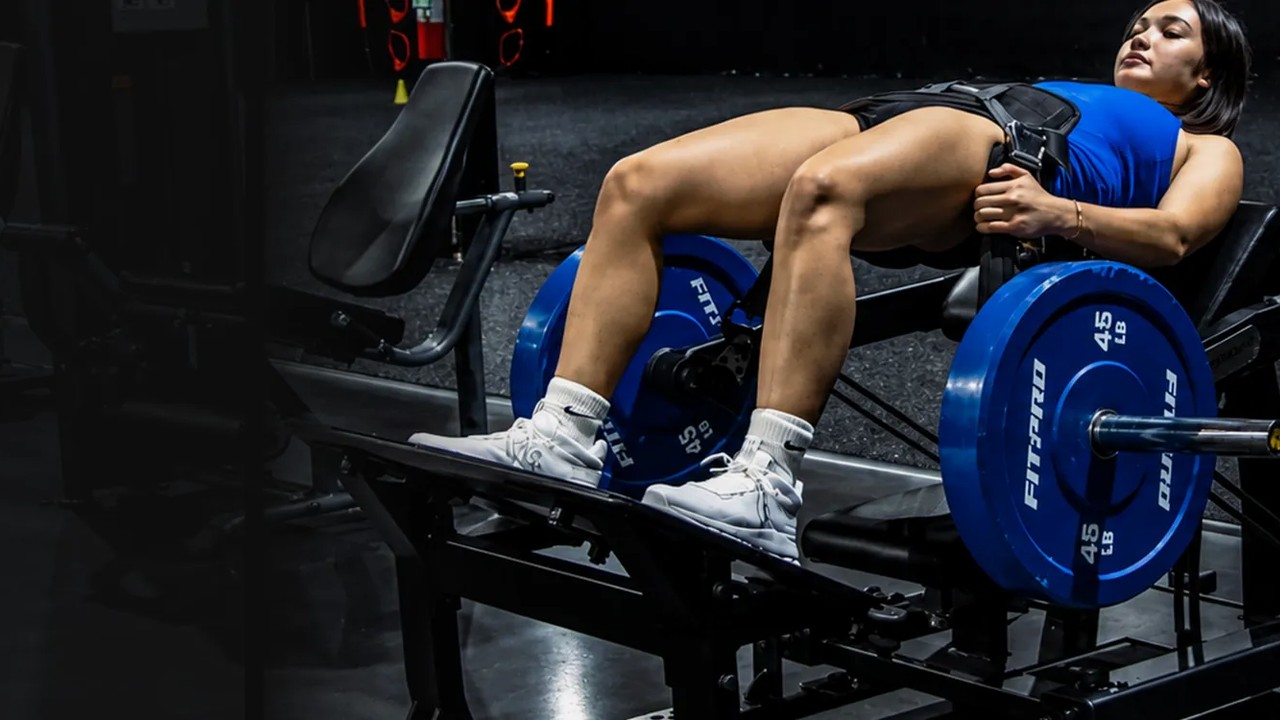
For beginners, the sweet spot is training glutes 2 to 3 times per week, with at least one rest day between hard sessions. That range shows up in the research again and again, and it matches what the best glute coaches recommend. It is also the number GluteZone’s own product team landed on: the Hip Thrust Machine FAQ recommends 2 to 3 hip-thrust sessions per week with at least 48 hours of rest between them, which lines up exactly with what the science supports.
What the Research Actually Says
In 2016, Brad Schoenfeld and colleagues published a meta-analysis in Sports Medicine that pooled the available studies on resistance training frequency. Their finding was clear: training each muscle group twice per week produced significantly greater hypertrophy (muscle growth) than training it once per week. The effect sizes told the story: roughly 0.49 for twice-weekly training versus 0.30 for once-weekly.
But here is the part most people miss. When later reviewers equated total weekly volume between groups, training more than twice a week added no significant extra benefit. Grgic and colleagues (2018, Journal of Science and Medicine in Sport) concluded that the major muscle groups should be trained at least twice a week to maximize growth, and that whether three times per week beats two remains unresolved. In plain English: going from one session to two is a big deal. Going from two to three is fine-tuning, and it only works if you keep your total volume sensible.
The practical takeaway for beginners: your total weekly sets matter more than how you split them. Dr. Mike Israetel’s RP Strength glute guide puts the working landmarks at 8 to 24 sets per week and a training frequency of 2 to 5 sessions per week. And splitting your sets across several sessions tends to beat cramming them into one marathon workout, partly because there is a ceiling on how much growth stimulus a single session can deliver.
Is Twice a Week Enough to Grow Glutes?
Yes. This is one of the most-searched questions in glute training, and the answer is reassuring. If you can only commit to two glute sessions a week, the research says you are capturing most of the benefit. Two sessions beat one by a clear margin, and many beginners grow just fine on two well-designed workouts because every set is still a fresh stimulus.
The key is making those sessions count: 3 to 6 exercises covering the main glute movement patterns, 3 to 4 sets each, and progressive overload over time (a little more weight or a few more reps each week). Ten to twenty total sets per week across two sessions is a proven starting point for beginners.
Can You Train Glutes Every Day?
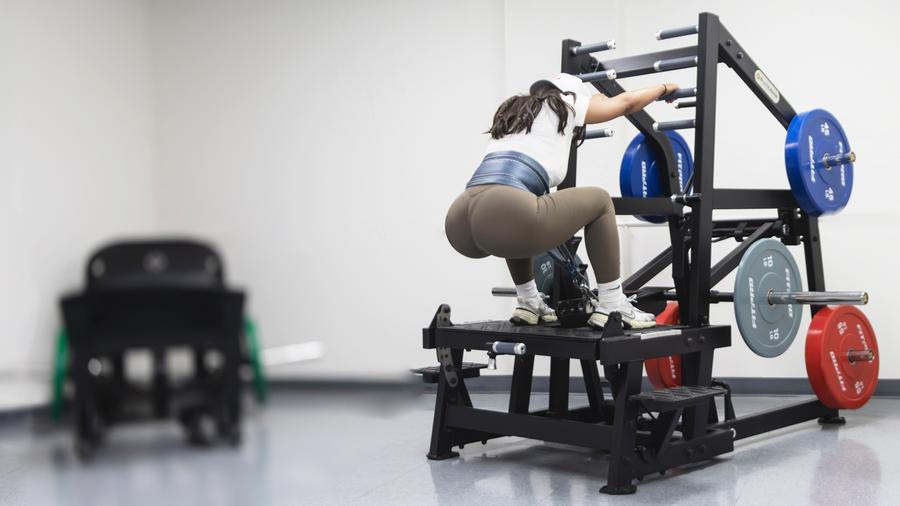
Daily heavy glute training is where beginners get into trouble. Muscle grows during recovery, not during the workout, and hard sessions with stretch-under-load movements like Romanian deadlifts need 48 to 72 hours before the same muscle should be hit heavy again.
But there is a nuance worth knowing, and it comes from Bret Contreras, who literally wrote the book on glute training (Glute Lab). He classifies glute exercises into three types: Stretchers (deep stretch under load, like Romanian deadlifts), Activators (peak contraction work, like hip thrusts), and Pumpers (high-rep burn work, like band abductions). His point: the exercise type dictates the recovery time. Pumpers recover fast and can be trained almost daily. Stretchers need the longest recovery. So daily glute work is fine if it is light activation and pump work, but your heavy sessions still need rest days between them.
The practical rule for beginners: heavy glute days 2 to 3 times per week, with rest days between. Light activation work (glute bridges, band walks, bodyweight hip thrusts) can fill the gaps if you enjoy moving every day.
A Simple Weekly Template (Steal This)
Two-day split (the minimum effective dose):
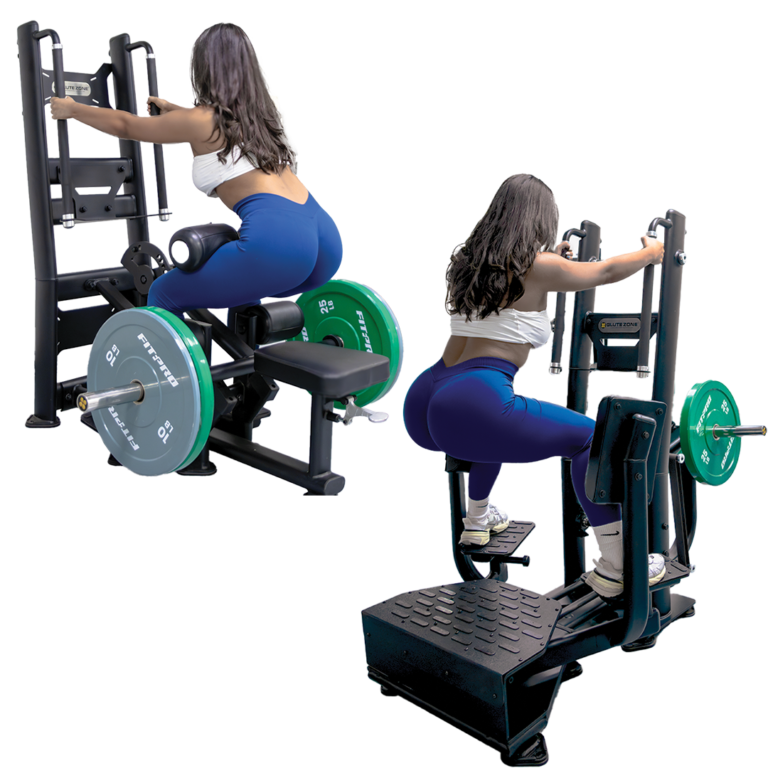
- Day 1: Hip thrust machine 4×10, goblet squat 3×12, Romanian deadlift 3×10, standing abductor 3×15 per side
- Day 2: Pendulum squat 3×10, hip thrust machine 3×12 (lighter load), step-ups 3×10 per leg, cable kickback 3×12 per leg
Three-day split (the sweet spot):
- Day 1, heavy: Hip thrust machine 4×8, Romanian deadlift 3×8, pendulum squat 3×10
- Day 2, volume: Hip thrust machine 3×15, walking lunges 3×12 per leg, standing abductor 4×15, glute bridge hold 2×30 seconds
- Day 3, power and pump: Hip thrust machine 4×10, step-ups 3×10 per leg, band lateral walks 2×15 per side, bodyweight glute bridges 2×20
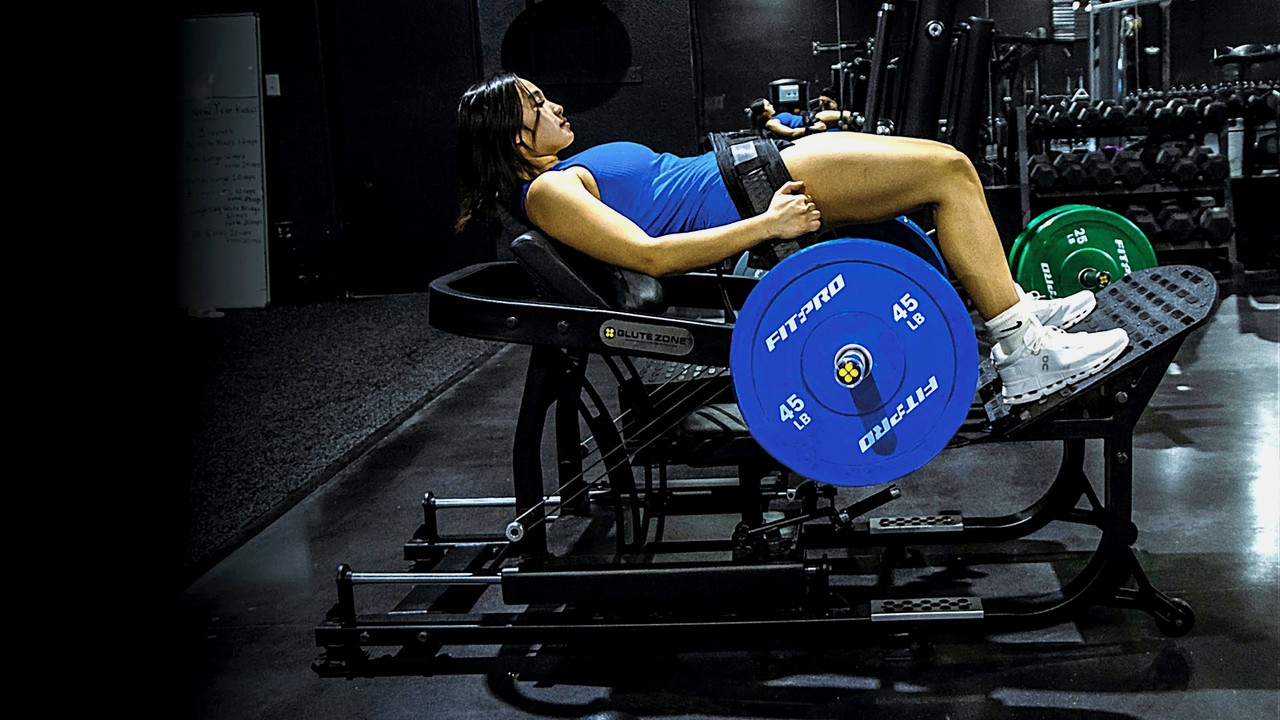
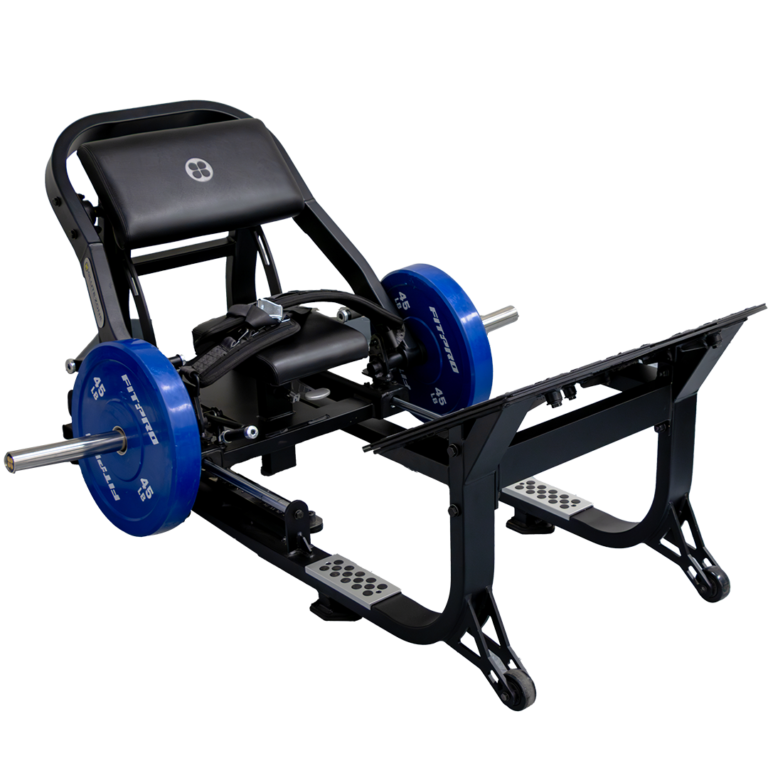
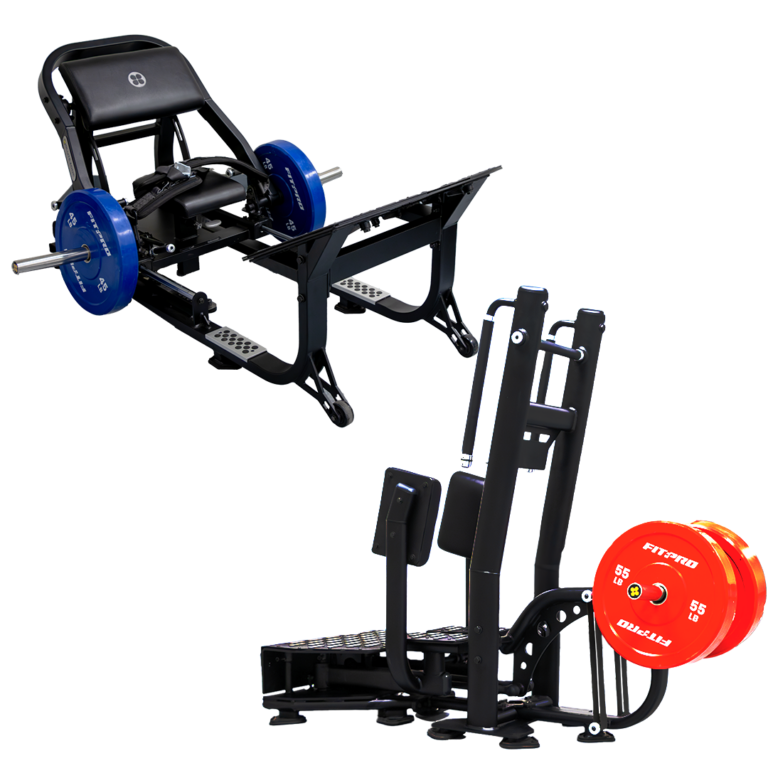
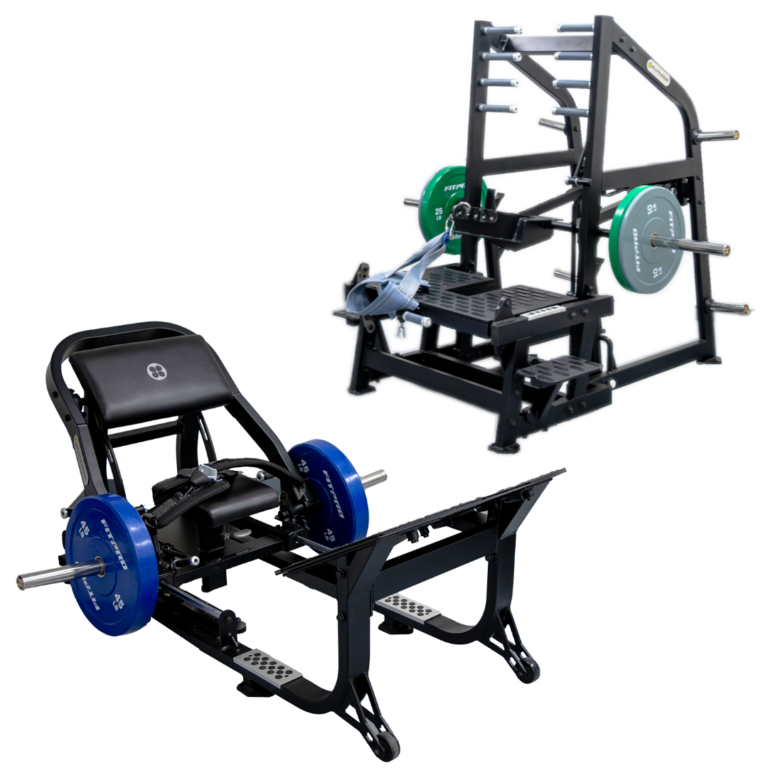
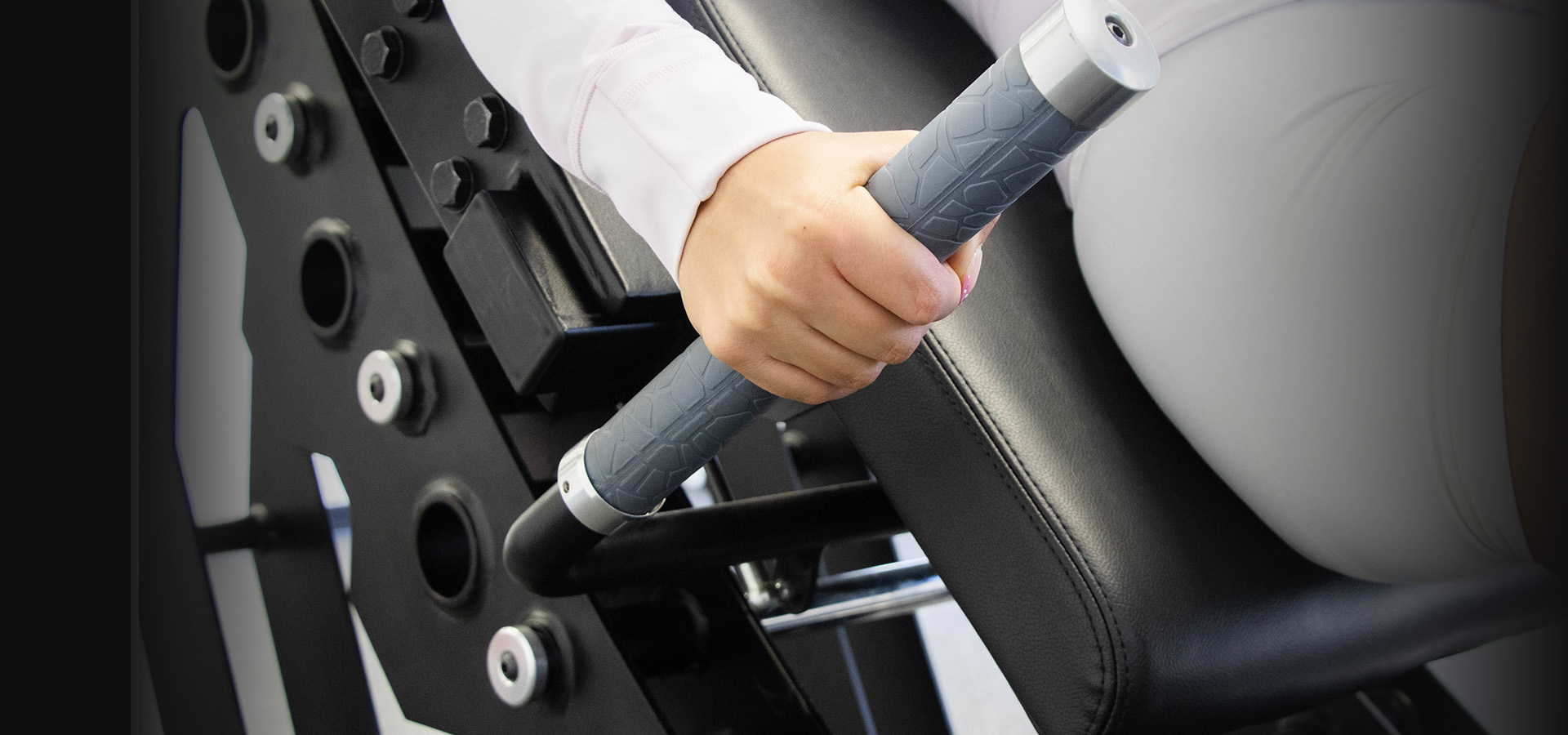
Notice the anchor: the hip thrust machine appears in every session. It is the most efficient glute builder most people can load progressively, and a commercial machine with a 16-point adjustable seat lets every body type dial in the setup in seconds. If you are still setting up your barbell hip thrusts with a bench and plates, our setup guide walks through all 16 positions: Hip Thrust Setup Guide: 16 Positions for Every Body Type
What Training Frequency Means for Gym Owners
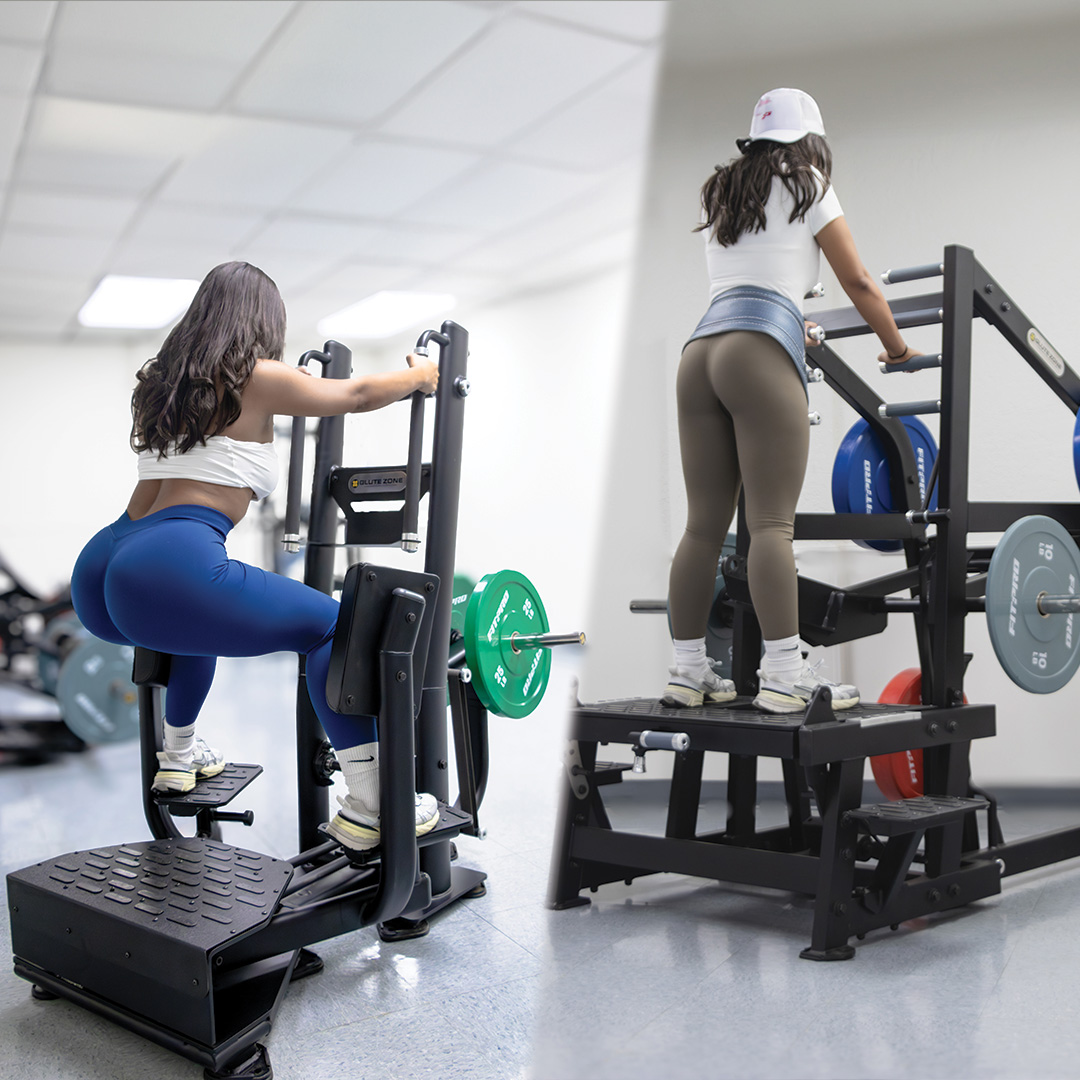
Here is the part nobody talks about. If your members should train glutes 2 to 3 times a week, your glute equipment gets used 2 to 3 times as hard as the machines on a once-a-week body-part split. Training frequency is a usage forecast.
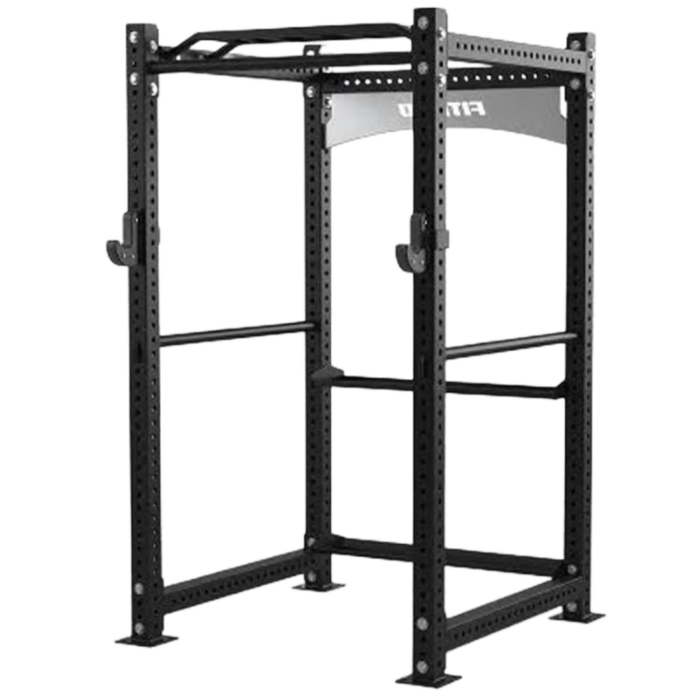
A dedicated hip thrust machine built from commercial-grade steel, with a 550 lb plate capacity and a 16-point adjustable seat, is not a luxury. It is the answer to dozens of members sharing one station across three weekly sessions. When a member asks their trainer “how often should I train glutes?”, they are really asking “does this gym make it easy for me?” Put the answer on your floor: accessible equipment, simple setup, no waiting.
That is also a retention lever. Members who train a muscle group 2 to 3 times a week visit more often, and visit frequency is the strongest predictor of staying. We broke down the full retention math here: Why a Dedicated Glute Zone Increases Member Retention
Signs You Are Doing Too Much (or Too Little)
Too much: soreness that never clears within 48 to 72 hours, weights stalling or dropping, and a growing dread of glute day. Back off one session or cut volume by about 20 percent for a week and reassess.
Too little: no progression in 4 to 6 weeks, workouts that feel easy start to finish, no pump or fatigue in the target muscle. Add a session, or add 2 to 3 sets to each exercise.
Frequently Asked Questions
Is 2 times a week enough to grow glutes? — Yes. Research shows training a muscle twice per week beats once per week for growth, and beginners can progress for months on two quality sessions. Three is the sweet spot, but two is the proven floor.
Can you train glutes every day? — Heavy glute training every day will outrun your recovery. Light activation and pump work can be done daily, but save your heavy hip thrusts, squats, and deadlifts for 2 to 3 sessions per week with rest days between.
Can I train glutes two days in a row? — As a short-term strategy to break a plateau, yes, if you vary the intensity: heavy one day, light pump work the next. Beginners should stick to rest days between sessions until they know how they recover.
How long does it take to see glute growth? — Most people need 8 to 12 weeks of consistent training, progressive overload, and enough protein to see visible change. Glutes grow during recovery, so the rest days are part of the program, not time off from it.
The Bottom Line
Stop asking whether once a week is “enough.” The research settled this years ago: twice a week is the floor, three times is the sweet spot, and total weekly volume matters more than the exact split. Train your glutes 2 to 3 times per week, rest between hard sessions, progress your loads, and give it 8 to 12 weeks.
Ready to make glute frequency effortless on your floor?
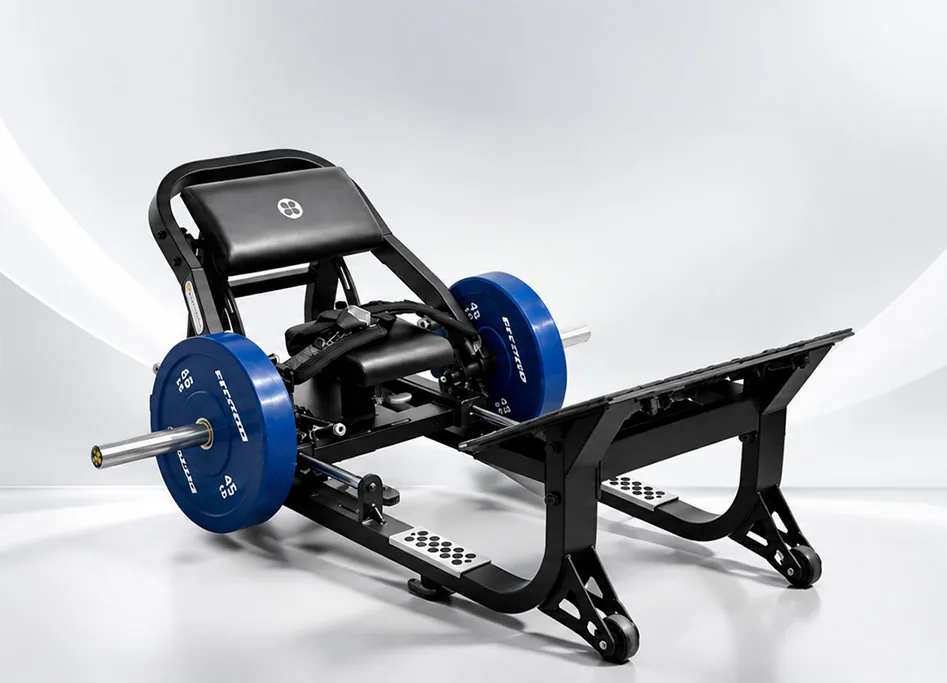
The GluteZone Hip Thrust Machine is commercial grade, handles up to 550 lbs, adjusts to every body type with its 16-point seat, and starts at $2,239. Financing available through Affirm.
Sources
1. Schoenfeld BJ, Ogborn D, Krieger JW. Effects of Resistance Training Frequency on Measures of Muscle Hypertrophy: A Systematic Review and Meta-Analysis. Sports Medicine, 2016.
2. Grgic J, Schoenfeld BJ, Latella C. Resistance training frequency and skeletal muscle hypertrophy: A review of available evidence. Journal of Science and Medicine in Sport, 2019;22(3):361-370.
3. Israetel M. Complete Glute Training Guide. Renaissance Periodization. https://rpstrength.com/blogs/articles/glute-hypertrophy-training-tips
4. Contreras B. Your Optimal Training Frequency for the Glutes, Part I: Exercise Type. https://bretcontreras.com/your-optimal-training-frequency-for-the-glutes-part-i-exercise-type/
5. How can I lift my saggy bum? Fitness Network Australia. https://www.fitnessnetwork.com.au/how-can-i-lift-my-saggy-bum/
6. GluteZone Hip Thrust Machine product page and FAQ. https://glutezone.com/product/hip-thrust-machine/