






Your hip thrust numbers are climbing. Your form is clean. You train glutes twice a week and you are consistent. But the mirror is not changing, and the most common reason is not your program. It is your plate. Muscle is built from training, but it is paid for with food. If you eat below what your body needs for long enough, your glutes can get stronger without getting much bigger. This guide answers the question lifters and gym owners hear every week: do you need a calorie surplus to grow glutes, and if so, how big should it be?
The short answer is honest. A surplus is not an absolute requirement for everyone, especially beginners. But if your goal is to maximize glute growth, the research points in one direction: eating at least at maintenance, and usually a little above it, gives your body the energy it needs to build new muscle. Eating in a clear deficit does the opposite for lean mass, even when strength still improves.
What the deficit research actually shows
Start with what happens when you do not eat enough. Murphy and Koehler published a meta-analysis and meta-regression of resistance training studies done in an energy deficit. Lean mass gains were impaired in the deficit groups compared with control groups, with an effect size of -0.57, while strength gains were not significantly impaired. Their meta-regression found that a deficit of about 500 calories per day prevented gains in lean mass altogether.
That finding explains a pattern coaches see constantly. A member trains hard, gets stronger on the hip thrust, and still looks the same after three months because she is quietly dieting the whole time. Strength and size are related, but they are not the same outcome. Neural adaptations can drive strength up while energy intake holds muscle growth back. If a client tells you her glutes are not growing, ask what she eats before you change her program.
500 kcal/day
deficit that prevented lean mass gains in the meta-regression
-0.57
effect size for impaired lean mass gains in a deficit
10 to 20%
surplus above maintenance for novice and intermediate lifters
1.6 to 2.2 g/kg
daily protein range for maximizing muscle growth
How big should the surplus be?
The best practical guidance comes from Iraki and colleagues, who reviewed the literature and published nutrition recommendations for natural bodybuilders in the off-season, the phase where the goal is exactly this: add muscle without adding unnecessary fat. They recommend a hyper-energetic diet of about 10 to 20 percent above maintenance calories for novice and intermediate lifters, with a target weight gain of about 0.25 to 0.5 percent of bodyweight per week. Advanced lifters should be more conservative, closer to 5 to 10 percent above maintenance in their summary table, because their remaining muscle gain potential is smaller and extra calories are more likely to become fat.
Translated into real food, a 10 percent surplus for someone who maintains on 2,200 calories is about 220 extra calories a day. That is a glass of milk and a banana, not a second dinner. The popular image of bulking as eating everything in sight is outdated, and the next study shows why.
Bigger is not better: the surplus size studies
Ribeiro and colleagues ran a small pilot study with 11 male bodybuilders training six days per week for four weeks. The higher energy group ate about 67.5 calories per kilogram per day, and the moderate group ate about 50.1. The higher group gained more muscle mass, up 2.7 percent versus up 1.1 percent, but it also gained far more body fat, up 7.4 percent versus up 0.8 percent. More food built more muscle, and a lot more fat along with it.
Helms and colleagues tested surplus size more directly in 2023. They randomized trained lifters to maintenance, a moderate surplus of about 5 percent, or a high surplus of about 15 percent for eight weeks of training. Their conclusion was clear: faster rates of body mass gain primarily increased the rate of fat gain rather than increasing hypertrophy or strength gains. In other words, once you are eating enough to support training, tripling the surplus mostly triples the fat, not the muscle.
Slater and colleagues reached a matching recommendation: start conservatively with a surplus of about 1,500 to 2,000 kilojoules per day, roughly 360 to 480 calories, and adjust based on body composition and performance. A small, controlled surplus, monitored weekly.
Who can grow glutes without a surplus?
There is an important exception, and good coaches are honest about it. Beginners, people returning after a long break, and lifters carrying more body fat can often build muscle at maintenance or even in a small deficit. Their bodies are more responsive to training and can draw on stored energy. Slater and colleagues note that hypertrophy is frequently observed in small to moderate deficits, particularly in people with higher adiposity and less training experience. This is the body recomposition effect, and it is real.
But it has limits. The Murphy and Koehler data show that as the deficit grows toward 500 calories per day, lean mass gains disappear. And for an experienced lifter who is already lean and whose hip thrust has been progressing for years, expecting visible glute growth while dieting is usually wishful thinking. The more advanced you are, the more growth depends on eating enough.
For gym owners, this matters commercially. A new member can progress visibly on a near-maintenance plan, which is great for retention. A long-term member chasing a bigger goal needs a different conversation: a planned gaining phase instead of another diet.
Protein still comes first
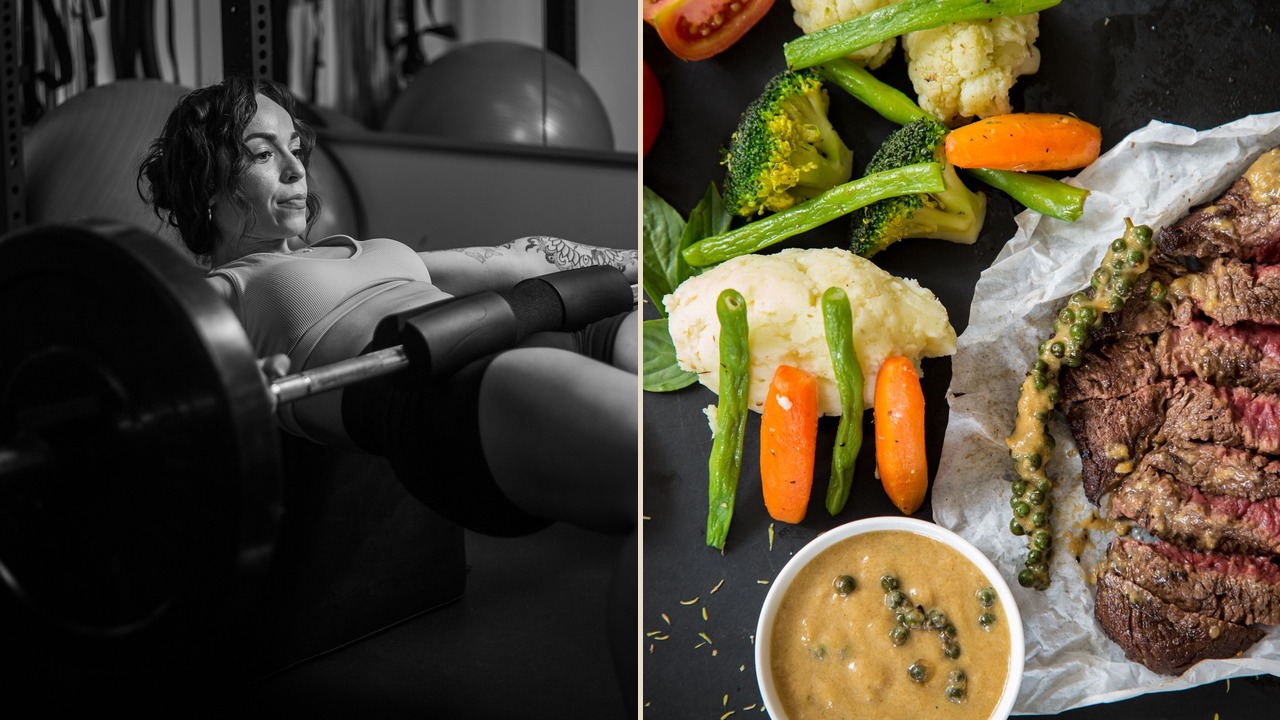
A surplus built on low protein is mostly a fat gain plan. Iraki and colleagues recommend 1.6 to 2.2 grams of protein per kilogram of bodyweight per day, spread across 3 to 6 meals, with about 0.40 to 0.55 grams per kilogram per meal. Fat should sit in a moderate range of 0.5 to 1.5 grams per kilogram per day, and the remaining calories should come from carbohydrates, at least 3 to 5 grams per kilogram per day, to support hard training sessions.
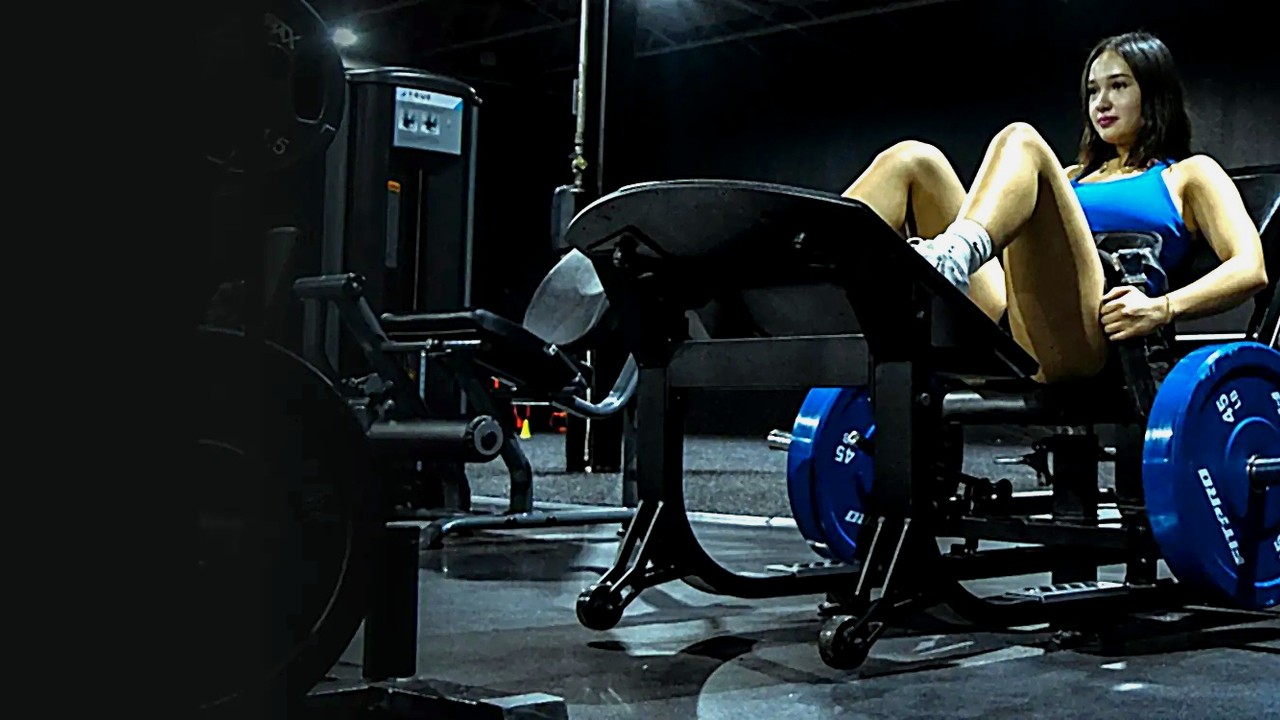
Carbohydrates deserve special mention for glute training. Heavy hip thrust and pendulum squat sessions are demanding, and carbohydrate is the fuel that lets a lifter complete hard sets at high effort. In practice, the simplest surplus for most people is to keep protein steady, then add carbohydrates around training: a normal meal one to two hours before the session and a full meal after it. That is where the extra 200 to 400 calories do the most work.
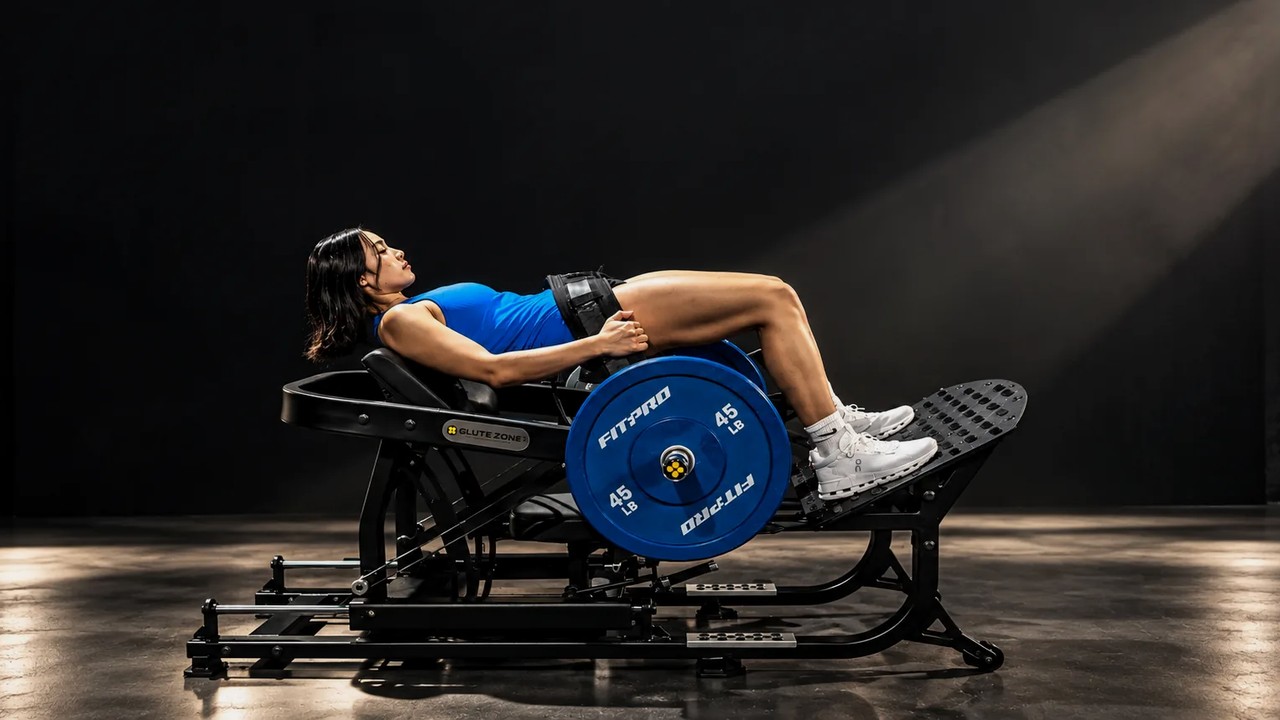
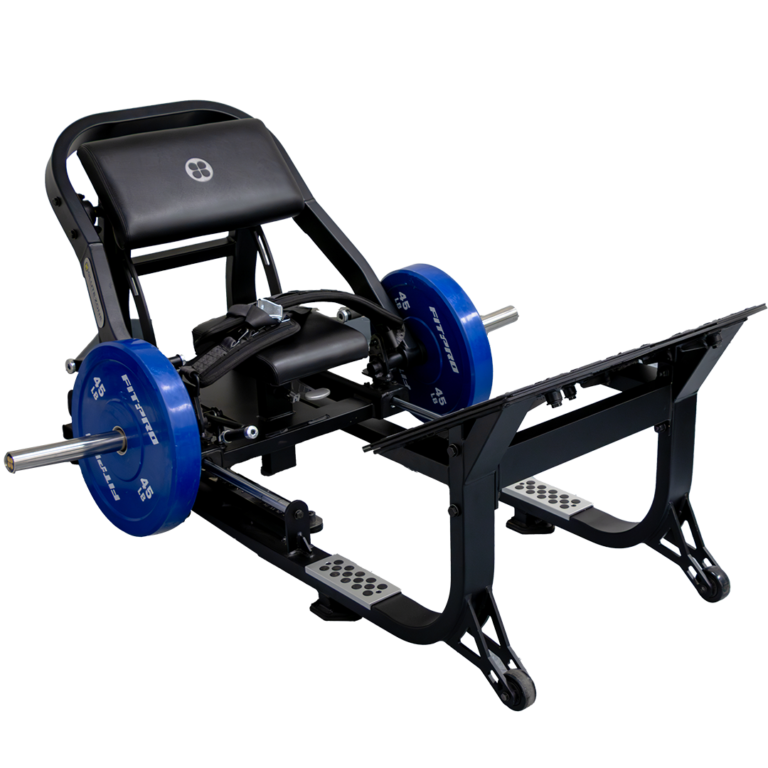
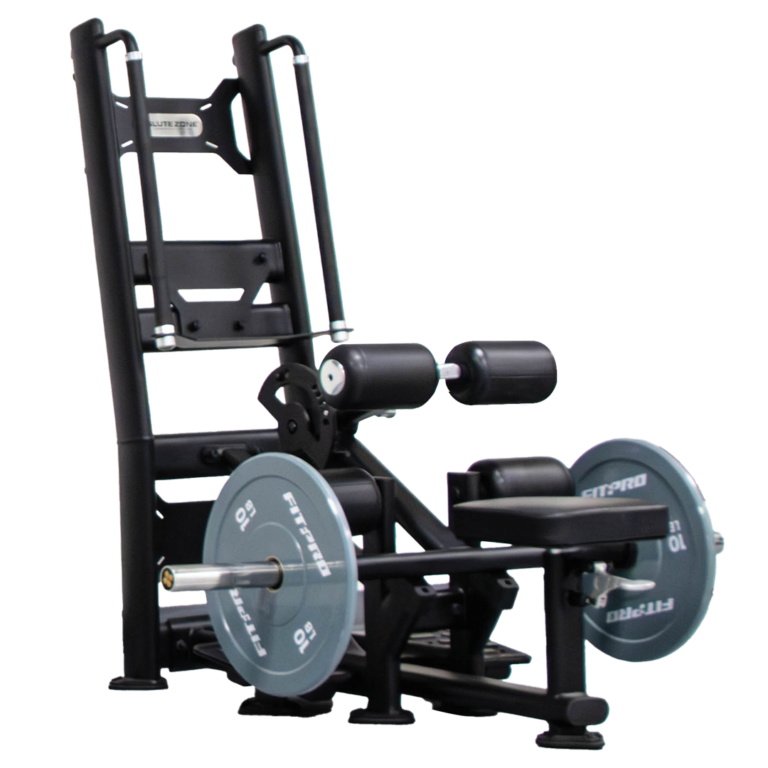
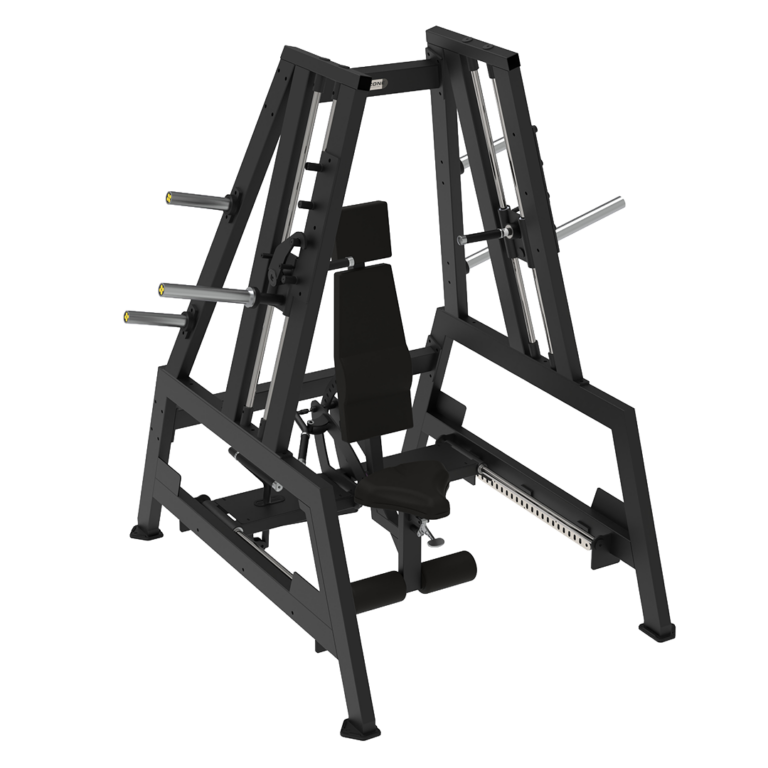
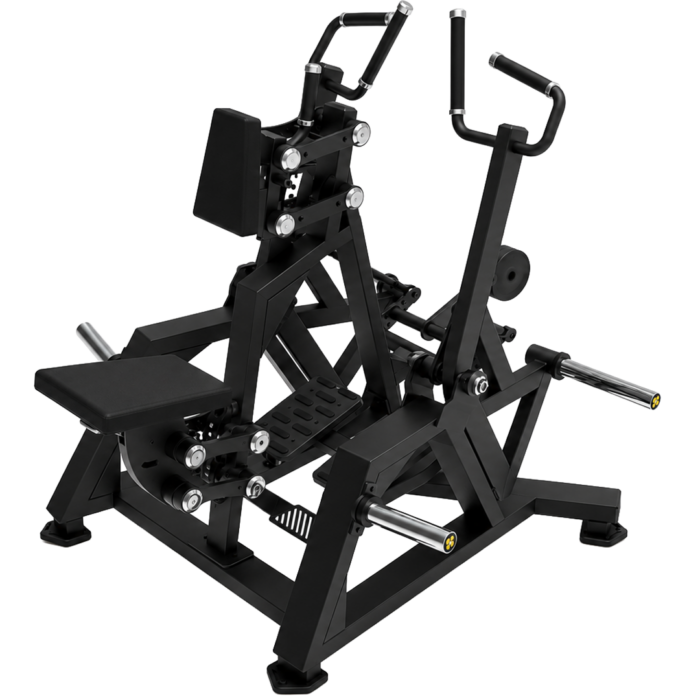
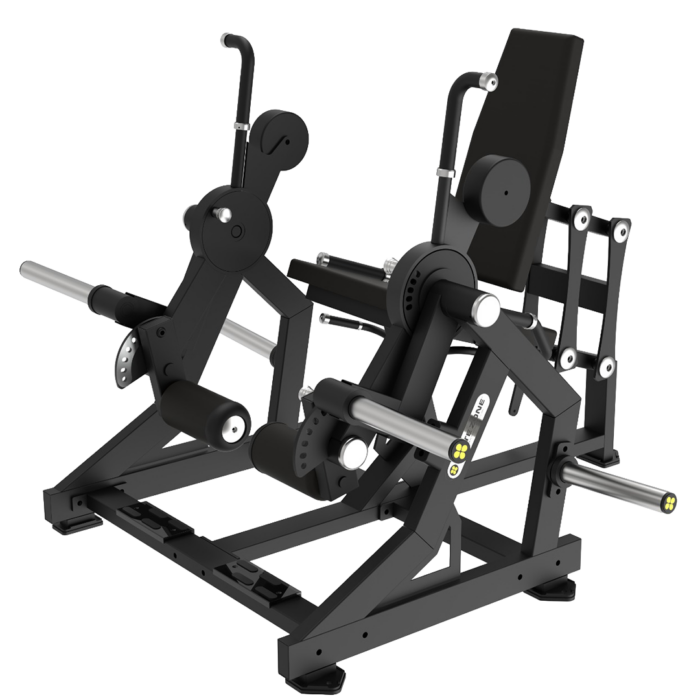
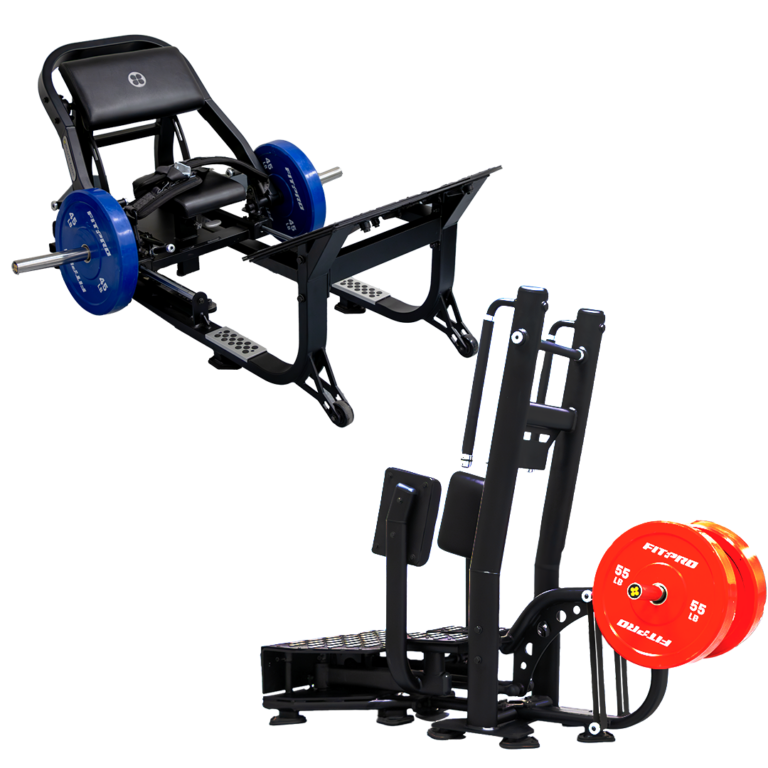
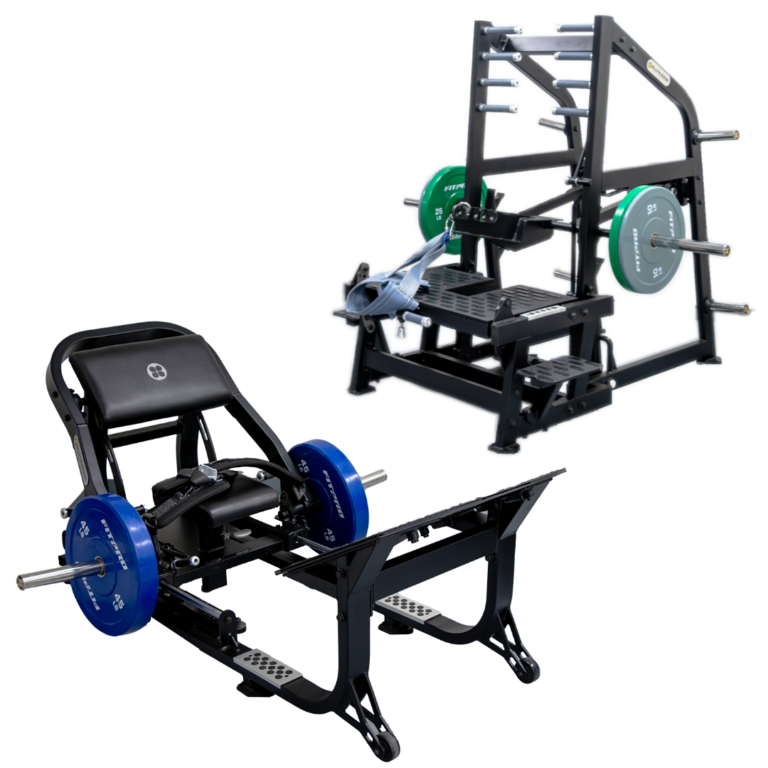
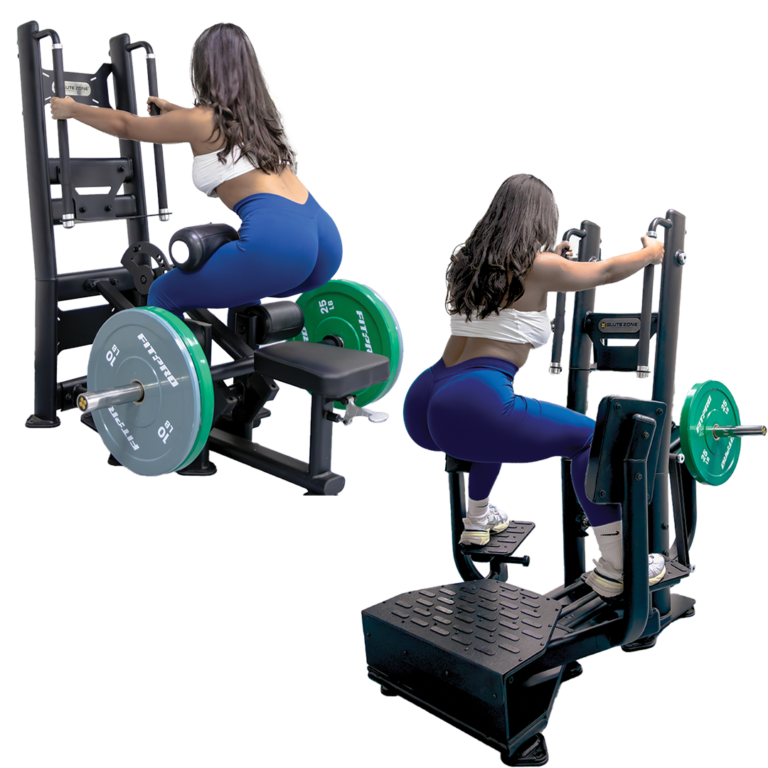
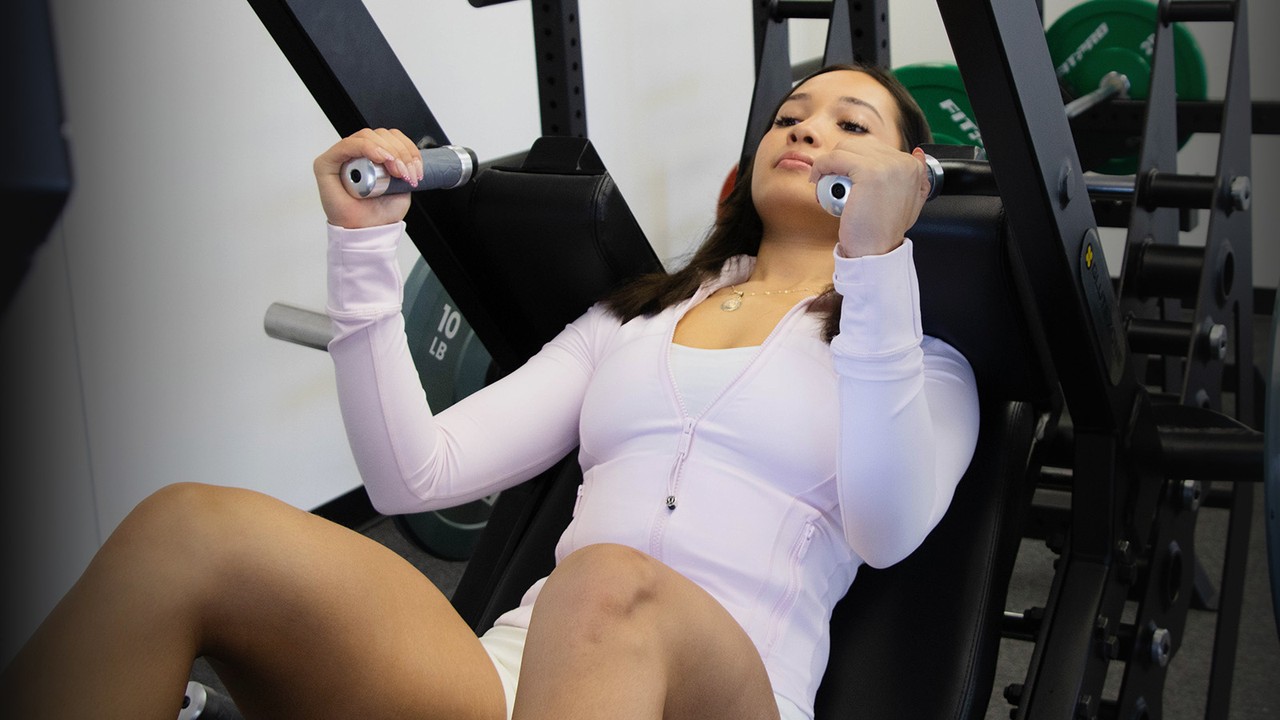
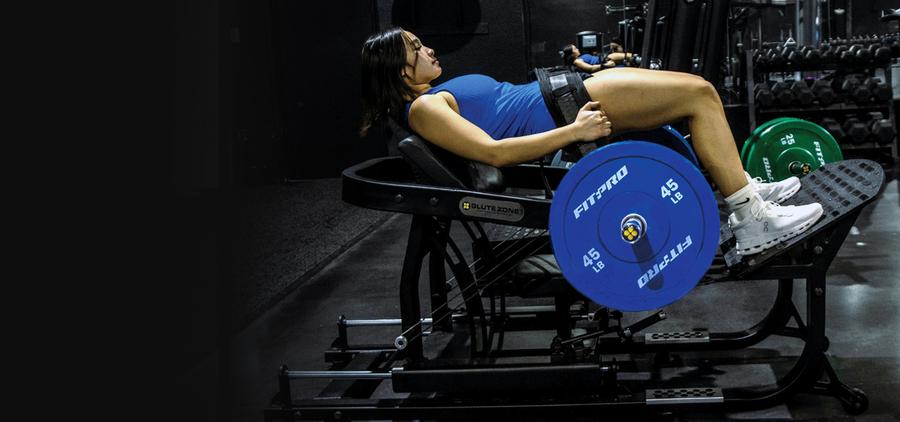
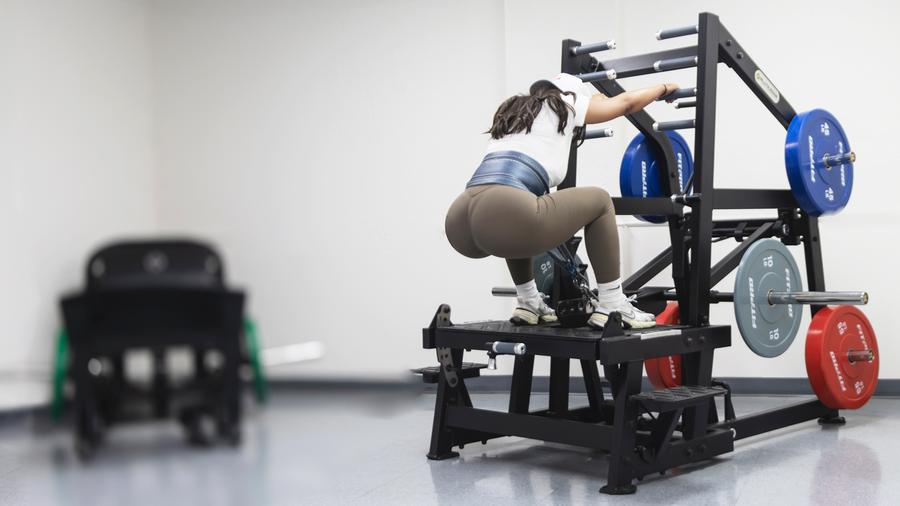
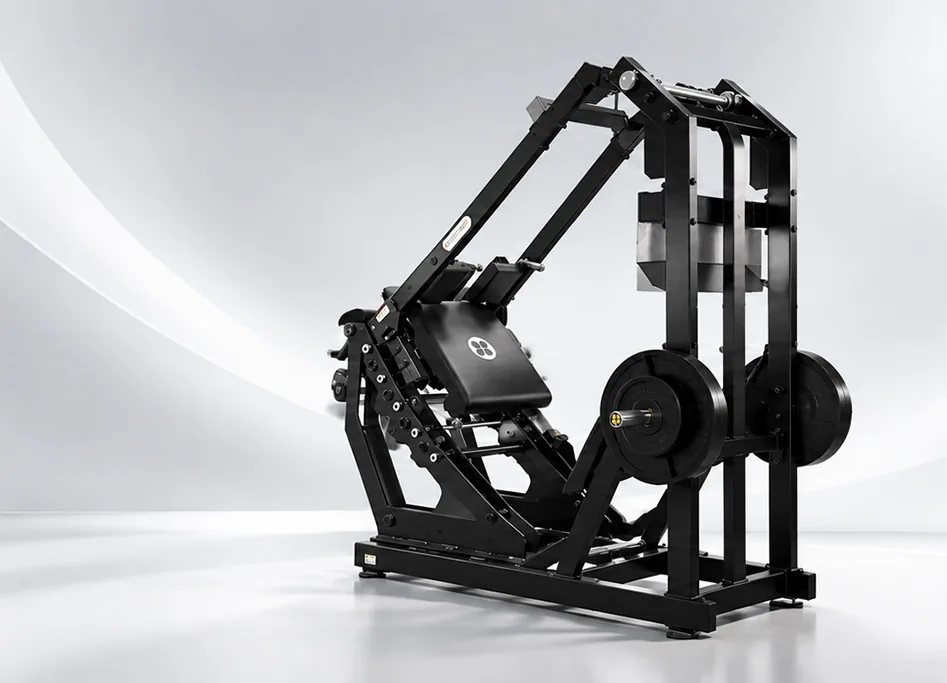
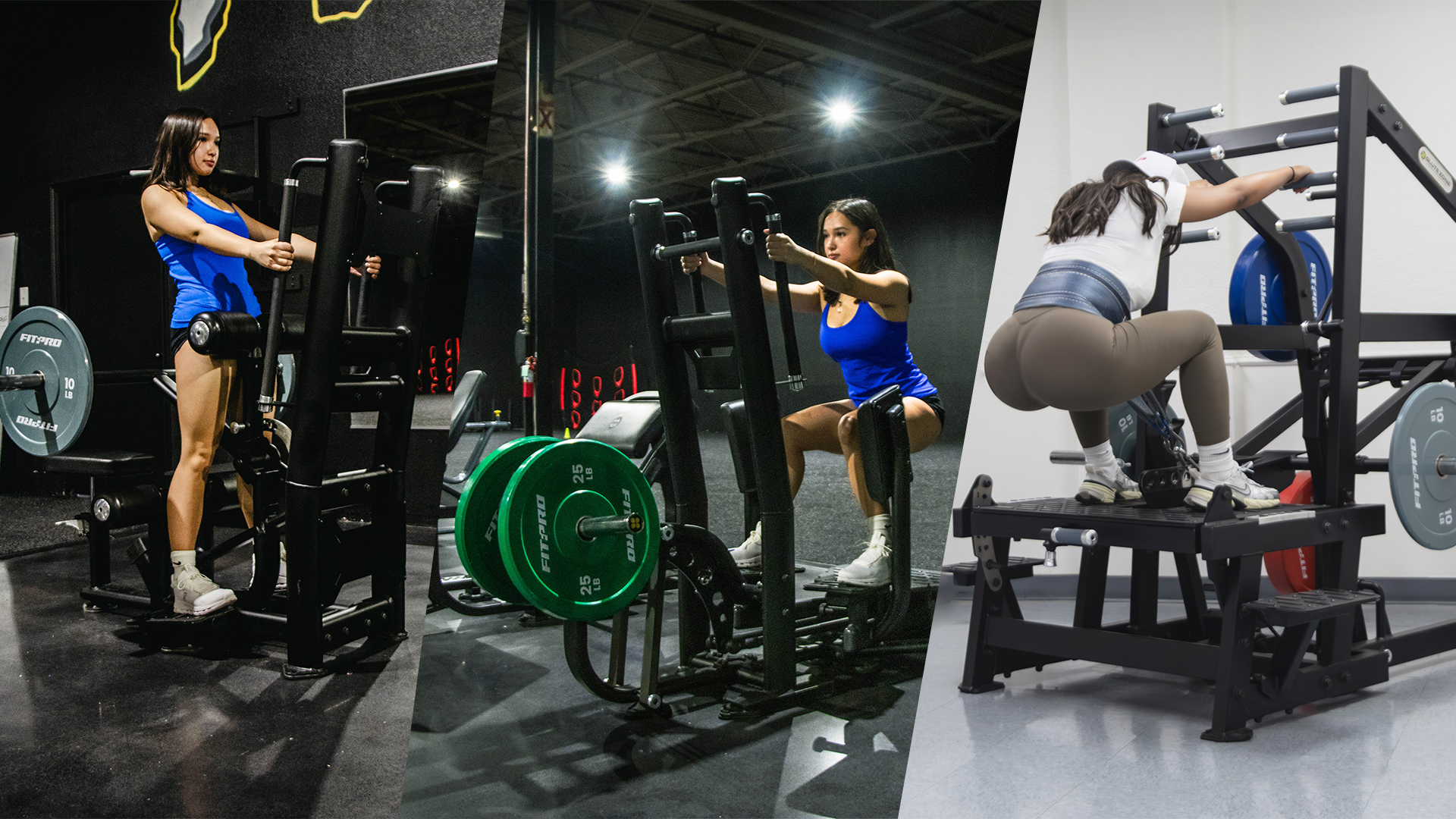
Machines make the training side easier to standardize, whether a member trains in your gym or in a serious home setup. A plate-loaded Hip Thrust Machine removes the barbell setup that stops many people from training heavy, and its 16-point adjustable seat, 550 lb plate horn capacity and 357 lb frame are built for progressive loading week after week. Pairing that kind of overload with a Pendulum Squat gives glutes both a hip extension staple and a deep knee flexion option, the two patterns a complete glute program needs.
A simple 8-week fueling plan for glute growth
First, find maintenance honestly. Track everything you eat for two weeks while your weight stays stable. That average is your starting point, not a calculator estimate.
Second, add 10 percent. If maintenance is 2,000 calories, start at about 2,200. Keep protein at 1.6 to 2.2 grams per kilogram every day.
Third, weigh in three mornings per week and use the weekly average. You are aiming for a gain of about 0.25 to 0.5 percent of bodyweight per week. For a 70 kg lifter, that is roughly 0.18 to 0.35 kg per week.
Fourth, adjust in small steps. If the average is flat for two full weeks and your training loads are not moving, add about 100 to 150 calories per day, preferably from carbohydrates. If you are gaining faster than the target range and your waist is climbing quickly, pull back by a similar amount. The research on surplus size says patience wins: the slow gainer ends the year with more muscle and less fat to lose.
Fifth, keep training progressive. A surplus without overload is just weight gain. Your hip thrust and squat pattern loads, reps or sets should trend upward across the eight weeks. Food supports the work; it does not replace it.
What gym owners should do with this
Members rarely fail glute programs because of one bad exercise choice. They fail because nobody connects their training to their eating. A short nutrition framework in onboarding, a simple handout with the protein and surplus guidance above, and coaches who ask about food before rewriting programs will do more for results than another machine variation. Results retain members, and visible glute progress is one of the most shareable results in a modern gym.
Equipment still sets the ceiling. Members cannot overload a movement they avoid because setup is painful or slow. A dedicated glute area with a commercial grade hip thrust machine turns the nutrition conversation into progress members can actually see.
Frequently asked questions
Can I grow glutes in a calorie deficit?
Sometimes, especially if you are a beginner, returning to training, or carrying more body fat. Keep the deficit small, keep protein high, and expect slower growth. The meta-analysis evidence shows a deficit near 500 calories per day prevented lean mass gains, so a large deficit and maximum glute growth do not mix.
How many extra calories should I eat to grow glutes?
A practical starting point is about 10 percent above maintenance for novice and intermediate lifters, which often works out to roughly 200 to 400 calories per day. Aim to gain about 0.25 to 0.5 percent of bodyweight per week and adjust from your weekly average.
What if I gain fat faster than muscle?
Your surplus is probably too large. Studies comparing surplus sizes found that bigger surpluses mainly added fat. Reduce intake slightly, keep protein and training unchanged, and reassess after two weeks.
Do I need to eat a lot of protein on a surplus?
Yes. The reviewed recommendation is 1.6 to 2.2 grams per kilogram of bodyweight per day, distributed across the day. A surplus does not compensate for low protein.
How long should a gaining phase last?
Long enough to see measurable change, typically at least 8 to 12 weeks of consistent intake and progressive training, with weekly average weight moving at the target rate. Short, stop-start attempts rarely give the process time to work.
The bottom line
You do not need a huge surplus to grow glutes, and a huge surplus will mostly grow fat. You do need to stop dieting by accident. Eat at maintenance or a little above it, hit your protein target, gain slowly at about 0.25 to 0.5 percent of bodyweight per week, and pair that fuel with progressive hip thrust and squat training. That combination is what the evidence supports, and it is achievable in a commercial gym or a serious home gym.
Ready to build a glute area that members actually progress on? Talk to GluteZone about the commercial grade Hip Thrust Machine and Pendulum Squat for your gym or home setup. Financing is available through Affirm, so you can spread the cost while your members start training. Get a quote here.
Sources
- Iraki J, Fitschen P, Espinar S, Helms E. Nutrition Recommendations for Bodybuilders in the Off-Season: A Narrative Review. Sports. 2019. https://pubmed.ncbi.nlm.nih.gov/31247944/
- Ribeiro AS, Nunes JP, Schoenfeld BJ, Aguiar AF, Cyrino ES. Effects of Different Dietary Energy Intake Following Resistance Training on Muscle Mass and Body Fat in Bodybuilders: A Pilot Study. Journal of Human Kinetics. 2019. https://academicworks.cuny.edu/le_pubs/465
- Murphy C, Koehler K. Energy deficiency impairs resistance training gains in lean mass but not strength: A meta-analysis and meta-regression. Scandinavian Journal of Medicine and Science in Sports. 2022. https://onlinelibrary.wiley.com/doi/10.1111/sms.14075
- Helms ER, et al. Effect of Small and Large Energy Surpluses on Strength, Muscle, and Skinfold Thickness in Resistance-Trained Individuals: A Parallel Groups Design. Sports Medicine Open. 2023. https://pmc.ncbi.nlm.nih.gov/articles/PMC10620361/
- Slater GJ, Dieter BP, Marsh DJ, Helms ER, Shaw G, Iraki J. Is an Energy Surplus Required to Maximize Skeletal Muscle Hypertrophy Associated With Resistance Training. Frontiers in Nutrition. 2019. https://public-pages-files-2025.frontiersin.org/journals/nutrition/articles/10.3389/fnut.2019.00131/pdf